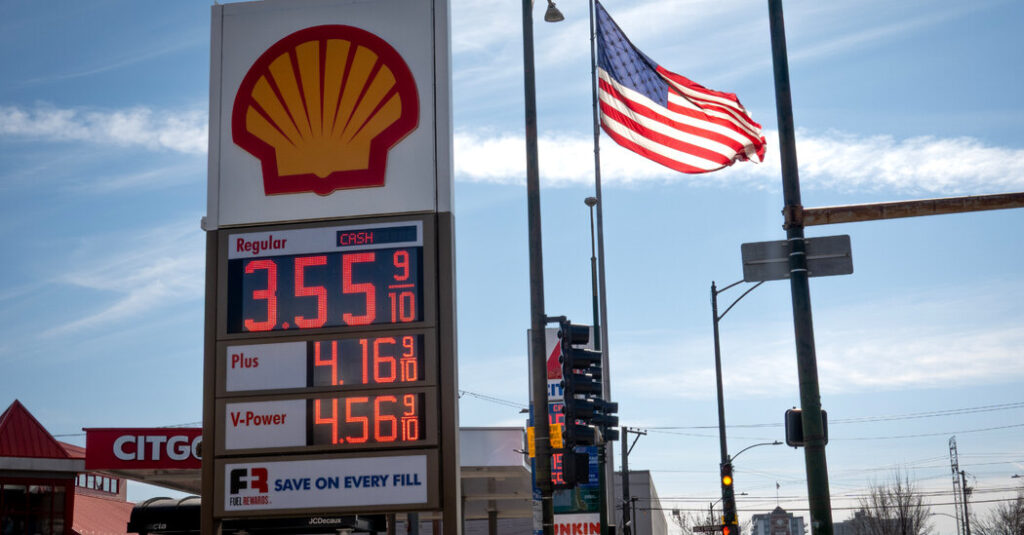
The price of gasoline in the United States rose only modestly on Monday, even as oil prices climbed in response to a widening conflict in the Middle East.
If the war drags on, though, that could abruptly change.
The U.S.-Israeli attacks on Iran, and Iran’s counterattacks, have started to limit the export of oil and gas from the region, pushing global oil prices higher. West Texas Intermediate crude oil futures, the domestic oil benchmark, jumped about 6 percent on Monday to just over $71 a barrel. (The international benchmark rose about 7 percent.)
But gas prices tend to take days or weeks to respond to rising oil prices as refiners pass on expenses. So a prolonged war is certain to result in higher costs at the pump.
“About at least 60 percent of the price you pay when you go fill up has to do with the price of crude oil,” said Aixa Diaz, a spokeswoman for the AAA motor club. “If it were to get above $80, or worse, it’ll be more noticeable at the pump.”
Other factors in gasoline prices include taxes, distribution costs and profits for the refiners. Those don’t change nearly as much as oil.
As of Monday, a gallon of gas cost just below $3, on average, across the United States, according to AAA. The national average was just above $3 a year ago, and the national average last month was the lowest for February since 2021.
But oil prices could continue climbing for a while, now that the conflict has disrupted shipping and energy production — about 20 percent of the world’s oil passes through the Strait of Hormuz, the narrow exit to the Persian Gulf that borders Iran, where tanker traffic has slowed significantly.
“It is such a volatile commodity,” Ms. Diaz said. “Anything could really change it.”
American consumers last lived through a big run-up in prices in the weeks and months after Russia invaded Ukraine in February 2022. Oil prices rose around 20 percent after the invasion began, out of concern that sanctions would take Russian oil off the global market.
But in the first week after the invasion, the average price of a gallon of regular gasoline in the United States went up only about 3 percent, according to AAA. Drivers began to see noticeably higher prices the next week, and by June 2022, gasoline was above $5 a gallon, at record highs.
Back then, though, West Texas Intermediate crude oil futures had climbed well above current levels, to about $120 a barrel.
Gas prices could rise for other, seasonal reasons, too. Spring and summer demand at the pump is higher, Ms. Diaz said, as more Americans take to the roads for holidays.
Emmett Lindner is a business reporter for The Times.
The post What Rising Oil Prices Could Mean for Drivers in the U.S. appeared first on New York Times.