In the lead up to the United States and Israel’s attack on Iran, prediction markets saw a frenzy of activity tied to the conflict. Speculators rushed to guess when the first missile strikes would begin and who might be impacted, placing trades worth hundreds of millions of dollars in total. There are already big winners—and some big losers. This weekend, following the death of Iranian Ayatollah Ali Khamenei, Kalshi faced a customer revolt over how it handled a $54 million market about the fate of Iran’s leadership. “People are absolutely livid,” says Kalshi trader Nicholas Mahoney.
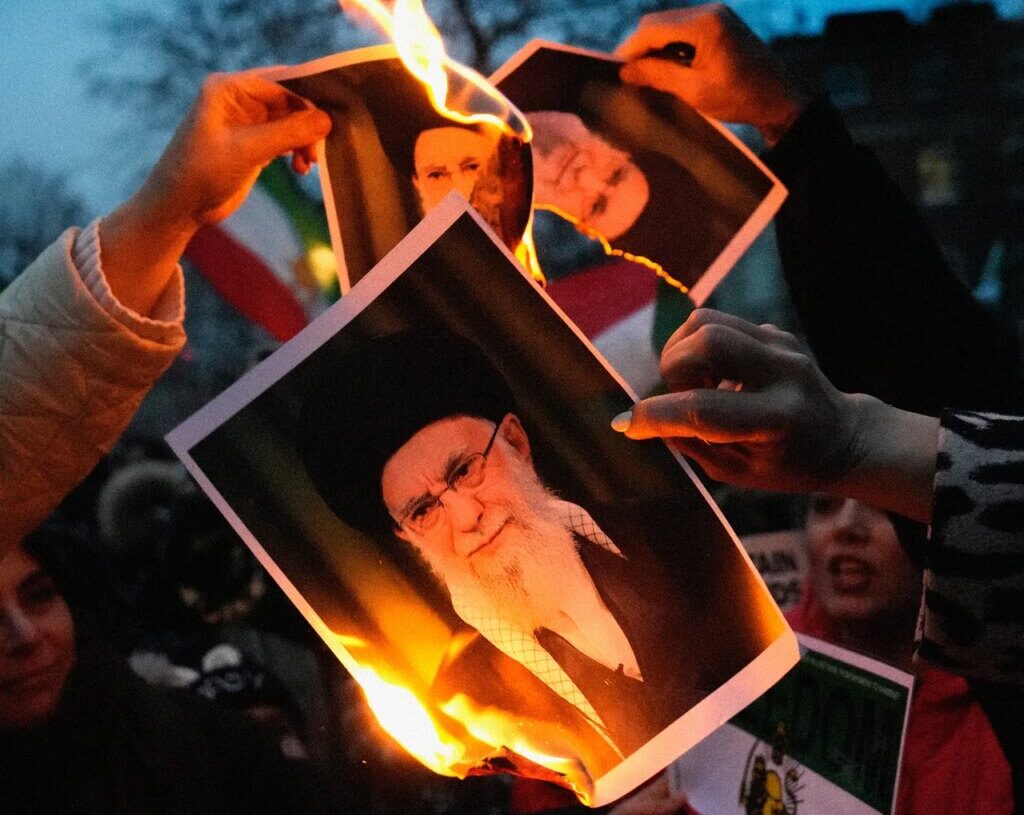
The market offered “yes” or “no” contracts on whether Khamanei would be “out” as the nation’s Supreme Leader. On Saturday morning, while rumors of Khamenei’s death circulated online but an official announcement had not yet been made, Kalshi was promoting the market on social media. After his assasination was confirmed, many traders who had purchased “yes” contracts assumed they had turned a profit—after all, Khamenei was demonstrably no longer the Supreme Leader.
Instead, Kalshi paused the market for review on Saturday afternoon, then ultimately resolved at the last-traded position prior to his killing. This meant that many people who had purchased “yes” trades did not get the payouts they anticipated. Kalshi declined to comment on the incident.
After the initial wave of criticism on Saturday, Kalshi CEO Tarek Mansour noted on social media that Kalshi’s rulebook has always included a “death carve-out” for markets on when leaders will leave office. Derivatives markets in the United States are not legally permitted to offer contracts on assassination. But Kalshi had only added a notice about the carveout to the webpage for the market after the attack on Iran had begun, which meant that some traders did not see it. The backlash came swiftly. (Sample commentary online: “You literally ruined the entire credibility of your business.”) Some traders threatened class action lawsuits, and said that they had filed complaints to the Commodity Futures Trading Commission, the government agency that oversees prediction markets.
On Sunday, Mansour stressed that Kalshi had taken a financial hit to try to fix the issue, and vowed to ensure that nobody would lose money. “Kalshi incurred a substantial loss to make users whole,” he wrote in a lengthy apology. “I’m sorry for the disappointment. We’ll improve, thank you for bearing with us,” he wrote. Moving forward, Mansour says Kalshi will make changes to more prominently highlight death carveouts in similar markets. A source at Kalshi told WIRED the company lost approximately $2.2 million on the incident.
Mansour’s apology hasn’t satisfied some critics. “I defunded my account and deleted the app,” Mahoney tells WIRED. “They should have settled the market how people thought it would be settled.”
Although this was the largest prediction market resolution dispute of its kind related to the war, it wasn’t the only one. Some traders also criticized Polymarket for its approach to a number of markets about the events in Iran. How prediction markets handle sensitive contracts related to world events is an ongoing issue in the industry. Last year, for example, traders protested how Polymarket resolved a popular market about whether Ukrainian president Volodymyr Zelensky, known for his casual outfits, would wear a suit before a certain date.
The controversy over contracts tied to the war in Iran arrives at a moment when prediction markets are already under heightened regulatory scrutiny. A growing bipartisan movement in the US is calling for the platforms to be more tightly regulated, and Kalshi alone is facing 19 separate lawsuits from state authorities. This week, former Trump chief of staff Mick Mulvaney also launched an advocacy group called Gambling Is Not Investing aimed at pushing for more guardrails on the sector.
Despite the recent turmoil, enthusiasm around prediction markets remains high. Traders eager to continue prognosticating what will happen in Iran are in luck—Kalshi has a market on who will be Khamenei’s next successor. Millions of dollars are already on the line.
The post Iranian Ayatollah Khamenei’s Death Sparks Revolt Among Kalshi Customers appeared first on Wired.