Regarding the Feb. 25 front-page article “Why some baby boomers are talking about physician-assisted suicide”:
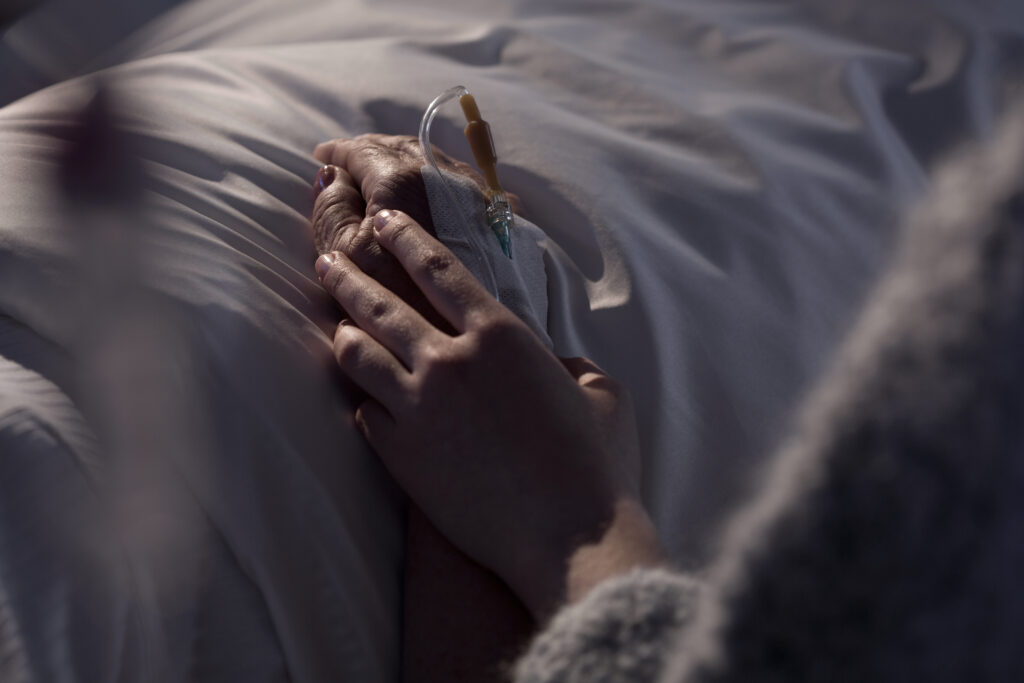
Dying is something we will all do, and considering the manner of one’s own death is a deeply personal experience.
Some will choose to pursue as many medical interventions as possible to prolong their existence. Some will instead choose gentle, palliative care. Some will choose medical aid in dying to spare themselves pain, avoid the loss of conscious connection with their loved ones, or relieve survivors from financial anguish.
All of these choices are valid. We should all be able to make our personal choice, not dictated by somebody else’s values. Medical aid in dying laws not only specify how and when people can choose how they spend the rest of their lives. They also mandate necessary safeguards, such as having mental capability to decide and having a prognosis of six months or less to live.
The moral path is to champion the freedom for adults with a terminal illness to make this most personal choice for themselves.
Curtis Eschels, Lacey, Washington
Surrounding people with care that alleviates suffering and restores dignity is central to Catholic health care’s mission. Every human life is sacred, and we have the moral duty to care, even when we cannot cure.
Frequently cited reasons patients request assisted suicide include a loss of autonomy, diminished quality of life and perceived loss of dignity. But these are not reasons to normalize death as therapy. They are a call to fix what’s broken: unrelieved suffering, untreated depression, caregiver exhaustion, loneliness, and a fragmented health care system that too often leaves patients feeling unseen and unprotected.
When care is inadequate, fear and despair can easily take root. But the solution is not to make it easier to end a life. The remedy is ensuring that every person has access to high‑quality palliative and hospice care providing the physical, emotional and spiritual support that honors their inherent dignity.
Sister Mary Haddad, St. Louis
The writer is president and CEO of the Catholic Health Association.
The Feb. 25 front-page article discussing boomers’ thoughts on assisted suicide laws was comprehensive and evenhanded but perhaps overly polite. In some boomers’ own words, for them, assisted suicide is about control and the sense of peace they hope to have with this “option.” But should society really provide such an option in the law when, for some people, it is the only “option” to which they have equal access?
Assisted suicide is ever-cheap. Factoring in for-profit insurers, government-starved bureaucracies and heirs, the financially motivated players are ubiquitous.
For many, end-of-life care and social services in this country are subpar. The folks who make up the “silver tsunami” are justifiably terrified of being neglected and experiencing indignities. But as a doctor quoted in the article exclaimed, “Wow, is this the way we’re solving social problems?” I hope not. A 62-year-old expressed to the reporter that she doesn’t want policy that would force people to consider assisted suicide, but she does want the option for herself. There’s the rub: On this issue, boomers cannot have their cake and eat it, too.
Assisted suicide laws put some people at risk of a death-too-soon through mistakes, abuse and coercion: How much collateral damage are we willing to swallow? I say none. Instead, there should be meaningful alternatives and a society that empowers everyone to choose among them.
Matt Vallière, New York
The writer is an emergency medical worker and the executive director of the Institute for Patients’ Rights and the Patients’ Rights Action Fund.
Support mobility medicine
Neha Sabharwal’s Feb. 27 Friday Opinion essay, “Seniors should be walking. These regulations discourage it,” rightfully focused on the need for walking programs to be a higher priority in nursing homes. Though her essay mentioned the physical benefits, I would like to highlight the mental ones.
Walking is a natural mood booster. My mother, a fiercely independent woman until the age of 91, endured the consequences of a devastating medical setback that led to her requiring nursing home care for the last three years of her life. She needed assistance with nearly everything, but one of her pleasures of those final years was the daily count of laps around the unit she could make with her walker, always accompanied by a nurse, certified nurse aide or family member. This was made possible in my mother’s case by family advocacy, an administrator who supported a walking program, and some amazingly dedicated CNAs.
We need better funding for elder care so walking programs can be available to more people.
Jeffrey B. Freedman, New York
The writer is a psychiatrist and an associate professor of clinical psychiatry at Weill Cornell Medical College.
The post How should we face the end of life? appeared first on Washington Post.