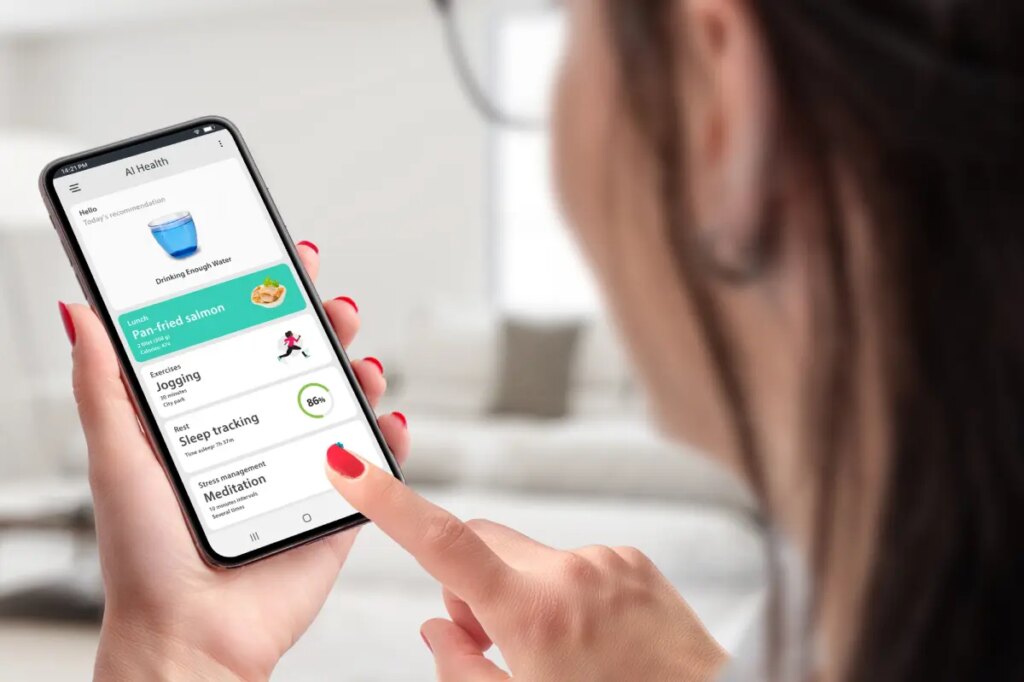
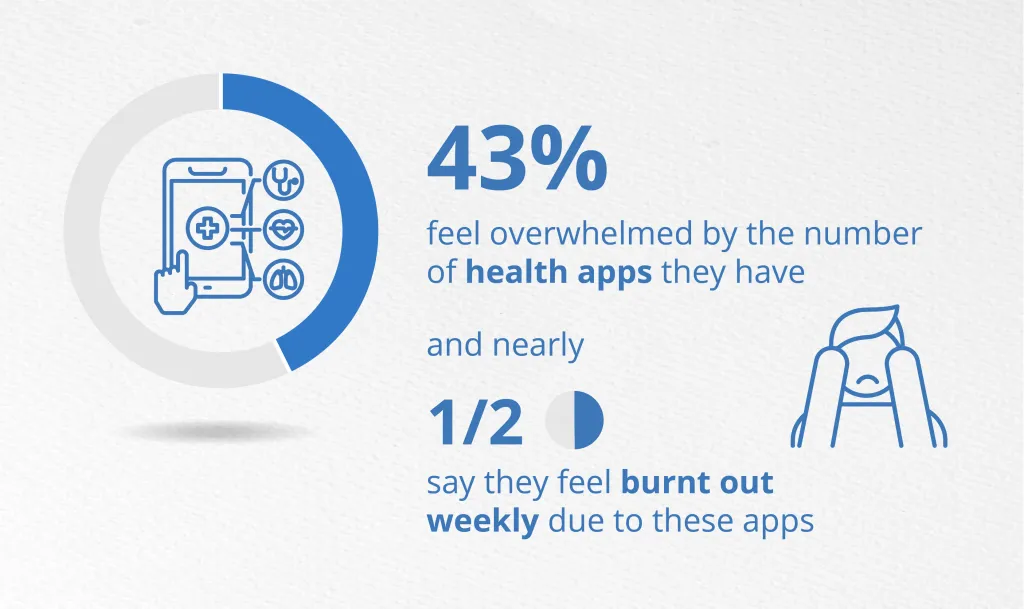
Nearly half of Americans are feeling overwhelmed by the number of digital health tools they have, and many report health app burnout, according to new research.
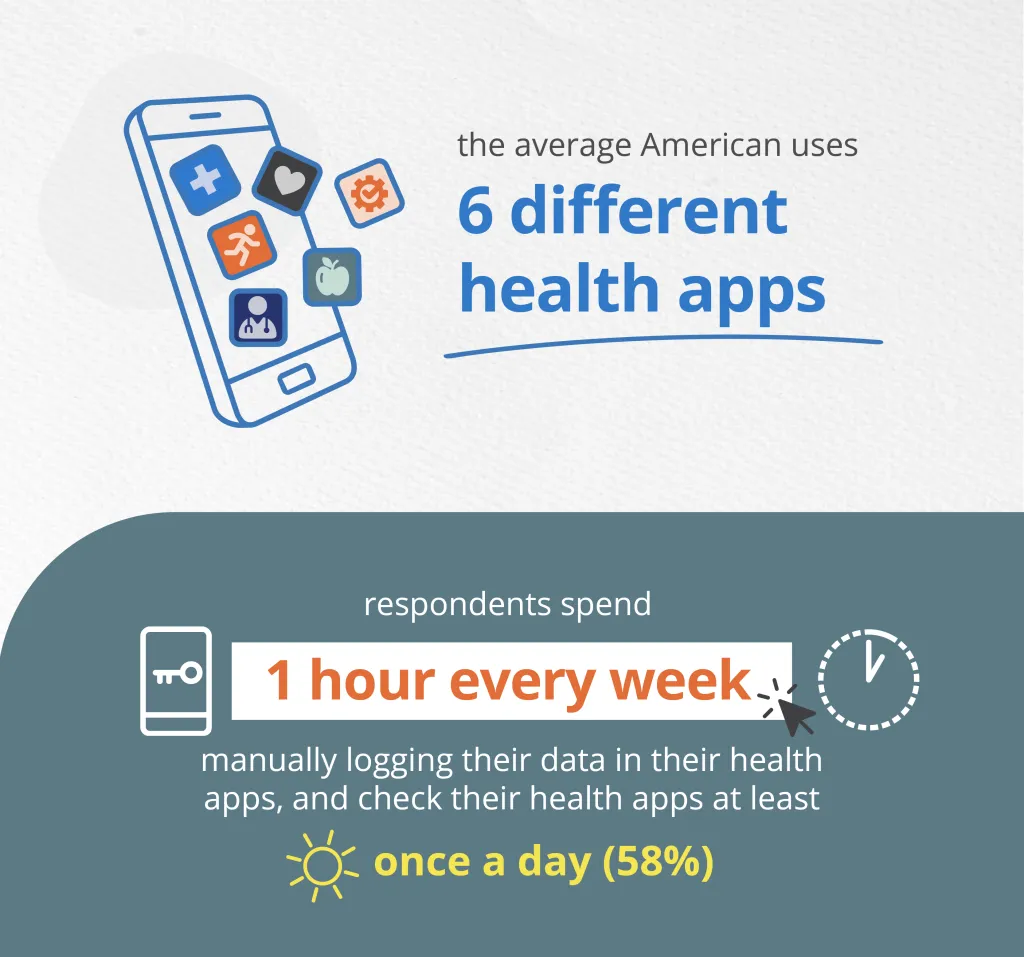
A survey of 2,000 insured adults aged 18-65 found that the average person uses six different health-related apps on a regular basis, with one in five having upward of 10 (22%).
For some, that includes daily activity trackers (57%), nutrition apps (39%), and sleep tracking tools (37%), while others utilize health apps for ongoing care needs like weight management support (34%) and virtual care to connect with doctors (30%). While nearly one quarter (23%) use apps to manage a specific chronic health condition, more than one in 10 (14%) respondents admit they use these health tools to try popular health trends they’ve seen online.
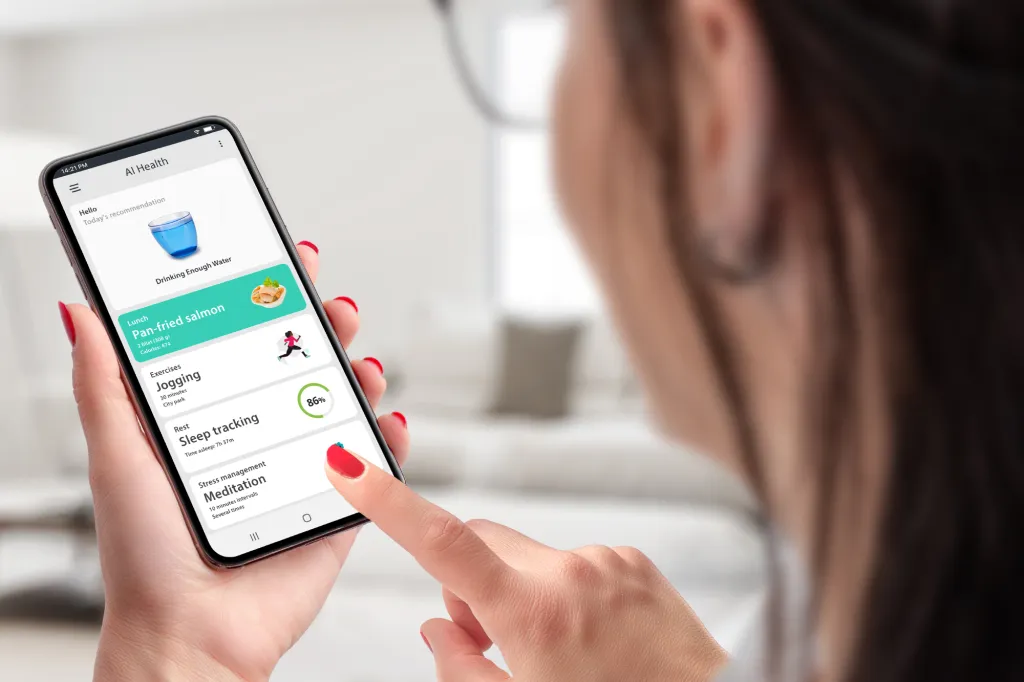
On average, respondents spend over an hour every week manually logging their data and checking their health apps at least once a day (58%). In fact, more than one in ten (11%) admit to checking their app data hourly.
As a result, eight in 10 Americans said their phone now knows their health better than they themselves do (79%).
Even though the data shows that Americans love tracking their health via apps, the survey conducted by Talker Research for MD Live found there are certain drawbacks.
More than half (53%) feel there are too many health apps to keep track of, and 45% say they’ve felt “burnt out” on a weekly basis just from trying to stay on top of inputting information into their apps. More than one in ten (15%) feel exhausted trying to keep up with alerts.
A third of those surveyed have downloaded apps that they didn’t end up using (32%), so it’s no surprise that 24% have deleted at least four of them over the past two years.
Respondents shared that their disinterest grew when these apps required a subscription (27%) or displayed too many ads or tried to push products (23%). Nearly one in five (17%) have deleted an app because they say they have received conflicting or confusing information.
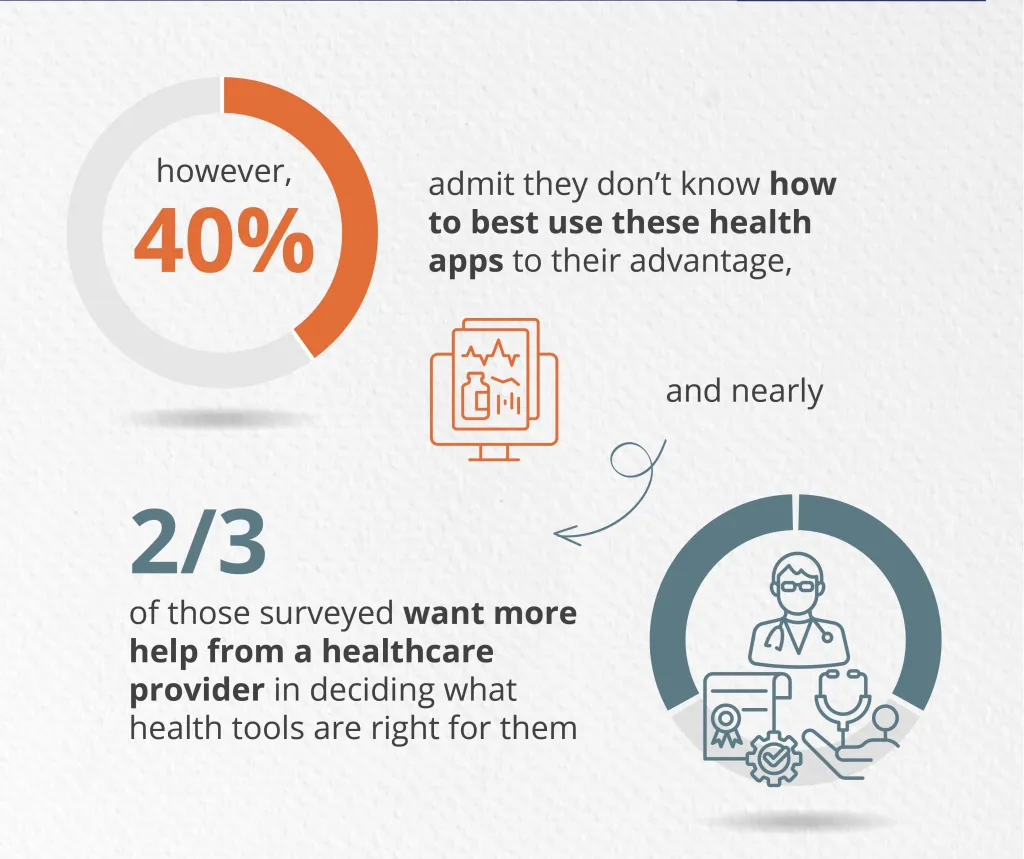
On top of that, 40% admit they don’t know how to best use these apps to their advantage, and 41% note that they often feel like they’re juggling too many.
As a result, one quarter say they have forgotten to follow through on a health goal or appointment because they were managing too many tools.
“People aren’t overwhelmed by technology; they’re overwhelmed by the number of choices,” said Dr. Maggie Williams, medical director for Primary Care at MD Live by Evernorth. “Most consumers want to engage in their health and find digital tools useful. They just want help understanding which tools are right for them and how to get the most out of them.”
Even so, many Americans aren’t giving up on digital health. Forty-one percent plan to use more health tools and apps in 2026, especially for fitness or activity tracking (54%), weight loss or management support (50%), and nutrition tracking (49%).
Despite the effort that goes into maintaining these apps, the payoff is worth it for many.
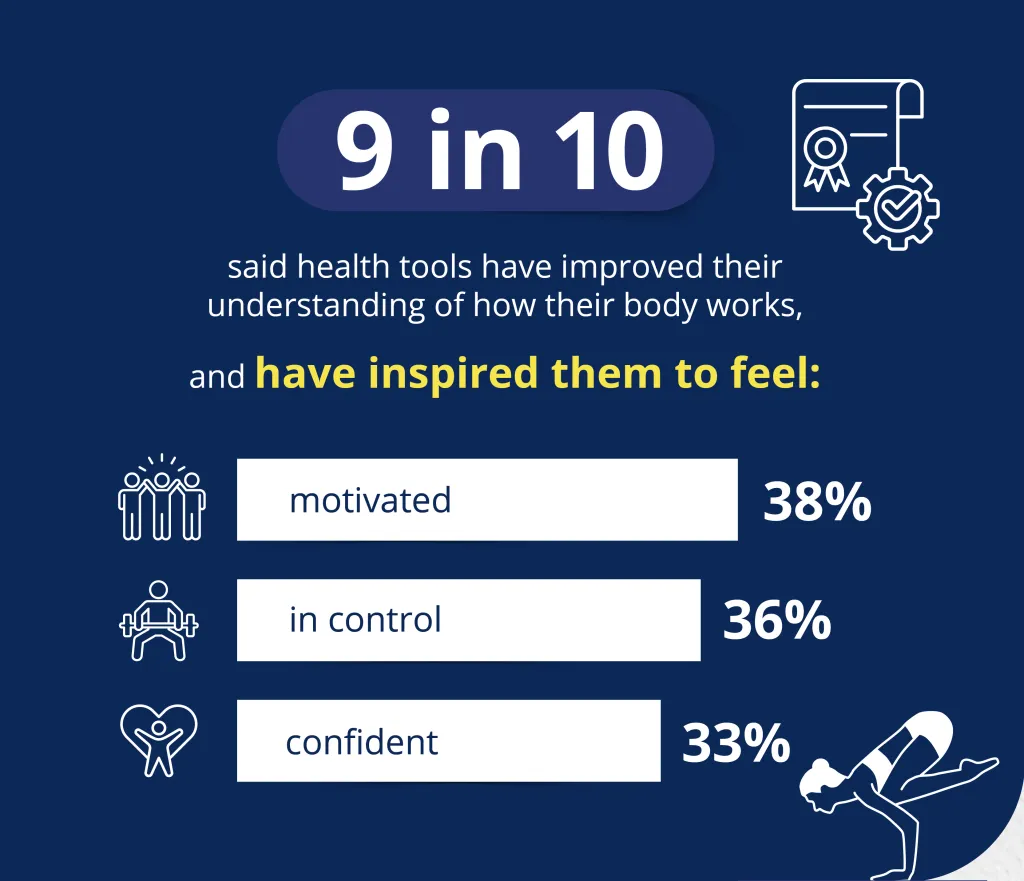
Nine in 10 said health tools have improved their understanding of how their body works (91%) and have inspired them to feel motivated (38%), in control (36%), and confident about the decisions they make (33%).
Respondents say they gain value from learning more about themselves, such as identifying personal patterns (34%) and better understanding their body’s needs (31%). For some, it also helps them stay motivated (37%) and improves their mindfulness (28%).
Even with these benefits, consumers still need help wading through it all. Nearly two-thirds of those surveyed want more help from a healthcare provider in deciding what health tools and apps are right for them (62%), and 54% want more communication from their health plan about the tools available to them.
Respondents dished on what would make them use health tools/apps more efficiently and reported that the top priority would be all their apps and tools living together in one place (28%), followed closely by all their apps being synced to share data (27%).
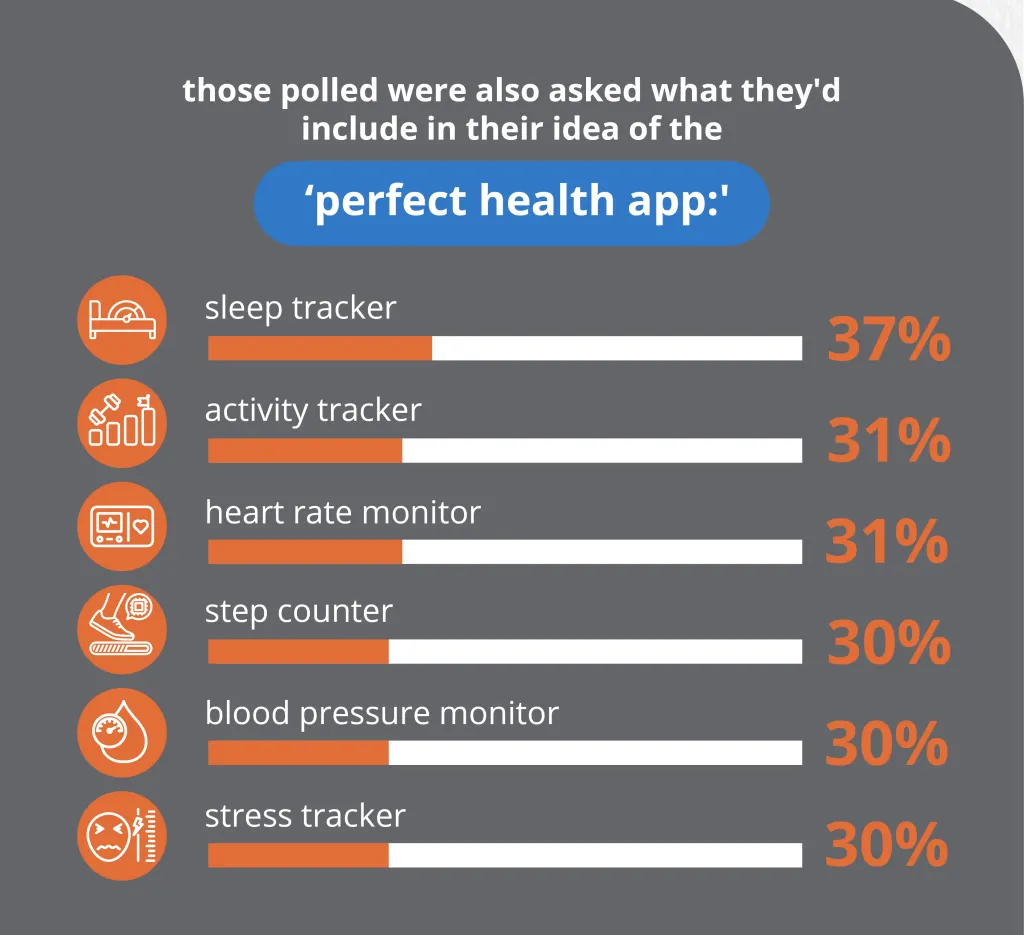
Those polled were also asked what they’d include in their idea of the “perfect health app,” and a sleep tracker scored the highest (37%). That was followed by an activity tracker (31%), a heart rate monitor (31%), a step counter (30%), a blood pressure monitor (30%), and a stress tracker (30%).
“It’s hard to know which tools are truly right for you,” said Dr. Williams. “Your doctor can help you prioritize your needs and narrow the choices, and some health plans now offer recommended app lists tailored to different health needs. Both can help make the digital health world much easier to navigate.”
The post Here’s how much time Americans spend logging into their many health apps appeared first on New York Post.