The top US general shared details of the first days of America’s major combat operation against Iran, including a timeline of some of the action, assets and weapons used, and what’s next.
Operation Epic Fury began Saturday after a US military buildup and stalled nuclear talks, with the US and Israel saying the strikes aimed to cripple Iran’s military and ability to pose a threat; Supreme Leader Ayatollah Ali Khamenei was killed on the first day.
US Air Force Gen. Dan Caine, the chairman of the Joint Chiefs of Staff, said at a Monday morning Pentagon press briefing that Operation Epic Fury, a joint force operation that was coordinated with Israel, took months and in some cases years of “deliberate planning and refinement.”
He said that “across every domain, land, air, sea, cyber, the US Joint Force delivered synchronized and layered effects designed to disrupt, degrade, deny and destroy Iran’s ability to conduct and sustain combat operations,” Caine said.
What went into the preparations?
Prior to the start of the operation, US forces gathered in and around the Middle East, including thousands of service members from all branches, hundreds of advanced fourth- and fifth-generation fighters, dozens of refueling tankers, and the USS Abraham Lincoln and USS Gerald R. Ford carrier strike groups and their embarked air wings.
“The joint force began to systematically reposition assets and personnel across the region,” Caine said, including eventually reducing basing staff to essential personnel only to reduce the risk once missiles and other ordnance began flying.
The logistics flow of necessary munitions, supplies, and intelligence, surveillance, and reconnaissance was put in place to support the operation. Caine said that the logisticians are the “unsung heroes” of the operation against Iran.
At 3:38 pm on the Friday before the operation, Central Command received the final go-ahead from President Donald Trump via the secretary of defense.
“Operation Epic Fury is approved. No aborts. Good luck!” the president’s message said.
“In the region, every element of the joint force made their final preparations,” Caine said. “Air defense batteries readied themselves, checking their systems to respond to Iranian attacks. Pilots and crews rehearsed their strike packages for their final time. Aircrews began loading their final weapons. And two carrier strike groups began to move toward their launching points.”
Operational security was paramount. “This operation was highly classified,” Caine said, “so that at H-hour the enemy would see one thing: speed, surprise, and violence of action.”
How did operations start?
US cyber and space non-kinetic capabilities were the first movers, “disrupting and degrading and blinding Iran’s ability to see, communicate, and respond,” Caine said.
Then at H-hour, at 9:45 am local Tehran time, the start of significant combat operations, “the sky surged to life,” the general said.
More than 100 aircraft, including fighter jets, tankers, early warning and control planes, electronic warfare planes, bombers, and uncrewed aerial systems, were launched from land and sea, from within the region and at home in the United States, forming a single wave for a daylight strike.
Air Force B-2 bombers, flying about a 40-hour sortie from the continental US, dropped “precision penetrating munitions on Iranian underground facilities,” Caine said. The play was similar to Operation Midnight Hammer last summer, when the US struck Iranian nuclear facilities.
Israel separately executed hundreds of aircraft sorties against hundreds of targets across Iran.
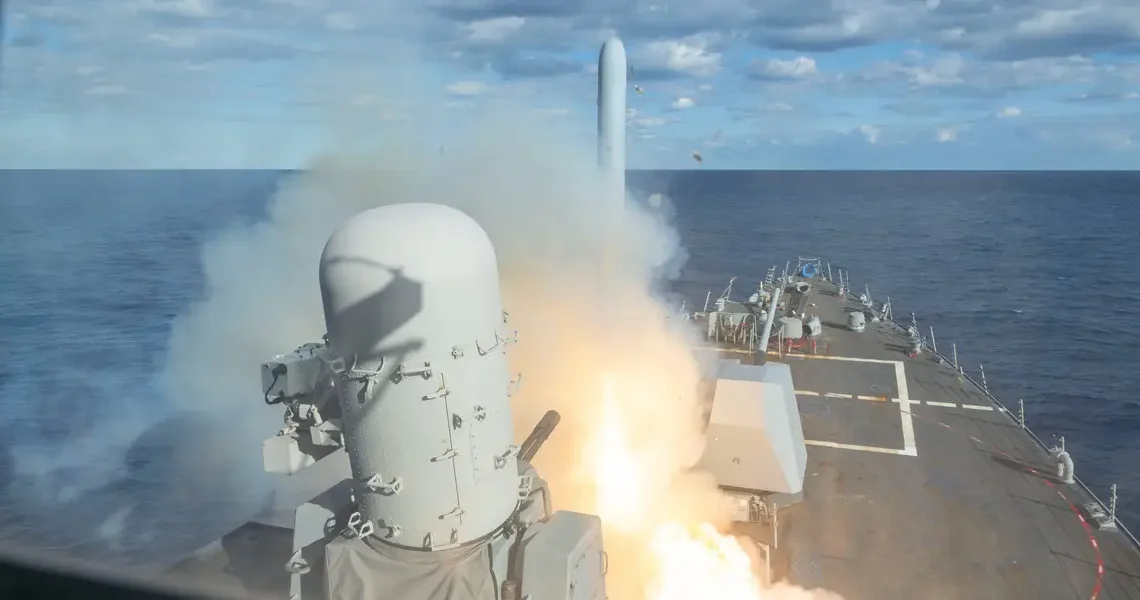
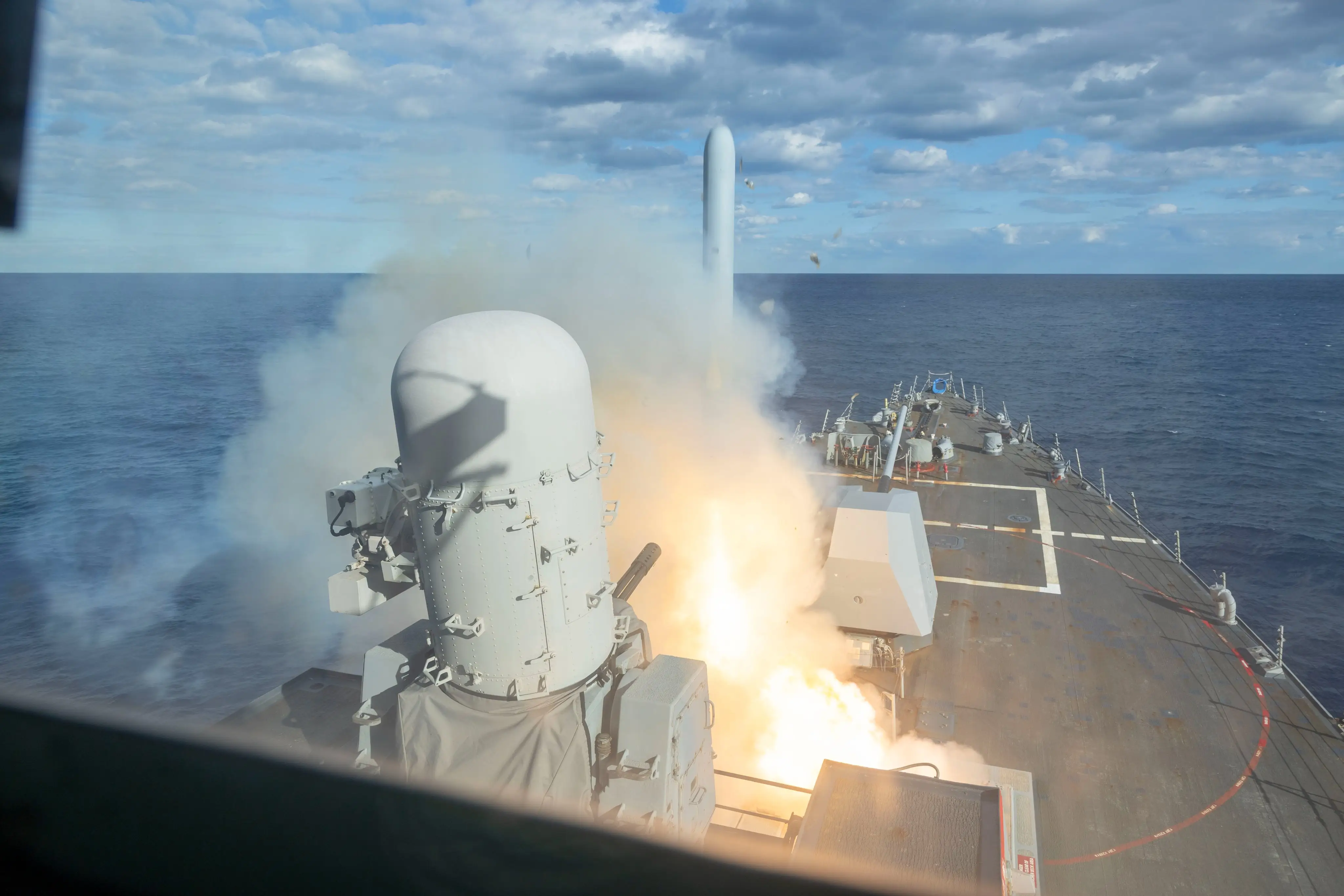
US Navy warships at sea launched Tomahawk cruise missiles at Iranian targets, and on the ground, precision standoff weapons were used. “Coordinated salvos of precision standoff weapons from across the region have neutralized hundreds of preplanned targets,” the general said.
What has been the effect of the operations?
“This was a massive, overwhelming attack across all domains of warfare, staking more than 1,000 targets in the first 24 hours,” Caine said. “We are now roughly 57 hours into the operation.”
In the initial waves of attack, the priority targets in Iran were command and control infrastructure, naval forces, ballistic missile sites, and intelligence infrastructure. The aim was to “daze and confuse them.” Caine said that the combined kinetic and non-kinetic effects “disrupted communications and sensor networks” and presented the US with an opportunity for local air superiority.
Over the last two days of combat, hundreds of missions have been launched from land and sea, with tens of thousands of pieces of ordnance employed in battle.
“We’ve prosecuted a relentless offensive campaign,” Caine said. “Our defense has been equally important.”
He said that the US integrated air defense network, which includes Patriot and THAAD batteries and Navy destroyers capable of ballistic missile defense, has been performing as expected, intercepting hundreds of missiles targeting US and partner forces. Air defenders have also been countering hostile drones.
Conflict is rarely without its complications or losses though. The general acknowledged the loss of 3 American F-15 fighter jets, which were brought down by friendly fire from partner air defenses. The matter is under investigation. Additionally, four US service members have been killed since Saturday. Caine said that the US expects fighting to be ongoing with additional casualties.
Read the original article on Business Insider
The post Top US general lays out how the opening days of Operation Epic Fury against Iran went down appeared first on Business Insider.