Tens of thousands of Americans are losing access to treatment for H.I.V. as nearly 20 states impose restrictions on assistance programs and several others weigh such changes.
The states, led by both Democrats and Republicans, are tightening requirements for people benefiting from Ryan White AIDS Drug Assistance Programs, or ADAPs, according to an analysis released on Monday by the health research group KFF.
The programs help pay for H.I.V. medications or provide them free to some people, and pay insurance premiums for others.
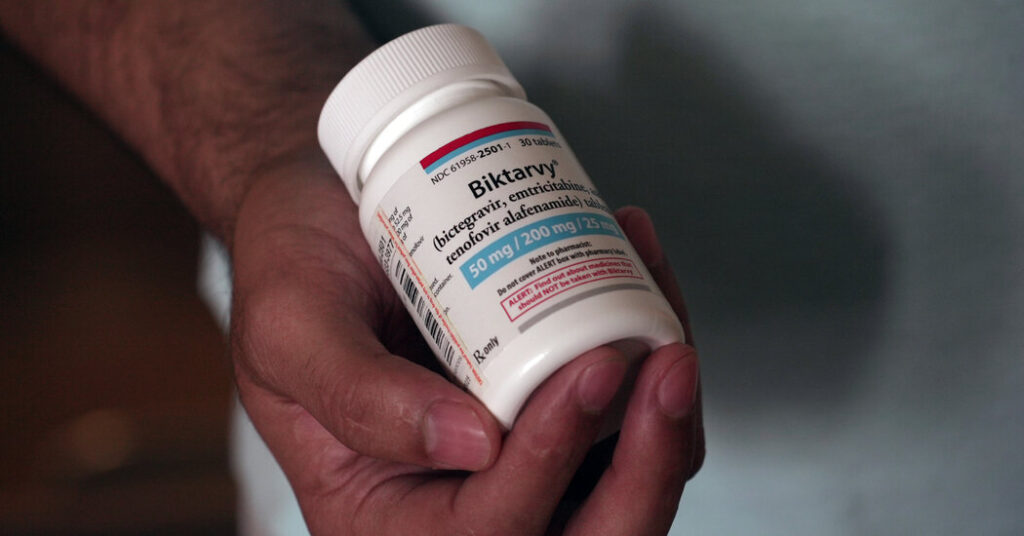
The biggest change took effect in Florida on Sunday, when officials cut off benefits for at least 16,000 residents living with H.I.V. The state also will no longer cover Biktarvy, the most widely prescribed H.I.V. medication.
On Friday, the Centers for Medicare & Medicaid Services opened a special enrollment period allowing Floridians who lose financial support for insurance premiums to choose a new plan. The period ends April 30.
ADAPs support roughly 25 percent of the 1.2 million people living with H.I.V. in the United States. The programs had a 30 percent surge in enrollment from 2022 to 2024, in part because states were removing people from Medicaid after keeping them on during the pandemic.
ADAPs are funded by Congress through the Ryan White federal H.I.V. program. The programs are contending with rising costs as H.I.V. drugs become more expensive even as health care subsidies have expired, sending premiums soaring.
At the same time, funding for the programs has remained flat for more than a decade.
“Effectively, programs are being asked to do more with less federal funding,” said Lindsey Dawson, associate director of H.I.V. policy at KFF.
The financial constraints have led 19 states to take at least one cost-cutting measure, including restricting eligibility by income and reducing the number of medications covered. Five other states are considering changes that would go into effect next month.
More states may consider such measures, as new work requirements drive patients out of Medicaid and increase enrollment in ADAPs, some experts warned.
“We’re expecting to see more states anticipating or contending with budget deficits, and we do anticipate a growing number of states having to implement cost-containment measures,” said Tim Horn, director of medication access at the National Alliance of State and Territorial AIDS Directors.
The alliance began tracking modifications to state programs last fall, when Pennsylvania amended its eligibility criteria for income from 500 percent of the federal poverty level to 350 percent.
The changes will have ripple effects well beyond the communities of people living with H.I.V., some experts said. The cost of thousands of people losing their insurance will have to be absorbed by other parts of the public health system.
H.I.V. medications suppress the virus to undetectable levels, eliminating the chance of spreading the virus to others, so interrupting treatment may lead to an increase in new infections.
Anticipating the loss of medications, some people may try to extend their supplies by alternating days or sharing their pills with others. If the virus replicates in people with only partial protection, it can become resistant to the medications. People living with the virus may then pass the resistant virus on to others.
“This is really an economic disaster, a public health disaster, a moral disaster,” said Esteban Wood, director of advocacy and legislative affairs at the advocacy group AIDS Healthcare Foundation.
The foundation has filed an injunction seeking to halt Florida’s health department from carrying out its ADAP restrictions.
With more than 32,000 clients, Florida’s program is the largest in the country. In January, the state informed members that it was altering income eligibility to 130 percent of the federal poverty level from the previous 400 percent — to an annual income of $20,748 for an individual, from the previous $63,840.
The Florida health department has cited a projected $120 million budget shortfall as the reason for the adjustments, but it has not released details. The department did not respond to a request for comment.
Advocacy groups tried to stop the limits from going into effect, noting that the state had not followed the protocols for changing the rules. On Tuesday, the state filed an emergency rule that would enforce the restrictions beginning on Sunday.
“We’re seeing patients across the state full of anxiety and fear rationing their lifesaving medication,” Mr. Wood said.
“These are people who have no other safety net,” he added. “ADAP is the safety net.”
Apoorva Mandavilli reports on science and global health for The Times, with a focus on infectious diseases and pandemics and the public health agencies that try to manage them.
The post States Move to Limit Access to H.I.V. Treatment appeared first on New York Times.