The French call them “lits froids,” or cold beds — apartments kept vacant most of the year, occupied only when they are rented out during ski season and a few scattered weeks that align with traditional vacation times.
In the ski resort towns of the French Alps, lits froids now make up half of all available beds, said Éric Adamkiewicz, a lecturer in regional development at the University of Toulouse, a public research school. Between Christmas and New Year’s, he said, occupancy briefly surges to 90 percent, and then the lodgings stand empty again.
Jessica Brazeau, 34, and her husband, who live in the small French town of Areches in the northern Alps, have felt the effects firsthand. “In the spring, autumn and most of the summer, half of the houses are empty, shutters closed up,” she said. Rather than being able to rent a home for a full year, the couple has had to piece together housing a few months at a time. “We have had to find a few different places and move rather than being settled in one spot,” she said.
The Alps have long been a destination for winter tourism, filled with legendary ski towns like Chamonix, Kitzbuhel and Val d’Isère. But recently, the resort towns that dot the mountains from Austria to France have reached what people here say is a crisis point, facing changes that threaten their cultures and even survival, as demand for short-term tourist rentals reshapes towns where skiing has traditionally only been part of their identity.
In the early 2000s, many second homeowners in the Alps were still reluctant to rent houses or apartments to strangers. But today, online reservation platforms like Airbnb, Abritel and Booking.com are ubiquitous. In the regions of Savoie and Haute-Savoie, Airbnb offerings have doubled in six years, with 72,000 listings in 2025, compared to 38,000 in 2019, according to data from Inside Airbnb. France is Airbnb’s second-largest market, after the United States.
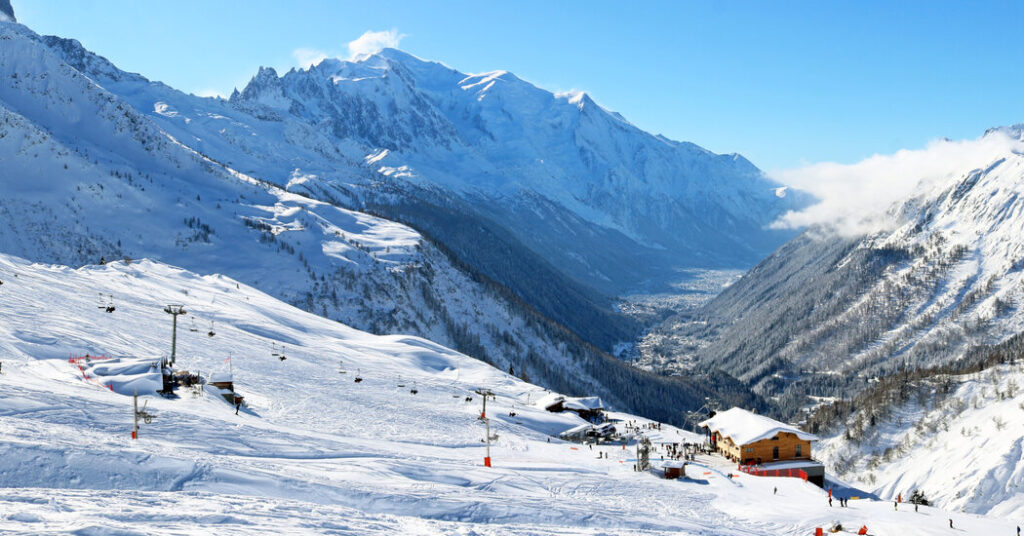
On the other side of Mont-Blanc, in Chamonix, second homes now make up 70 percent of all housing, according the French National Institute of Statistics and Economic Studies. The mountain town has lost 10 percent of its population in the last 25 years, largely because of unaffordable housing prices.
The Americans Arrive
In the past decade, European ski mountains started teaming up with the American-based Ikon and Epic multimountain passholders. Chamonix was the first French ski resort to become part of the Ikon Pass group, in 2022. Megève has since joined, as well as nearby Courmayeur Mont Blanc in Italy. In Chamonix last winter, there was a 32 percent increase in overnight stays from U.S. customers compared with the previous year, according to Nicolas Durochat, the director of the Chamonix-Mont-Blanc Tourism office. The Americans are particularly desirable, he said, because they visit outside of French and European school vacation periods, so they fill hotel rooms and rentals that might otherwise sit empty.
For Jackie Ennis, 28, both affordability and Europe’s skiing tradition were important factors in deciding to travel to Saint Anton to ski this winter with friends.
“The Alps are so steeped in skiing culture and skiing history, Ms. Ennis, a New York-based sustainability solutions consultant, said. “We’re really stoked to try out some röstis and some of these more classic groomed ski runs in Europe. We’re lucky that we have Ikon Passes.”
More recently, Vail Resorts, the American ski behemoth and creator of the Epic Pass, has been buying resorts in the Alps. Vail closed on the purchase of Andermatt-Sedrun in August 2022 and Crans Montana in May 2024, both in Switzerland.
“If Vail Resorts arrives in France, it could drive the market even more upscale,” Mr. Adamkiewicz, the Toulouse researcher, said. “They have a business model and operating methods that we don’t really have here.”
For its part, Vail Resorts, valued at $5 billion, said that the company focuses on maintaining ski resort identity.
“We prioritize enhancing the ski experience over collecting assets, carefully selecting resorts that complement our network while respecting local culture, communities and economic value,” John Plack, Vail Resorts’ senior communications director, said. “Our goal is to enhance these qualities, not change them.”
More Wealth, More Luxury
But as more international clients flock to the Alps, they are changing. Resorts in France are moving toward luxury real estate developments to attract a wealthy clientele, even as winters shorten, Mr. Adamkiewicz noted.
“In the French market, there is a lot of pressure to upgrade and reassure ourselves as we get closer to ‘last resort’ skiing,” he said, referring to the idea that climate change will soon make skiing impossible at some existing resorts. “It’s not North American customers who pose a problem. This issue is upscaling while there’s an increasing scarcity of snow in large resorts,” he said.
Investment companies and holding groups infusing money into luxury accommodations are changing the dynamics in European towns, where lodgings were often in small inns and chalets or modest apartments rented out by local people. Now, many short-term vacation rentals are owned by investment companies or groups, said Valerie Paumier, founder of Resilience Montagne, a French environmental organization focusing on climate change and sustainable development in the mountains. She cites Club Med’s influence in the Alps.
The all-inclusive resort company has been on a push to open new resorts and upgrade existing ones, including in the Alps.
“In addition to construction, Club Med targets a wealthy international clientele,” Ms. Paumier said. “It’s a bit like the driver for other accommodation providers.”
Club Med did not return requests for comment.
American visitors, especially, expect a higher level of luxury, she said. “We’ll have to build to American standards, which means larger apartments and completely different services,” she added.
With travelers coming from far away to ski, there is the added pressure of guaranteeing good snow, despite climate change making winters less predictable. In the Mont-Blanc massif, the snow cover lasts a month less than it did in 1970 at mid-mountain elevations.
Fighting Back
Last March, Chamonix became the first ski resort in France to adopt Loi Le Meur, a law passed by the French parliament aimed at combating the hold of Airbnb and other online platforms. It allows cities where second homes account for more than 20 percent of residences to tax unoccupied second homes and to limit or stop the construction of them in certain zones. The measure also limits private ownership to a single second residence in the valley. Short-term rental properties need official approval from the local government. The resort towns of Bourg-Saint-Maurice and Les Arcs now only allow households to rent out one furnished tourist residence, excluding primary residences, for three years.
Whether the laws have had any effect is hard to tell. The Swiss resort of Verbier passed similar restrictions 13 years ago, but while construction has slowed there, real estate prices have skyrocketed.
Still, the Alps remain a bargain compared to many American resorts. The walk-up price for a lift ticket at a big U.S. resort can now approach $300. Skiers who invest in Ikon or Epic passes pay close to $1,000 and up for passes that include European resorts. In contrast, this year, a one-day ticket at Chamonix is $79, and rates at other top ski areas are similar.
“Logically, the price-to-quality ratio is much more affordable for an American customer,” said Antoine Burnet, the commercial and marketing director for Compagnie Mont-Blanc (which manages the ski areas in the Chamonix Valley). “A week of skiing in Chamonix costs much less than skiing in Colorado or elsewhere.”
A lack of snow in the West for much of this season may also have some people redirecting their ski vacations to Europe.
Beyond that, there’s the cachet of an Alpine vacation. “For skiing enthusiasts, Chamonix is an obligatory stop at least once in their lives,” said Mr. Durochat of the Chamonix-Mont-Blanc tourism office.
Follow New York Times Travel on Instagram and sign up for our Travel Dispatch newsletter to get expert tips on traveling smarter and inspiration for your next vacation. Dreaming up a future getaway or just armchair traveling? Check out our 52 Places to Go in 2026.
The post A Crisis in the Alps: Airbnb, Climate Change and Americans appeared first on New York Times.