President Trump is resurrecting his tariffs, after a Supreme Court ruling that struck down many of those he levied during his first year back in office. This means higher costs for American consumers and businesses and more economic uncertainty.
What’s worse, these new tariffs will enable more preference-peddling on the part of Mr. Trump and his administration, tilting the economic playing field toward large and well-connected businesses. Mr. Trump still has plenty of tariff-setting authorities to exercise, and he has shown that he will play favorites when given the chance.
To some extent, businesses always seek to curry favor with legislators and government officials. But ideally, they would spend little time and money doing so. Pouring resources into lobbying, or potentially even bribery, diverts resources away from productive investments and toward supplication, which can hurt the economy — and change the nature of competition itself. When companies’ profits depend on political connections, smaller firms lose out, and the market can’t adequately reward risk-taking, entrepreneurship and innovation. The overall result is weaker economic growth.
To fight favoritism, Congress has imposed guardrails, such as empowering independent civil servants to make decisions on regulations, enforcement and government contracting; some executive branch decisions are also subject to judicial review. In some areas, though, Congress has delegated flexible authorities to the president, and tariff setting is one of them.
Lobbying increased dramatically when Mr. Trump levied his previous battery of tariffs. Politically connected firms received exemptions, and the dollar amount of tariff exemptions skyrocketed. Before Mr. Trump’s second term, hardly any U.S. imports were exempted from tariffs. By December, 51 percent of imports were exempt. There is now even a tariff “inclusion” process through which firms can lobby for new tariffs on their competitors abroad; the Commerce Department has approved a slew of petitions.
The lobbying will persist. In its recent ruling, the Supreme Court considered only one of the tariff-setting authorities Mr. Trump has claimed. Others give the president wide discretion, too, even if they require more process or come with time limits.
Tariff laws known as Section 232 of the Trade Expansion Act of 1962 and Section 301 of the Trade Act of 1974 require the administration to build a formal case before the president can impose any new tariffs. Senior presidential appointees make these reports. They will almost certainly greenlight the tariffs Mr. Trump wants, and exemption-seeking will continue apace. A study of Section 301 exemptions granted in Mr. Trump’s first term shows that firms connected to the administration or the Republican Party were more likely to be granted exemptions.
Other laws grant sole discretion to the president, such as Section 122 of the Trade Act of 1974, the basis for the tariff Mr. Trump announced after the court’s decision came down. This is the first use of Section 122 authority, so it is unclear how courts will respond to legal challenges, and the tariffs imposed under this law may last only 150 days unless Congress extends them. But the statute still appears to give the president leeway.
Since Mr. Trump retains the final say on whether a tariff is imposed — and who or what is exempted — businesses still have reason to seek the president’s favor. Uncertainty will make companies only more determined to get an inside track.
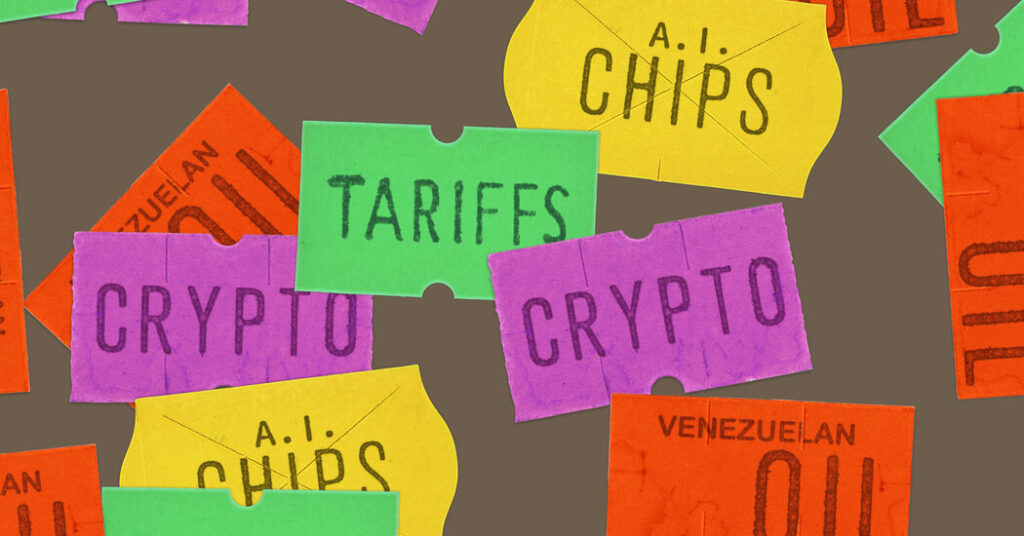
Norms against lobbying and corruption have surely eroded after nearly a year of tariffs and, more broadly, of the pay-to-play dynamics visible across Mr. Trump’s administration. In return for export licenses, the administration has extracted fees from Nvidia in the form of a profit-sharing agreement with the government, seemingly violating a law Mr. Trump signed in 2018 that bans charging fees for such licenses. The administration waived restrictions on exports to the United Arab Emirates just as an Emirati company made a large investment in a cryptocurrency firm owned by the families of Mr. Trump and Steve Witkoff, the president’s special envoy to the Middle East. Both sides have denied any quid pro quo, but the timing of the policy change raises questions.
The administration has struck agreements giving the government ownership stakes in businesses or rights to their profits. Mr. Trump has called for chief executives and corporate board members to be removed and made extortionary demands of law firms, universities, state and local governments and even many foreign governments.
Some administration officials appear to be profiting from their public positions, whether through government contracts, cryptocurrency or even potentially Venezuelan oil. Combined with the Trump administration’s evisceration of white-collar criminal and tax enforcement, the message is clear: Businesses that pay for influence might be rewarded.
Many factors contribute to the longstanding success of the American economy. An essential one is its institutions’ resistance to corruption; economies where corruption is endemic have a poor track record. Mr. Trump’s erosion of the distinction between public power and private gain imperils the foundation of both American prosperity and liberty.
The Supreme Court has done its part, and federal lawmakers need to do theirs. Until Congress reasserts its constitutional authority over tariffs and other policy matters, the institutional decline and corruption enabled by Mr. Trump’s agenda will continue.
Shane Ball is a student at U.C.L.A. School of Law. Kimberly Clausing is a chair in tax law and policy at U.C.L.A. School of Law.
The Times is committed to publishing a diversity of letters to the editor. We’d like to hear what you think about this or any of our articles. Here are some tips. And here’s our email: [email protected].
Follow the New York Times Opinion section on Facebook, Instagram, TikTok, Bluesky, WhatsApp and Threads.
The post The Big Problem With Tariffs Isn’t the Rates. It’s the Corruption. appeared first on New York Times.