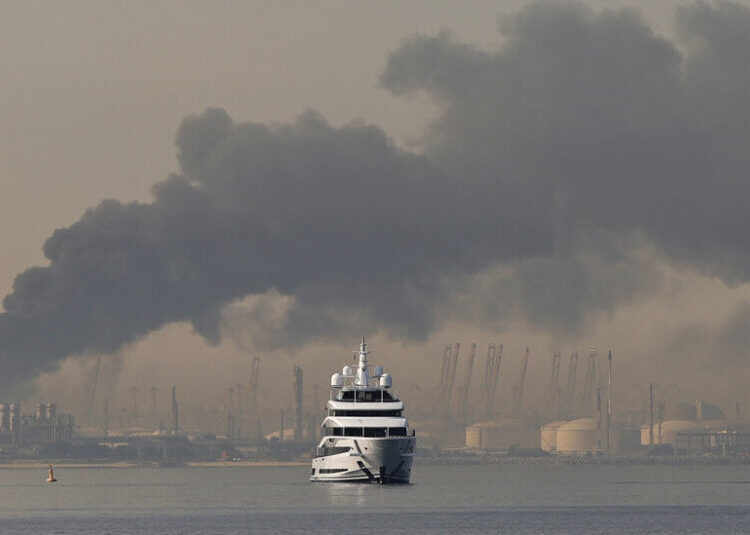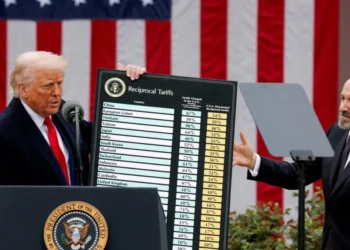
Federal agencies are starting to show signs of strain as the Department of Homeland Security’s shutdown enters its third week and the U.S. assault on Iran raises concerns about a heightened risk of terrorist threats domestically.
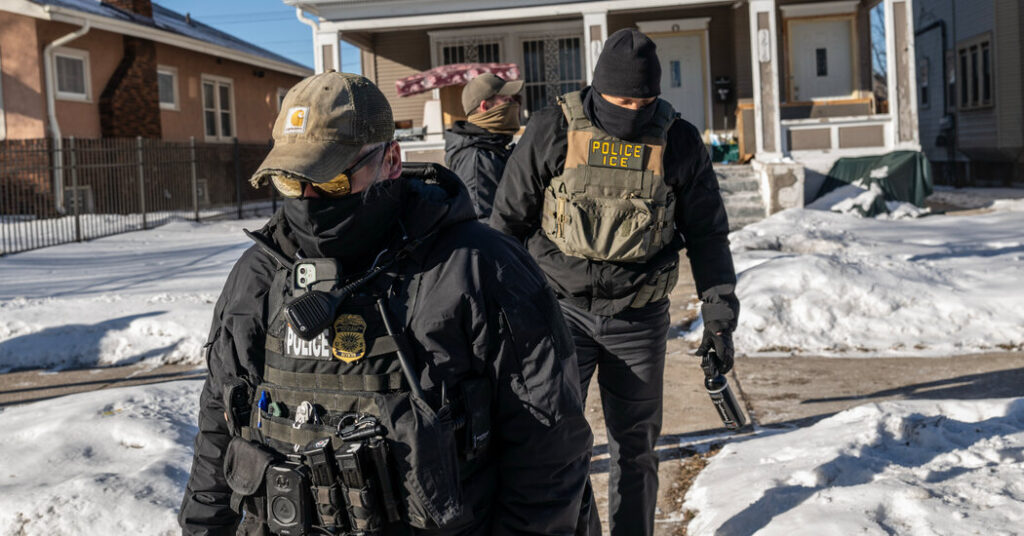
The department is continuing what it calls “essential” missions amid a partisan standoff in which Democrats have refused to fund the department without measures to rein in immigration officers. The funding lapse has had few implications for U.S. Immigration and Customs Enforcement, however, in large part because of the billions of dollars in funding Republicans in Congress approved for the agency last summer.
But funding delays and discontent among federal employees could threaten crucial government services and national security if the shutdown drags on. And cracks are already showing in some corners of the department, including the Federal Emergency Management Agency. Federal officials say money for disaster recovery is draining away, and organizers for cities set to host World Cup matches this summer are waiting for funding to ramp up security.
Over the weekend, Republican lawmakers maintained that President Trump’s military assault on Iran makes it even more critical that federal employees who help keep the country safe, including airport security officers, should not go without pay.
“We cannot afford delays,” Representative Andrew Garbarino, the chairman of the Homeland Security Committee and a Republican of New York, said in a social media post. “We must ensure DHS is operating at maximum readiness to prevent and respond to threats against our homeland.”
Democrats dismissed those arguments, saying they would keep demanding restrictions on immigration agents.
“I don’t have any obligation to fund a Department of Homeland Security that is violating the law every day,” Senator Chris Murphy, Democrat of Connecticut, said on CBS’s “Face the Nation” on Sunday.
Kristi Noem, the homeland security secretary, said in a social media post on Saturday that the department is continuing “to closely monitor and thwart any potential threats to the homeland.”
Thomas Warrick, a former deputy assistant secretary for counterterrorism policy at D.H.S. for more than a decade, said the shutdown should not seriously affect the department’s counterterrorism capabilities for at least several months. But if it is prolonged and employees miss paychecks, they could become distracted from work, he said.
“After a certain amount of time, you start to have friction in the system,” Mr. Warrick said. “People become irritated because they’re not being paid and they’re worried about how to put food on the table.”
Transportation Security Administration officers have grown increasingly frustrated, raising the risk of straining the airport security system if they do not show up for work, according to employee organizations. Those employees, who are considered essential and required to work, started to receive reduced paychecks last week.
“They’re tired of going to work without being paid,” said Johnny Jones, the secretary and treasurer of the American Federation of Government Employees TSA Council 100, which represents about 45,000 TSA workers.
TSA officers worry about how they will afford rent and mortgage payments, and some have taken on side jobs with ride-share services because they are concerned about missing some paychecks, he said.
Many of the effects of the shutdown are already being felt by FEMA, which is housed within the Department of Homeland Security. Federal officials have warned in recent days that FEMA’s disaster relief fund, which is used to pay for both urgent and long-term recovery work, is being “rapidly depleted” amid the shutdown.
Last month, homeland security officials said that FEMA had suspended work on “legacy disasters,” and is instead focusing only on new or recent disasters that require immediate emergency action.
But on Friday, FEMA said it released more than $5 billion in recovery funding for projects, some dating as far back as 15 years. The agency’s disaster relief fund had roughly $10 billion at the end of January, according to a FEMA report. The release of the money led Democrats to accuse the Trump administration of seeking to deplete FEMA’s reserves to pressure them to buckle on their demands.
“It’s clear she’s rushing to spend down what’s left of the Disaster Relief Fund to force Congress’s hand in funding negotiations because she refuses to make any changes to how ICE and CBP operate in our communities,” Representative Bennie Thompson of Mississippi, the top Democrat on the Homeland Security Committee, said of Ms. Noem in a statement.
Victoria Barton, an agency spokeswoman, said FEMA was moving quickly to “get recovery dollars to communities,” and that decisions were not based on political considerations.
“FEMA will continue to prioritize lifesaving and life-sustaining operations, but without additional funding, our ability to respond to new disasters will be severely impacted, ” Ms. Barton said in a statement.
In recent months, a bottleneck of disaster spending under review had reached as much as $17 billion, according to internal documents reviewed by The New York Times.
The suspension of some FEMA activities is affecting recovery work that continued in previous government shutdowns. Funding for those activities comes from a pot of money that is separate from day-to-day government operating expenses.Last month, FEMA halted travel for employees who were not working on “active disasters” until the shutdown ends.
Emily Montanez, a spokeswoman for the Office of Emergency Management in Los Angeles County, said FEMA’s suspension was a “frustrating development and highly disappointing” as the county continued to recover from the January 2025 wildfires.
Organizers representing cities hosting FIFA World Cup matches this summer also said that delays in federal funding could impede their preparations. FEMA is supposed to provide $625 million for host cities to build up security ahead of the tournament.
Raymond Martinez, the chief operating officer of the Miami host committee, said at a congressional hearing last week that the city had not received funding from the program. Miami is set to host seven matches, with the first scheduled for June 15.
“Without receiving this money, it could be catastrophic for our planning and coordination,” Mr. Martinez said.
Some Democrats pointed out that funding for the program was already held up before the shutdown began.
Catie Edmondson contributed reporting.
Madeleine Ngo covers immigration and economic policy for The Times.
The post Republicans Cite Iran Attacks to Pressure Democrats on Shutdown appeared first on New York Times.