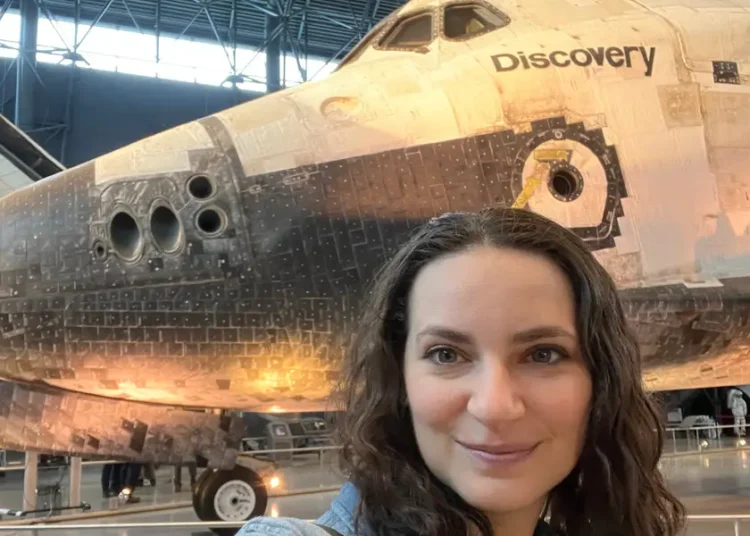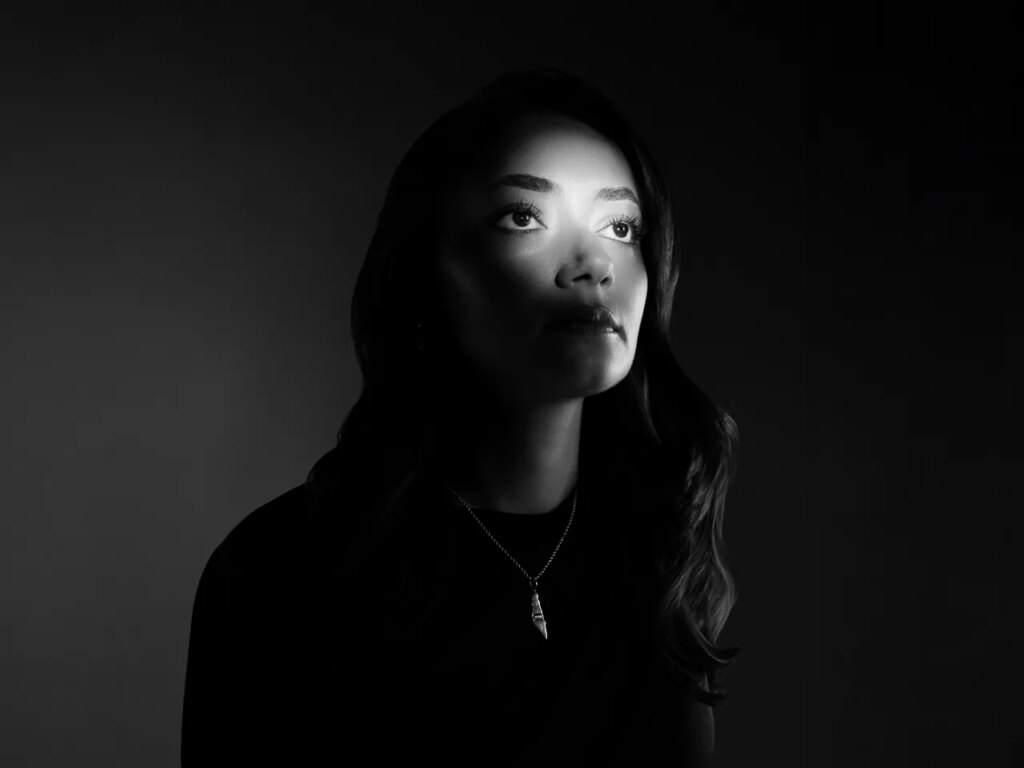
Plestia Alaqad is known to millions of people as an image on a screen: a young Palestinian journalist in a press vest and helmet, standing amidst the destruction of Gaza, speaking to the camera in between airstrikes. She is one of many.
The burden of witnessing and reporting events in Gaza has been almost exclusively carried by Palestinian journalists, as Israel has barred international journalists from entering the territory and reporting on the war since October 2023. In limited cases, journalists have been allowed to enter under controlled conditions, escorted by the Israeli army.
Reporters like Alaqad began reaching millions of people through social media, which has been widely credited with turning the tide of opinion outside of the Middle East. “I believe everyone now knows how powerful social media is, and we’ve seen that firsthand in the genocide that is happening in Gaza, in Palestine,” Alaqad says. “It’s because of us citizen journalists reporting on what’s happening using social media.”
Nearly two years after clashes reignited, with 72,045 Palestinians killed according to local authorities, an independent UN commission of inquiry concluded that Israel has committed genocide in Gaza, a finding that the Israeli foreign ministry has dismissed as “distorted and false.” Alaqad says the situation is not only about Palestinians, but about what kind of world people are willing to accept. “What’s happening in Iran, in Congo, in Sudan shouldn’t be accepted, because none of us should be OK to live in a world where violence exists.”
In Iran, a media blackout instated on January 8, 2026 has affected 90 million people, leaving locals disconnected from the rest of the world amid a wave of mass protests across the country. “There was near total shutdown of all forms of communication: internet, Wi‑Fi, phone connections, phone calls,” says Jonathan Dagher, who heads the Middle East desk for Reporters Without Borders. “The tools that journalists in Iran were already used to using [to bypass restrictions], even those tools were down.”
Iranian Foreign Minister Abbas Araghchi told media in January that the blackout was instated “after we confronted terrorist operations and realized orders were coming from outside the country.”
Protestors are relying on illegally operating Starlink terminals to share videos globally, but the lack of coverage and clear communication has made it difficult to verify the death toll from the ensuing government crackdown, with estimates ranging from 3,000 to 30,000 dead.
Alaqad says that because traditional media outlets pick and choose what to show their audiences, losing on-the-ground journalists means losing parts of the truth. “When the people are being silenced and censored, and they don’t have a space for them to talk or a platform to express what’s happening, and for us to see what’s happening through their eyes, there will always be limitations [on] how much we know,” she says.
In every crisis, when communication breaks down, accountability is lost and injustice becomes easier to ignore. “Injustice is super loud,” Alaqad says. “Justice needs to be louder.”
Targeted
Journalists are also silenced permanently. Reporters Without Borders (RSF) wrote in December 2025 that 67 media professionals were killed that year, 43 percent of whom were killed in Gaza by Israeli armed forces. The total number of journalists killed in Gaza since October 7, 2023 has risen to over 220, according to the RSF. The UN estimate sits at more than 260.
“When we look at it within the framework of imposing a ban on the foreign press entering Gaza now, more than two years into that war, when they are restricting the free movement of journalists within Gaza and into Gaza, when we are talking about an unprecedented massacre of journalists, the targeting of media offices and the targeting of communication infrastructure just becomes another piece of that puzzle, which aims at imposing a media blackout,” Dagher says. Israel has repeatedly denied claims that it targets journalists or media infrastructure.
“Killing journalists means killing and silencing the truth,” Alaqad says. In her experience, this strategy works on multiple levels—killing journalists means fewer people reporting on the ground, but equally, it turns journalists into a threat to the people. “This is also sending a message to the people that all journalists are a threat, don’t talk to journalists, stay away from journalists,” she explains.
She recalls her mother begging her not to wear her press vest and helmet. Meant to signify neutrality and protect journalists in the field, instead, it made her feel like a target. “It’s supposed to protect, but on the contrary, it actually puts risk on your life and even on your beloved ones and the ones around you,” she explains.
Alaqad says it was not always this way. Early on, people would greet journalists, offer them food, and thank them for their work. “After a couple of months, when they’d seen journalists getting targeted, Palestinians started treating journalists differently,” she says.
To report in Gaza was to work inside a landscape where time itself was unstable and not guaranteed. Plans rarely extended beyond daylight. Conversations ended abruptly. Addresses became memorials overnight. “The only certainty in Gaza is uncertainty,” Alaqad says.
She recalls interviewing families and planning to return the next day, only to find that the people she spoke with had been killed in airstrikes.
She has since left Gaza, and is pursuing a master’s degree in media studies at the American University of Beirut. She received the Shireen Abu Akleh Memorial Endowed Scholarship, named for the Palestinian journalist killed by Israeli forces in May 2022.
Digital Truths
Going viral on social media helped her reach people, but it also put her at risk. “It showed millions of people around the world what’s happening in Gaza, but at what cost? Being in Gaza could cost you your life, especially as a journalist,” she says.
Despite the reach of digital reporting, she does not trust its permanence. Accounts disappear, posts are removed and videos are lost. What is available today may be gone tomorrow.
This makes digital reporting both powerful and precarious. When access exists, it can bring audiences closer to lived reality. When it is cut, as in Iran’s blackout, whole crises risk slipping into uncertainty. “What this looks like practically is that we are hearing information about massacres happening in Iran, but we don’t have any way of getting numbers, getting testimonies, getting photos, getting footage,” Dagher says.
Without images and testimony, even large-scale violence can remain unverified, contested, or ignored. “We lose the voices on the ground, and we lose the truth,” Alaqad says.
She is skeptical of mainstream media outlets, which have their own editorial agendas, picking and choosing what gets covered. Meanwhile, social media posts are subject to moderation and opaque algorithms. Social media tools, Dagher says, “are not outside of any form of political control. These are still tools in the hands of powerful people with political and financial interests.”
But it is better than nothing. “At the end of the day, I believe the power of the people is far more powerful than any algorithm or censorship,” she says. “Because if the people choose that this message will go viral and everyone will see it, they will keep sharing it.”
This visibility, she says, is only meaningful if it does not come at the cost of authorship. “I want us to talk about us,” Alaqad says. “Not people speaking over us.”
Still, she believes everyone should talk about what is happening, no matter where they are from. “It’s good to have people from different nationalities amplifying our voices, but not speaking or replacing our voices,” she says. “I really want future generations to read about the genocide through the eyes of those who lived it.”
She does not exempt herself. “When I was in Gaza, I had access, I was on the ground, reporting firsthand what I [was] seeing,” Alaqad says. “But right now, judging that I’m not physically there, I always make sure to talk to people and to amplify their voices and to give them that space, not to speak over them.”
Narratives amplified online do not always vanish into the feed; sometimes, they materialize in unexpected places. She recalls visiting a small town in Switzerland, where she complimented a woman wearing a kuffiyah. The woman, not recognizing her, explained its meaning. Testimony travels, turning an image on a screen into a story carried across borders.
“These small moments, they do give me hope,” Alaqad says.
This story originally appeared on WIRED Middle East.
The post When the Internet Goes Dark, the Truth Goes With It appeared first on Wired.