Oil prices rose in Asia on Monday as investors reacted for the first time to the U.S. and Israel-led conflict in the Middle East. Japan’s Nikkei 225 stock index, which has been on a months-long tear, was down more than 2 percent in early trading.
Brent crude, the global oil-price benchmark, rose above $78 per barrel in Tokyo, up almost 8 percent. The move confirmed fears that even a short military operation — or war — in the region would drive oil and U.S. gasoline prices higher. But investors were largely sanguine about the short-term outlook.
“I suspect it won’t be the worst-case scenario,” Mark Matthews, head of Asia research for Julius Baer, a financial services firm, told Bloomberg Television.
The conflict’s consequences will depend on how long it lasts and how far it spreads. Rising oil prices are just the start. Shipping disruptions could make other goods more expensive, too, hitting American pocketbooks and derailing expectations of an acceleration in U.S. economic growth.
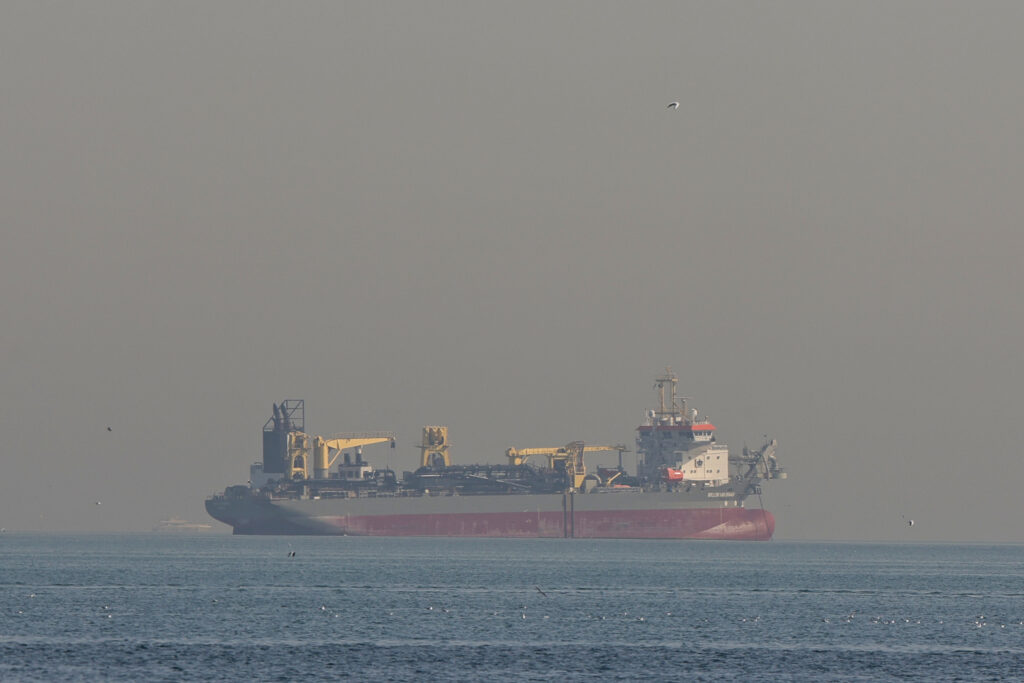
At least three vessels came under attack near the Persian Gulf on Sunday, according to the U.K. Maritime Trade Operations Center, which monitors high-risk waterways in the region. Most traffic through the narrow Strait of Hormuz has ceased, one day after Iran’s Revolutionary Guard Corps said it closed the channel shortly after U.S. and Israeli strikes on Iran began.
In an interview with Al Jazeera on Sunday, Iranian Foreign Minister Abbas Araghchi denied any intention of closing the strait or disrupting navigation.
Still, the obvious physical danger, plus rising maritime insurance charges, are discouraging carriers from attempting the transit — and imperiling the smooth flow of energy products. About one-fifth of the world’s seaborne oil trade passes through the strait.
More extreme developments that interrupt the flow of oil from Iran and its regional neighbors, including Saudi Arabia, Iraq and the United Arab Emirates, could send prices soaring into triple digits.
A sustained conflict could also rattle Wall Street, denting the investment gains that Trump bragged about in Tuesday’s State of the Union address. U.S. stocks are at historically high prices relative to corporate earnings. Share values have wobbled in recent sessions amid fears that artificial intelligence companies may be overvalued. Many investors expect a sell-off when trading resumes Monday.
Disruptions to the oil and stock markets could mean “suddenly you’ve got gas prices up and 401(k)’s down,” said Neil Shearing, chief global economist for Capital Economics in London.
That outcome would complicate the administration’s efforts to demonstrate progress on voters’ affordability concerns before they choose members of the next Congress. Trump has claimed he lowered the cost of living, but 65 percent of Americans disapprove of his handling of inflation, according to a Washington Post-ABC News-Ipsos poll taken earlier this month.
Global container shipping already has been affected by the fighting, which could make many consumer and industrial products more expensive in the Persian Gulf region and possibly beyond. Within hours of the first U.S. attacks, Hapag-Lloyd, one of the world’s largest cargo carriers, said it was suspending all transits through the Strait of Hormuz.
On Sunday, the German carrier said it would introduce a “war risk surcharge” on containers shipped to and from the Persian Gulf. “The dynamic situation around the Strait of Hormuz and the necessary operational adjustments are causing disruptions throughout the network, which will impact schedules and equipment supply,” Hapag-Lloyd said.
Most major ocean carriers will follow Hapag-Lloyd’s lead, said Jan Tiedemann, a shipping analyst with Alphaliner in Hamburg.
Some carriers that had recently resumed sailing through the Red Sea bound for the Suez Canal will also likely stop doing so until the situation stabilizes, he said. The Iran-backed Houthi regime in Yemen may support its allies in Tehran by resuming attacks on shipping in the strategic Bab el-Mandeb strait, which the group suspended last year.
The outlook for broader shipping turmoil depends upon the length of the fighting. Protracted attacks would likely cause extensive disruption in container shipping, leading to congestion at ports in Oman, Sri Lanka, Malaysia and Singapore, according to Lars Jensen, CEO of Vespucci Maritime, a Copenhagen-based consultancy.
“Congestion in key hubs could even lead to rate increases on trade not directly going to/from the Gulf,” Jensen said via email.
Before the U.S.-Israeli offensive, the global economy was poised for steady growth. In January, the International Monetary Fund predicted that global output would expand this year by 3.3 percent, matching last year’s pace.
In the U.S., the Federal Reserve recently upgraded its outlook, forecasting a pickup in growth and continued gradual progress on inflation. Gross domestic product should rise at an annual rate of 2.3 percent, up from 1.7 percent last year, according to the median forecast of central bank policymakers.
Inflation, which is now running at an annual rate of 3 percent, exceeding the Fed’s price stability target, was expected to cool to 2.5 percent by year’s end.
Higher oil prices could prevent that. Oil supplies were unscathed during last year’s limited U.S. airstrikes on Iran. But with the death of Ayatollah Ali Khamenei, Iran’s supreme leader, authorities in Tehran now may see no reason for restraint.
U.S. stocks have risen steadily for several years despite geopolitical risks, including wars in Ukraine and Gaza and political tumult in the United States. War with Iran could mark an end to such investor complacency.
“We’ve all grown numb when it comes to these wars and geopolitics,” said Carsten Brzeski, chief economist for ING Germany in Frankfurt. “It would be a surprise if we don’t see at least a short-lived [10 percent] correction.”
The post Markets begin to react as Trump’s attack on Iran risks hitting American pocketbooks appeared first on Washington Post.