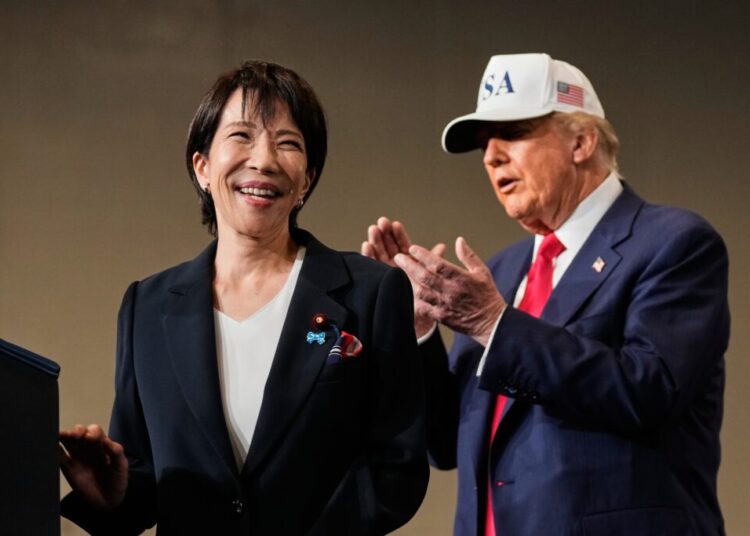
President Trump is being criticized from many quarters for his decision to join Israel in a war to topple the Iranian regime, which on Saturday yielded the killing of the supreme leader, Ayatollah Ali Khamenei. The reasons vary.
It’s “a betrayal of the American people,” says Elizabeth Warren, who warns that the intervention risks dragging “yet another generation into a forever war.” It’s a betrayal of MAGA principles, says Marjorie Taylor Greene, who denounced Trump for putting “America last.” It’s unconstitutional, according to the American Civil Liberties Union, because it’s being conducted without authorization from Congress. It’s unnecessary, according to the writer Andrew Sullivan, who (quoting me, albeit misleadingly) thinks that Iran isn’t much of a threat and the war is being waged for Israel’s sake.
And so on. But one country where the United States and Israel are garnering broad support is the same country that’s being bombed.
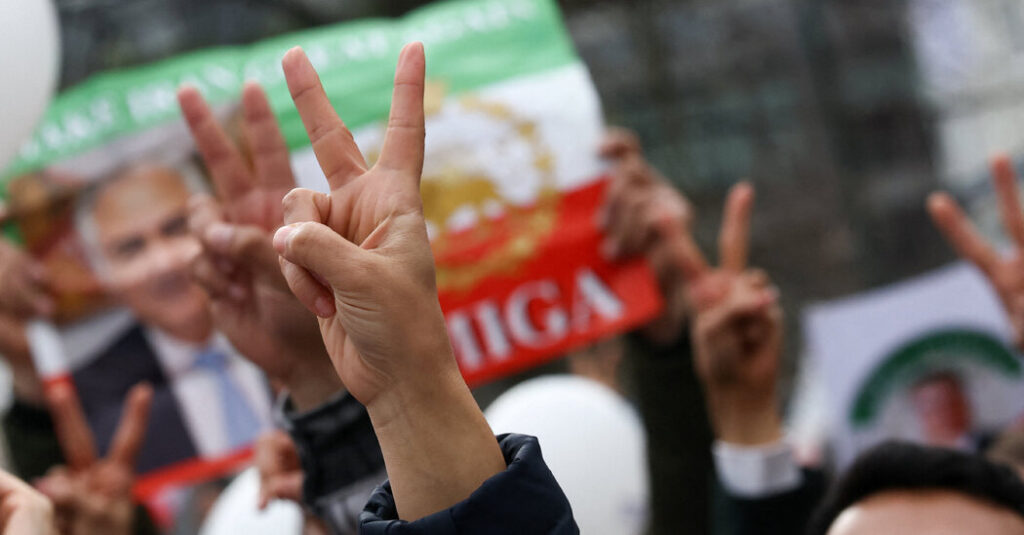
“Everyone is joyful, it is one of the best days of probably 95 percent of Iranians’ lives,” one Iranian resident of the city of Karaj told The Wall Street Journal about Khamenei’s death. “We bolted outside and shouted from the top of our lungs and laughed and danced with our neighbors,” a woman in Tehran named Sara told The Times. A doctor who lost his son when the Islamic Revolutionary Guards Corps mistakenly shot down a Ukrainian passenger plane in 2020 wrote on social media, “We will endure the winter, spring is near.” In the city of Shiraz, videos showed people “joined together in a cheer that is typically reserved for weddings, symbolizing pure joy.”
It is also true that scores of civilians have been killed, and there was public mourning for Khamenei. But those mourners didn’t have to emerge under the threat of the regime’s guns.
There was a time when American hearts could be moved by moments like these — when free nations, having endured years of provocations and attacks from tyrants, band together to administer justice and supply hope. We’re a different country now, less naïve but considerably more pessimistic and cynical, and thus likelier to ask: What’s in it for us?
Let me try to answer that question.
First, it’s a mistake to say that Trump got America into war on Saturday. What he did was respond to a war that Iran has been waging against the United States since 1979.
It waged war when it seized our Embassy in 1979, murdered (via proxy) hundreds of our service members in Beirut in 1983 and supplied the I.E.D.s that killed or maimed over 1,000 of our troops during the war in Iraq. It waged war when it sought to assassinate former senior U.S. officials, including John Bolton, Mike Pompeo and, according to a 2024 report in Politico, Trump himself. One reason Iran behaved as it did is because it drew the lesson that it would pay no great price. No more.
Second, Tehran had an opportunity to change course last June, after its 12-day pummeling by Israel and an overnight strike by the United States. Instead, it set out to begin reconstituting its nuclear capabilities while rapidly rebuilding the missile force that is now terrorizing civilians in Tel Aviv, Dubai, Manama and Riyadh, and targeting U.S. military assets in the region.
Would the United States, the Arab world or Israel have been safer if we had waited a year or two for Iran to build several thousand more missiles? Or after Russia had supplied the regime with thousands of advanced shoulder-fired air defense missiles, as The Financial Times reported last week that it had agreed to do?
Third, Iran does not exist in a geopolitical vacuum: With Moscow and Beijing, it is a core member of the axis of autocracies that threaten the democratic world broadly.
The same liberals who fault Trump for not vigorously opposing Vladimir Putin should at least consider that it’s Tehran that has given Russia the drones and drone technology that have destroyed so much of Ukraine. And the same conservatives who fault Trump for diverting military resources away from the Pacific for the war in Iran should also note that Iran covertly supplies China with much of its oil as part of a promised 25-year, $400 billion strategic partnership. If Tehran falls out of the axis, our remaining adversaries can only be weaker.
Fourth, it is impossible to imagine anything like Mideast peace without the end of this regime.
It isn’t simply that Iran has been the principal backer of the so-called axis of resistance that includes every terrorist group that sought to wipe Israel off the map. It’s also that no Israeli government will ever agree to a Palestinian state that could fall into Iran’s orbit. Paradoxically, the government of Prime Minister Benjamin Netanyahu will face a much tougher time fending off international pressure for Palestinian statehood if the Tehran regime falls and Saudi Arabia offers peace with Israel.
Fifth, even if the United States and Israel don’t force regime change in Iran, they can achieve strategically significant goals.
The United States is stronger when anti-American dictators have solid reasons to fear our wrath: It restores deterrence and, in doing so, makes diplomacy more effective. Israel and the Arab world are safer when Iran is weaker: Notice that, at least so far, Hezbollah, fearing for its position in Lebanon, has not joined the war against Israel. Finally, even if the regime doesn’t fall, it will be under heavy internal pressure to modify its behavior as a pragmatic concession to reality, much as Venezuela has under Delcy Rodríguez, its (hopefully) interim president.
That may not be the optimal outcome. But it’s considerably better than what came before.
Finally, the United States and Israel have taken considerable military and political risks to do the right thing. And that’s no small thing.
They have rid the world of an odious tyrant, and of several layers of his equally odious deputies. It’s odd that the same people who fault Trump for divorcing U.S. foreign policy from its democratic values now fault him for going to war for the sake of advancing democratic values. Still, millions of ordinary people around the world — not just in Tel Aviv or Tehran or Tehrangeles but also, perhaps, in Taipei and Tallinn — will notice that the United States, for its many warts, still stands for freedom.
My column has never been shy about denouncing either Trump or Netanyahu. It won’t be shy to criticize them in the future. But on Saturday this much-maligned duo did the free world a courageous and historic favor. It will be remembered long after the petulant criticism dies down.
The Times is committed to publishing a diversity of letters to the editor. We’d like to hear what you think about this or any of our articles. Here are some tips. And here’s our email: [email protected].
Follow the New York Times Opinion section on Facebook, Instagram, TikTok, Bluesky, WhatsApp and Threads.
The post Trump and Netanyahu Are Doing the Free World a Favor appeared first on New York Times.