This story appeared in Today, Explained, a daily newsletter that helps you understand the most compelling news and stories of the day. Subscribe here.
Finland made international news earlier this month for a disappointing near miss: Its men’s hockey team looked ready to prevail in the Olympic semifinals, until a (literal) last-minute goal gave Canada the win.
Nearly 100 years ago, it had a different kind of near miss — a democratic one, in which the country almost slipped into fascism, but ultimately recovered.
Modern Finland was established in 1919, after a bloody civil war between socialist “Reds” and conservative “Whites.” Even after the Whites prevailed, a deep fear of communism persisted. By the end of 1920s, it had coalesced into a far-right, authoritarian faction called the Lapua movement — named for a violent clash in the town of Lapua between local farmers and a communist youth group.
The Lapua movement gained widespread populist support across Finland, drawing in not only far-right radicals but also moderate center-right politicians, professionals, bankers, and prominent industrialists who hoped to benefit from the movement’s popularity. In the summer of 1930, some 12,000 Lapua members marched on Helsinki in a demonstration modelled after Benito Mussolini’s 1922 March on Rome, which brought fascists to power in Italy.
The Helsinki march didn’t topple Finland’s democratic government. But it didn’t really have to. The ruling conservative party was sympathetic to the Lapua movement, and in the wake of the march it passed a number of undemocratic “reforms” designed to limit the speech and political participation of Finland’s communists.
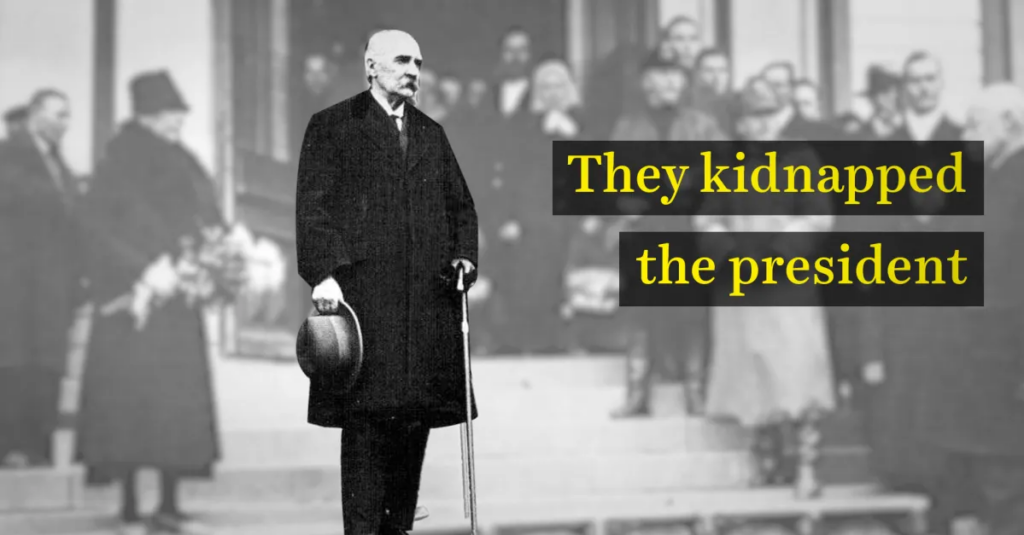
Extremists in the movement still weren’t satisfied, however — and their attacks on Finnish democracy grew increasingly violent. They became known for symbolic political kidnappings in which they snatched political rivals from their homes and dumped them at the border with the Soviet Union. In 1930, Lapua radicals even kidnapped former president Kaarlo Juho Ståhlberg, the first democratically elected head of the Finnish republic.
That escalation, in particular, alienated many of the moderate and center-right figures who had previously allied themselves with the far-right movement: It “went against the sense of decency of most of their supporters,” said Oula Silvennoinen, a researcher at the University of Helsinki, in an interview with Vox’s Nate Krieger.
Finland’s far-right wasn’t quite finished yet, however. Two years later, in 1932, they attempted to launch an armed attack on the capitol from the nearby town of Mäntsälä. They called on the country’s civil guard — an auxiliary force that had been sympathetic to the anti-communist cause — to join their uprising against the central government.
Instead, most members of the civil guard stood down, while judges and — importantly — mainstream conservative politicians moved to marginalize the radicals. Finland’s conservative president, who had previously been considered a darling of the Lapua movement, declared a state of emergency, demanded the arrest of the movement’s leaders, and broadcast a nationwide radio appeal ordering its members to return home.
“Throughout my long life, I have fought to uphold the law and justice,” he said. “And I cannot allow the law to now be trampled underfoot.”
The movement fizzled out entirely within a few years, and — by 1937 — a stable center-left coalition had secured power in Finland. Today, it is the only country to score a perfect 100/100 on Freedom House’s political rights and civil liberties index. (The US, by comparison, scored 84 last year, and Canada scored 97.)
Silvennoinen stressed that the Finns aren’t outliers here. “We remember the fascists of Italy and the Nazis of Germany, but in reality almost every European country had their own far-right movements and organizations … and almost all of them failed,” he said.
Finland’s story suggests that — even fairly late in the game — democracy can win. But only if the politicians who stand to benefit from extremism refuse to enable it. Watch Nate’s full story here.
This story was supported by a grant from Protect Democracy. Vox had full discretion over the content of this reporting.
The post How Finland defeated fascism appeared first on Vox.