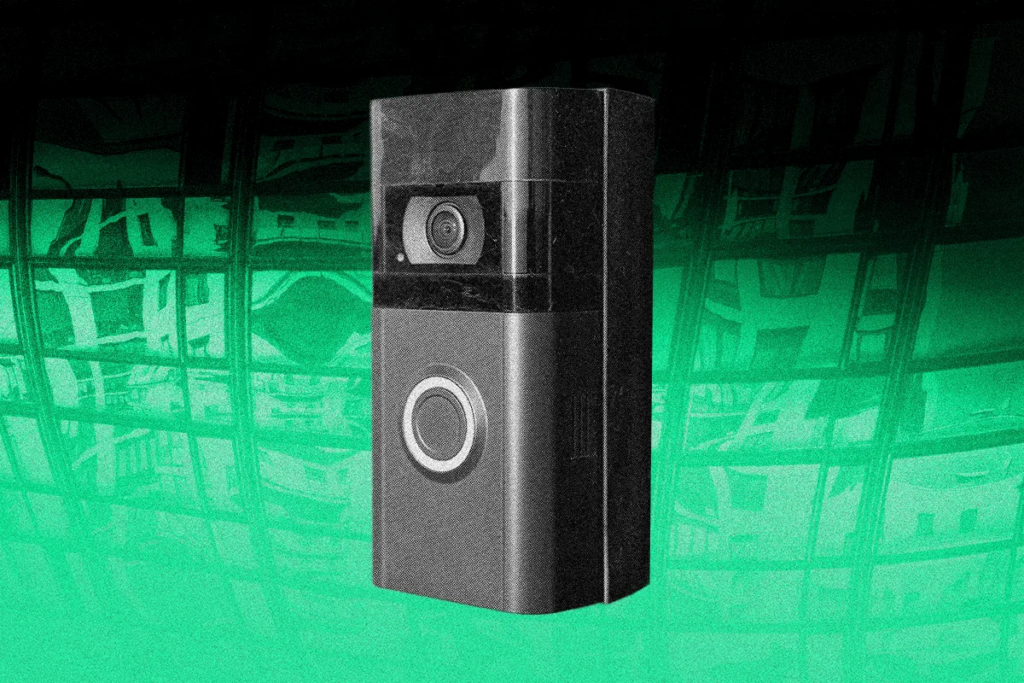
Maybe you bought a video doorbell to make sure you don’t miss the pizza arriving or to avoid getting out of bed for door-to-door sales reps. What you didn’t bank on was that your home security system might be turned into a tool of the surveillance state. Video doorbells have been in the news a lot lately, from Ring’s creepy Super Bowl ad to the retrieval of Nest doorbell footage in the Nancy Guthrie case, and people are beginning to ask: Where is my video going, who might use it, and for what?
I have expert advice for you on how to protect your privacy and the privacy of other folks in your neighborhood, and what your rights are with regard to video requests from law enforcement. I’ll also highlight the best video doorbells to use and how to set them up in a privacy-conscious way.
Ring Rinse Repeat
We have a complicated relationship with Ring here at WIRED. We stopped testing its doorbells and cameras for our buying guides in 2022, briefly resumed following a policy change, and recently reinstated our ban last year over concerns about the data it collects, how that data is shared, and its partnerships with law enforcement. The company has repeatedly announced deals to make video more accessible to law enforcement and then canceled them after public outcry. But the furore surrounding the Super Bowl ad, which shows a network of Ring cameras across a community using AI to track a lost dog, hit new heights.
Senator Ed Markey urged his fellow Americans to “oppose this creepy surveillance state.” Privacy expert Chris Gilliard described the ad as “… a clumsy attempt by Ring to put a cuddly face on a rather dystopian reality: widespread networked surveillance by a company that has cozy relationships with law enforcement …” in a 404 media piece.
Perhaps the funniest response came from a parody video featuring rival company Wyze cofounder Dave Crosby saying, “We could use this technology to find literally anyone, but we only use this technology to find lost dogs.”
It didn’t take long for Ring to announce its Flock partnership was off.
“I would not be ready to declare Ring harmless because the company has called off a potential partnership with Flock Safety,” Dr. Matthew Guariglia, Senior Policy Analyst for the Electronic Frontier Foundation (EFF), told WIRED. “People need to realize that all these police devices and data streams are incredibly interoperable. Axon, the maker of a huge percentage of police body-worn cameras and a popular operating system for fusing all police surveillance, is making a tool to let police request Ring footage, so the fight continues, despite some feeble PR maneuvering.”
When I asked Ring founder, Jamie Siminoff, about this in September last year, he was bullish, “There is no access that we’re giving police to anything other than the ability to, in a very privacy-centric way, request footage from someone who, by, the way, wants to do this because they want to live in a safe neighborhood.”
What Are the Risks?
Even with the best of intentions, how video footage is shared and used is unpredictable, and when networks of cameras are combined, there’s a serious threat to personal privacy.
“You might not mind walking past one camera that verifies where you were at a particular place at a specific time, but think of what these cameras might catch in aggregate—a person’s entire day seen through hundreds of interconnected cameras,” says Dr. Guariglia.
There’s also the risk that footage falls into the wrong hands and ends up enabling politically-motivated investigations, police harassment, or stalking without you intending or even knowing about it. Maybe company employees or third-party contractors gain access to videos, or your cameras are hacked. Amazon settled a privacy lawsuit brought by the FTC that mentioned both scenarios a few years ago.
More recently, ICE has been tapping into Flock’s automatic license plate reader (ALPR) cameras across the US, according to 404 media. What might it do with access to video doorbells?
Then there are doorbell owners. Camera footage is frequently shared online without the knowledge or permission of the subject. People on neighborhood networking apps and social media groups post videos of supposedly suspicious characters. Unfortunately, these suspicions are often subject to their prejudices, and racial profiling can be a real problem, as this research suggests. But, provided footage is captured in a public place, it’s perfectly legal to share it.
“Recording into windows, fenced backyards, or other private spaces on your property may be an invasion of privacy,” Emile Ayoub, senior counsel in the Brennan Center’s Liberty and National Security Program, explained to WIRED. “But footage that captures public-facing sidewalks or driveways likely won’t have the same protection.”
So, What Are Your Rights?
The law is straightforward when it comes to the police.
“Unless presented with an official request via a warrant or other court order, users are not required to share their footage with law enforcement,” says Ayoub. ”Certain providers allow law enforcement to post on community message boards seeking footage from users. You can ignore or decline those requests.”
If your video footage is stored in the cloud, rather than on your device, law enforcement can compel companies to hand it over, he explained. Typically, law enforcement must obtain a warrant or similar court order, depending on the type of information they seek. But there are exceptions to the warrant requirement in the case of emergencies, such as an imminent danger of death or serious physical injury.
According to their privacy policies, providers like Ring and Nest will notify users about data demands from law enforcement, unless they are prohibited by law from doing so. Of course, no one reads the privacy policy before they set a doorbell up.
“This is one of the scariest things about the rapid privatization of police surveillance,” says the EFF’s Dr. Guariglia. “As more evidence begins its journey as corporate data, the public has less and less power to figure out what happens to your information inside the company, if they require a warrant, what their relationship is like with police, and whether your data has been turned over.”
How to Safeguard Your Video Doorbell Footage
There may be a $10K bounty awaiting anyone who can hack Ring cameras to stop sharing data with Amazon, but there are easier and quicker ways to safeguard your video doorbell footage. Getting rid of your doorbell altogether is the simplest way to put privacy concerns to bed, but if you find them useful, you could always just avoid cloud services.
“Own your data,” says Matt Sailor, founder of global digital surveillance manufacturer IC Realtime. “There’s no need for other people to have your data.”
Pick a doorbell that only records locally, or opt out of cloud video storage. Some devices have onboard storage, but a system that connects to an indoor DVR via Ethernet is more secure as it makes the data harder to get at and bypasses Wi-Fi, which is relatively easy to scramble. That immediately rules out some of the best video doorbells I recommend, but that guide is based on how well they work. Luckily, there are some good local-recording video doorbell options.
Reolink’s doorbell supports Power over Ethernet (PoE), so you could record locally to a device inside. Wired doorbells are also generally more responsive and reliable than their wireless counterparts.
You might also consider doorbells from Eufy, such as the Eufy Video Doorbell E340 ($220), or maybe something from TP-Link’s Tapo range. I’ll be seeking out and reviewing more local storage options in the coming weeks.
Whatever doorbell you choose, check that you are not automatically enrolled in any footage-sharing programs. Sailor suggests combing the fine print on any freemium deal, not because people will be watching your video feed, but rather because these tech companies will be using your data to train their AI and improve their devices. “They have algorithms that are learning from your behaviors.”
Using the cloud isn’t always a bad thing, Sailor tells me. It can build redundancy and greater security into your system, mitigating the risk of a determined intruder breaking in and stealing physical footage. Just make sure that you opt for cloud storage that is end-to-end encrypted, so only you can access your video.
You can use Aqara’s doorbell with Apple’s HomeKit Secure Video. Provided you have an iCloud subscription and a home hub (HomePod or Apple TV), it will encrypt your video before sending it to the cloud, so even Apple can’t access it. But there are pros and cons to HomeKit Secure Video.
Video Doorbell Privacy Tips
If you have a smart doorbell or you plan to install one, here are a few tips to preserve your privacy and the privacy of others.
- Where possible, position cameras to only point at your own property. Many doorbells and cameras also include the option to set activity zones in the app, so you can ensure that only movement within your property line will trigger a recording. Some devices go further and enable you to mask off areas or set exclusion zones.
- You may want to turn off audio completely, as it doesn’t add much value for most folks, but it does add significant privacy risk. Doorbells have sensitive microphones capable of capturing audio you didn’t even realize they could pick up. This usually won’t prevent you from having two-way conversations when someone rings the doorbell.
- If you’re worried about how footage may be used, consider setting your data storage capabilities to the minimum or turning them off entirely. Your footage can’t be used in unpredictable ways if it isn’t stored at all or auto-deletes after a few hours.
- Think carefully before you share any video. When you post a video online, you lose control of it completely, and that could have unpredictable ramifications, not just for the subject of the video, but for your own privacy as well.
- It’s best not to accept the default settings on your doorbell. Unpalatable features are often opt-out, requiring you to act to prevent the company from storing or using your data in ways you may prefer it didn’t.
The post Video Doorbell Advice and Settings for Opting Out of the Surveillance State appeared first on Wired.