The Midnight Taxi
by Yosha Gunasekera
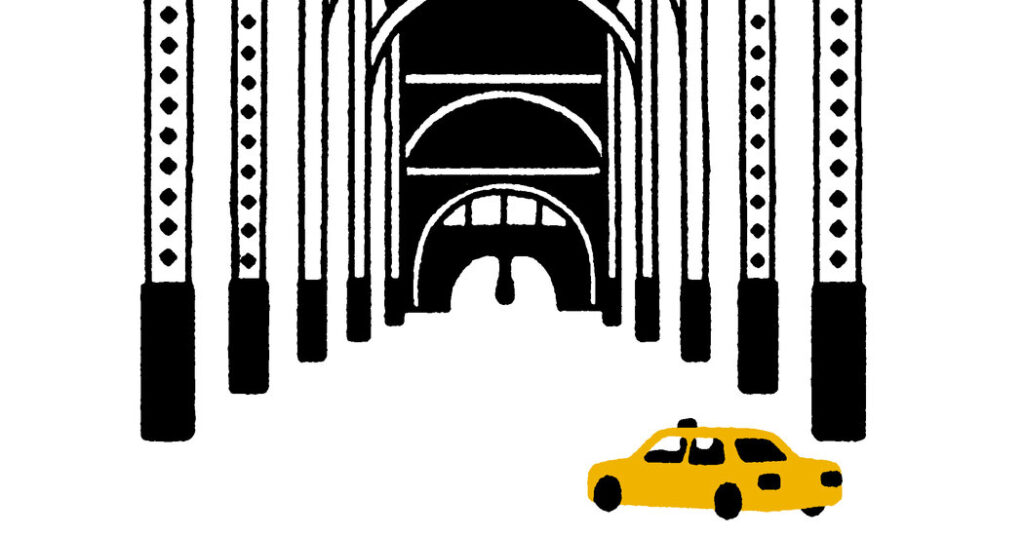
THE MIDNIGHT TAXI (Berkley, 336 pp., paperback, $19), arrives at an opportune moment: While clearly completed before last November’s New York City mayoral election, Siriwathi Perera, the novel’s amateur sleuth, embodies the issues — and enthusiasm — that spurred Zohran Mamdani’s win.
Siri earns her living as a cabdriver after a family tragedy slammed the brakes on bigger personal and professional dreams. One night she picks up the public defender Amaya Fernando, and they bond over their shared Sri Lankan heritage.
Siri’s next passenger catapults her into big trouble by dying in the back seat, “his hand on a silver knife that is sticking out of his chest.” Can Siri can prove her innocence before a grand jury indicts her for murder? Her first call is to Amaya.
Gunasekera, a lawyer at the Innocence Project, ratchets up the tension, showing what awaits anyone — guilty or innocent — entangled in the city’s criminal legal system.
Salvation
by C. William Langsfeld
In rural Colorado, three men are bound by murder. Langsfeld’s elegiac debut, SALVATION (Counterpoint, 257 pp., $27), knits the stories of a killer, a pastor and the town marshal into a tight noir tale.
Tom Horak is on the run after killing Rust Hawkins, once his best friend. The pastor, Morris Green, takes in Rust’s 12-year-old son. And Marshal Tomlinson sifts through the emotional wreckage of Horak’s years-in-the-making act to try to understand what happened.
“Everyone’s dirty cept the boy, and he’s been covered in stains by the sins of his father and his father’s friend.”
Langsfeld, who lives in Western Colorado, writes with bone-deep knowledge of his setting. He paints a portrait of collective isolation, of the ways in which men turn inward rather than reckoning with their deepest selves.
Blood Relay
by Devon Mihesuah
Perry Antelope, one half of the Oklahoma City police detective duo in Mihesuah’s winning series opener, BLOOD RELAY (Bantam, 324 pp., paperback, $20), introduces herself to another cop like this: “I’m Choctaw, but my husband is Comanche, hence the last name. We got this call because the victims are all probably Choctaw and I often get those even if they’re a bit outside my usual radius.”
Perry and her partner, Sophia Burns, are investigating the disappearances of Indigenous women from Oklahoma reservations when a well-loved Indian horse relay rider, Dels Billy, is abducted. (What’s Indian horse relay, you ask? “A sport in which one rider switches horses twice around a half-mile track,” as Perry explains. “One horse per lap. They jump off one horse and leap onto another … It’s dangerous and … crazy.”)
Mihesuah brings the reservations to life while illuminating the plights of missing and murdered Indigenous women. Her plain prose style underscores the horrors she describes — some of which are hard to stomach — but she also offers her characters real grace: “Perry took one glance back into the gloom, then started climbing toward the light.”
Worse Than a Lie
by Ben Crump
I admit to starting the civil rights lawyer Ben Crump’s first turn to fiction with a healthy dose of skepticism. I was pleasantly surprised: Even if it doesn’t quite fire on all cylinders, WORSE THAN A LIE (Bantam, 351 pp., $30) still offers plenty of crowd-pleasing thrills.
The author’s avatar is Beau Lee Cooper, who grew up in 1970s Texas idolizing Thurgood Marshall and dreaming of becoming the next Atticus Finch (The “To Kill a Mockingbird” version, of course) and has now become a successful civil rights attorney.
In November 2008 — on the night President Obama is elected — Hollis Montrose, a Black man in suburban Chicago, is shot by four white officers in a traffic stop. Is it because Montrose has a pending civil suit against his former employer, the Chicago police department? “My gut tells me it wasn’t random,” a community activist tells Cooper. “There’s something more going on here.”
While Hollis is still in intensive care, the city files charges against him — brandishing a firearm, battery, attempted first-degree murder — and Cooper and his team find themselves in the fight of their lives. “Welcome to Chicago,” he’s told after a bruising court session. “Judges and prosecutors tend to be in cahoots.”
So what, in the end, is worse than a lie? As Cooper says, it’s “when you’re reminded that racism is as American as apple pie. And the words on the court wall, like liberty and justice, to you they don’t apply. That’s worse than a lie.”
The post The Art of Murder appeared first on New York Times.