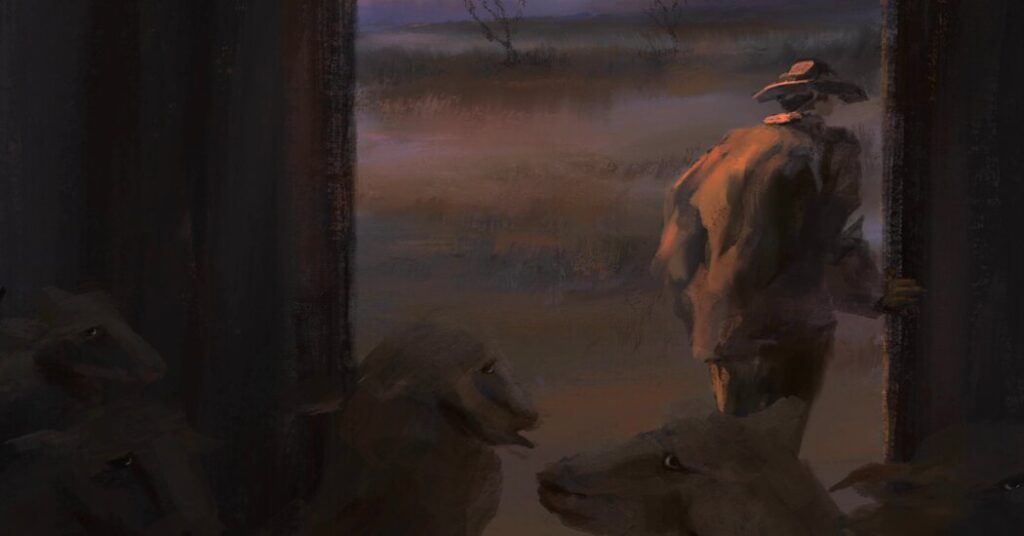
A FAR-FLUNG LIFE, by M.L. Stedman
It has taken the elusive Australian author M.L. Stedman a while to follow up on her best-selling 2012 debut, “The Light Between Oceans.” Translated into dozens of languages and made into a largely forgettable film starring Michael Fassbender and Alicia Vikander, that sweeping and sentimental novel about a baby found washed ashore on a remote island in the 1920s compensated for its occasionally overwrought emotions with fine writing and a careful, elegant evocation of Australia’s dramatic landscapes.
Like its predecessor, Stedman’s second novel, “A Far-Flung Life,” is also about a child of mysterious parentage; and it too is a book in which a lot of awful things happen. Think of it as “A Little Life,” but with dingoes and willy-willies.
The novel is set in Stedman’s home state of Western Australia and stretches across the full sweep of this territory, an area about the size of Alaska, California and Texas combined. It begins with a tragedy at the tail end of the 1950s. Driving a truck full of sheep back from market, Phil MacBride swerves to avoid a kangaroo in the road. He and his older son, Warren, are killed; Matt, the younger son, survives, but only just. Life at Meredith Downs, the million-acre sheep station that is the heart of the novel, is altered irrevocably.
From the wreckage of that crash a new family unit emerges: Phil’s widow, Lorna, her traumatized son and brittle, headstrong daughter, Rosie, are thrown together with a foppish English visitor named Miles Beaumont and a lonely “roo shooter,” Pete Peachey, a former prisoner of war in Japan who’s tasked with controlling the kangaroos that swarm the property.
As the years tick by and more tragedies ensue — and as the region’s economy shifts its attention from wool to asbestos and then to nickel — the narrative baton passes from one character to the next. We begin with Rosie, who flees Meredith Downs for the outback after a series of typical teenage crises lurches into something darker; after she returns home with a baby in tow, the perspective shifts to Matt, then Rosie’s son, then Pete Peachey.
Life in their world is hard: Storms and droughts ravage the land; the locals are judgmental at best, at worst vicious and even murderous; the gentle but skittish Pete wrestles with the psychological aftershocks of war. So many terrible things happen that the reader develops a kind of flinch, bracing for the next calamity whenever there is a brief lull in the misery.
The beauty and breadth of the landscape stand in counterpoint to the horrors of the human lives playing out upon it. Stedman describes the everyday elements of station life with graceful accuracy: A mustering of sheep gets underway as “the hands on their motorbikes winkled the sheep out of their paddocks in a flurry of dust and the heavy patter of hooves that sounded like gloved applause.”
There is a sense of continuity and resilience in the routines of Meredith Downs, the ongoing battle against nature, the deep tick of the grandfather clock that measures out the MacBride generations. A patch of land known as “Jemima’s trees,” a ridge on which a long-dead aunt planted eucalypts generations ago, now takes on a powerful symbolic weight for her descendants, surviving despite the hostile climate.
“A Far-Flung Life” pays homage to so many of Stedman’s forebears that these references can feel like a kind of literary tour of contemporary Australian writing. Its most obvious ancestor is Tim Winton’s “Cloudstreet” (1991), another Western Australian family saga that binds personal tragedy to the rhythms of a landscape — in Winton’s case, working-class Perth — that is as much a character as any of the humans inhabiting it.
There are nods, too, to Peter Carey’s 1988 novel “Oscar and Lucinda” (Matt at one point finds solace in refurbishing an old pearling lugger that sits in a shed in the middle of the wilderness, a vessel as quixotic and marooned as Carey’s glass church), and to Richard Flanagan’s 2014 novel “The Narrow Road to the Deep North” and Evie Wyld’s “After the Fire, a Still Small Voice” (2009), in its portrait of Australian masculinity in the shadows of war.
What separates great literature from cheap melodrama is not the grief the story contains, but whether the writing has earned it. Stedman lands every blow thanks to her patient accumulation of ordinary life, the shearing and mustering and fence-mending, the slow mapping of relationships that ensures each loss registers as something more than plot machinery.
“A Far-Flung Life” makes the argument that a family is not defined by bloodline or by the catastrophes visited upon it, but by the daily, dogged work of holding itself together. Against that million acres of red earth, even the worst of what befalls the MacBrides is finally a small thing. Despite everything, Jemima’s trees still stand on the ridge.
A FAR-FLUNG LIFE | By M.L. Stedman | Scribner | 431 pp. | $30
The post It Starts With a Fatal Car Accident. What Follows Is So Much Worse. appeared first on New York Times.