The hallucinations began the moment I lay back onto the mat and pulled the mask over my eyes. Oh, I instantly thought, this is not at all what I expected.
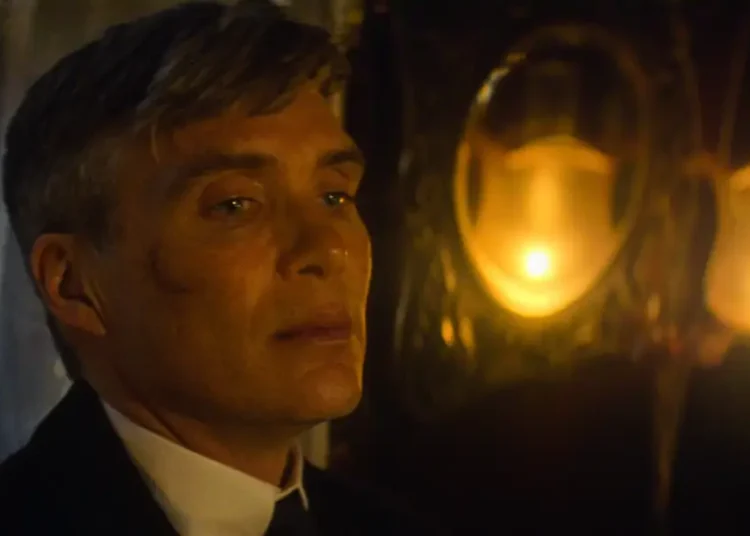
The first images were assembled like a film strip, a sharply focused Technicolor row of strong, grim-faced men who appeared to be some sort of tribal chiefs. Within seconds, a green tint covered their faces, which then dissolved, replaced by images of conflict. Bodies strewed across a battlefield. Starving children. They, too, dissolved. A pile of rocks took shape. From the pile, several long, dark snakes slithered out.
This could be unpleasant, I thought.
A crackling sensation coursed through my entire body, as if all my neurons were firing — not in any way painful, but also inescapable. I could feel my hands sweating. My ears buzzed, and it wasn’t long before I heard the murmuring voices of people who weren’t there, followed by the sound of puking from people who were.
There were 11 of us in the treatment room, in a basement in a cottage that overlooked the Pacific Ocean just south of Tijuana, Mexico, where ibogaine — a Schedule I drug in the United States — is legal. It was the night before Thanksgiving. We all had our reasons for coming to the treatment clinic called Ambio Life Sciences. Several in the group were veterans suffering from PTSD, traumatic brain injury, substance abuse or some combination of those. A sex-crimes detective had been in a terrible car accident and lost much of her short-term memory. A Marine veteran and blueberry farmer in Georgia was quietly drinking his life away.
And there was Erin, a Texas-based corporate consultant who had suffered trauma that began in childhood and continued in the workplace. Erin’s mat was next to mine at the far end of the treatment room. Because we were the only two in the group not to throw up during the 10-hour experience, we later referred to ours as the Quiet Corner.
The drug is derived from the Tabernanthe iboga plant, found mainly in Gabon in central Africa. The powerful hallucinogen has long been used there in the initiation ritual that is part of the Bwiti spiritual tradition, involving an intense all-night group ceremony of dance and music and fire-keeping that culminates in a trancelike state.
Knowledge of the drug spread to the United States in 1962, when an American named Howard Lotsof tried ibogaine and found that it cured him of his addiction to heroin. His campaign to explore ibogaine’s potential as a cure for substance abuse has gained momentum more recently as nonprofit groups like the Multidisciplinary Association for Psychedelic Studies and Veterans Exploring Treatment Solutions (VETS) have assisted military veterans in using ibogaine to treat combat-related traumas. Because of the association with veterans, ibogaine has received the kind of legitimizing attention from political leaders, including conservatives, that is rare for psychedelics.
As a political reporter, I regularly talk with such figures, and I first heard about ibogaine last year from the retired U.S. senator Kyrsten Sinema. When I spoke with her, she had just come back from the Ambio clinic herself, after learning about its ibogaine treatments from veterans she knew.
She told me it had been “the opposite of a pleasant experience”: maybe two minutes of unsettling visions followed by endless hours of darkness accompanied by a soundtrack of clanking in her ears, as if her brain were a car engine undergoing repair. But she left the clinic feeling that something powerful had occurred. A heaviness from her childhood, unspecified to me, had been processed. Things had shifted.
Sinema told me that she went to Tijuana after learning about the clinical studies begun at Stanford University in 2022, which suggested that ibogaine was effective in treating traumatic brain injury — and that it also had the potential to reduce cerebral decline. (Dementia claimed the mind of her beloved grandmother.)
After returning from Mexico to her home in Arizona, Sinema, a former Democrat who is now an independent, played a key role as the Republican-controlled State Legislature approved funds to set up clinical ibogaine trials to treat veterans. Arizona was following the lead of Texas, where ibogaine had an even less likely political champion: the former governor, Republican presidential candidate and Trump energy secretary Rick Perry.
Intrigued, I wrote an article for The Times last August about Perry and his advocacy of ibogaine. Before trying the drug in September 2023, Perry, a former rancher and Air Force pilot, had never even smoked marijuana. But as governor, he became close with veterans who suffered severe psychic scars from war. They had found no relief until they traveled to Mexico and underwent ibogaine treatment. Perry, who experienced brain trauma from concussions in his youth, decided that maybe the drug had something to offer him as well.
I began to consider the same thing myself after writing about Perry. The decision wasn’t one to make lightly. Ibogaine is not a party drug. It’s not sold on the street. No one takes it and then dances around a wooden figure burning in the desert. In my misspent youth, I had several psychedelic experiences — mushrooms, LSD, ecstasy — in recreational settings, accompanied by booze and loud music and fellow young idiots. Every trip was great fun and, I now believe, a thoroughly missed opportunity.
Nearly all of them took place in the years just before and just after the death of my brilliant wreck of an older brother when he was 23 and I was 22. Gawky and sullen and violent as a child, a 6-foot-5 guitar-playing antihero by the time he hit 18 and then an alcoholic college dropout after that, Eli was the wave of my youth that I rode with chattering teeth. When I could not tame him, I tried simply to survive him — and then, finally, distance myself from him. The shadow that Eli cast over me, in life and in death, had gone almost completely unexplored. Decades passed before I began to see the connection between my frequent bouts of self-flagellation and the inevitable survivor’s guilt that set in well before a car plowed into the motorcycle he was riding on the back of, on the corner of 38th and Lamar in Austin on Dec. 4, 1979.
All of which is to say that I had more than journalistic curiosity to take with me to Tijuana.
‘I don’t feel like I deserve joy’
The 11 of us squeezed into two S.U.V.s outside a hotel near San Diego’s airport and were then ferried to the border. We had all undergone a screening procedure to ascertain whether we had medical concerns (like a history of heart attacks) and were sufficiently committed to the rigor we were about to face.
The one guy in my van who made jokey small talk was a firefighter from Northern California. He made the trip to Ambio the previous year but came away feeling that the experience was short-circuited by the disruptive behavior of a fellow patient whose psychiatric situation went undetected in the screening process. Everyone else was somber and freighted with whatever it was that had compelled them to embark on this journey to begin with and apprehension about whatever lay ahead.
As part of Ambio’s protocol, all of us had agreed to refrain from alcohol and drugs for at least two weeks. We were given two rounds of coaching to prepare us: lots of everyone’s ibogaine experience is different, a clear and deliberate absence of guarantees that now, as we rode closer to our destination, left us hunched and wordless.
About 20 minutes after crossing into Mexico, our caravan turned onto a dirt road that dead-ended at a rocky ledge overlooking the Pacific. The facility was reassuringly airy and modern, with several smiling staff members arrayed between us and a spacious patio that afforded a sweeping view of the ocean. The clinic was founded by three men: Trevor Millar, a Canadian who had operated an ibogaine clinic in Vancouver; another Canadian, Jonathan Dickinson, one of the world’s leading scholars of the drug as well as the only legal export licensee of the Tabernanthe iboga root from Gabon; and José Inzunza, a Mexican paramedic who had been providing ibogaine to treat addicts in Tijuana for the previous five years.
In partnership with VETS, which offers grants to military veterans for psychedelic therapy, Ambio took in its first patients in July 2021. A year later, Millar appeared on the podcast of Shawn Ryan, a former member of the Navy SEALs. The show has over 5.8 million subscribers, and demand exploded. Ambio now treats 140 patients a month in Tijuana. In January, it opened a second ibogaine clinic on Malta’s Mellieha Bay.
The waiting list is long, and the cost is considerable: $8,350 for the five-day regimen, not including airfare to and from San Diego. (Veterans receive a $1,000 discount.) Dozens of other ibogaine treatment facilities exist, from Mauritius to Iceland to Indonesia — some pricier and more conspicuously deluxe, catering to affluent seekers of wellness. Improper administration of the drug can lead to arrhythmia or cardiac arrest, and I decided to go to the well-established Ambio like Sinema, Perry and several veterans I talked to.
The increasing interest in ibogaine coincides with a rising skepticism about Western health care and a corresponding interest in alternative therapies, including psychedelics. Officials in the Trump administration — especially the health and human services secretary, Robert F. Kennedy, Jr.; the Food and Drug Administration commissioner, Martin Makary; and the veterans affairs secretary, Doug Collins — have been receptive to such alternative treatments, though to date no significant policy shifts have been advanced.
Unlike therapy involving other psychedelics, ibogaine is not a guided experience. No shaman or talk therapist is present; the only dialogue is between you and the drug. But because it’s considerably more powerful than those other psychedelics, the whole endeavor — 12 unpredictable hours lying flat on your back, at the mercy of a mysterious substance with unpredictable powers — is sufficiently daunting that Ambio seeks to foster a “we’re all in this together” esprit de corps among the group.
We were shown to our rooms. Mine was spare but sunny, with a balcony overlooking the ocean. A staff member rifled through my bag to make sure that I hadn’t smuggled in any alcohol or drugs. Our phones would be confiscated. These formalities were a reminder that we had all made a commitment — and not just to ourselves.
Then we sat together watching a welcome video in which Millar offered a few words that I’m sure were intended to be encouraging. Taking ibogaine is like getting on a roller coaster. There might be ups; there might be downs. The only real rule of roller coasters is: Just don’t try to get off in the middle of the ride. … Not everybody has visions with this medicine, and you don’t need to have visions for ibogaine to work for you. … Nausea is super common. I’d say 75 to 85 percent of people are going to throw up at least once. … You might hear things. It might sound as though a whole bunch of new people entered the room. … So those can be fun, actually. Just lean into them.
After lunch, we took our seats in the living room, and each of us said a few words about why we were there. With few exceptions, the sentiments ranged from desperation to futility. A Navy veteran in his 30s said that he had tried everything to stop drinking except suicide, and that was next. A frail-looking woman in her 60s introduced herself as a refugee from Eritrea, where there had been war. After that, she began crying and couldn’t say anything else.
When it was my turn, I spoke somewhat sheepishly about a plight that didn’t seem to rise to the level of what the others had shared. “I’m too hard on myself,” I said. “I don’t feel like I deserve joy. And I know it’s all connected to the death of my brother, who didn’t get the breaks I got.”
What else could I say? That it actually wasn’t my successes I felt guilty about, but my failures? That I’d fallen woefully short of protecting our younger brother from Eli, even though John didn’t remember it that way? That I was dogged by my own cowardice in the face of a giant sociopath, one who terrorized our entire family while loving and sparing me the most? That I wasn’t doing enough with my own life after he’d been denied the same chance?
But in this I was really no different from the others. We were all here to see if our burdens could be eased.
Ibogaine is often portrayed as a kind of miracle drug: a breaker of addictions, a healer of trauma, possibly even a cure for cognitive disorders like Parkinson’s and A.L.S. Nearly everyone in the room seemed well past the point of believing in miracles. A few of them had tried ayahuasca, the psychoactive plant medicine that is indigenous to South America.
I know of one woman, a survivor of brutal sexual assaults, who reclaimed her life after taking ayahuasca in Canada. And I know of another woman who has undergone repeated ayahuasca therapy and remains a nervous wreck. Ketamine, ecstasy, psilocybin microdosing: the same disparity in results. My group knew too much. Hopeful though we were, the prospect of failure loomed over us.
After a surprisingly deft dinner (cream of poblano soup, citrus salmon, quinoa risotto), we were each fitted with an intravenous port and then sat together in the living room, haloed by our drip poles and IV nutrition bags (containing a cocktail of vitamins to maintain our health during the coming period of fasting and drug intake) while trading mordant jokes. Time crawled. Roughly 24 hours from now, we would receive the first dose of ibogaine.
Until then, after we slept and through the next day, there were deep-breathing exercises to help prepare us for the inevitable nausea. Then yoga. One-on-one counseling to make sure each of us was ready. (On rare occasion, someone will back out or be gently informed by the Ambio staff that they don’t seem fully committed to the process and should pack their bags.) A light lunch of lentil soup and tuna tostadas that was our last meal before the experience 10 hours later.
We had a Q. and A. with Isaac Pulido, a mellow gentleman who had administered ibogaine to over 4,700 patients and would soon be providing it to 11 more. Blood-pressure monitoring. Two bags of intravenous magnesium (to reduce the risk of cardiac arrhythmias that ibogaine can cause). Another group session. A massage. Scribbling on a piece of paper the things we wanted to divest ourselves of — the so-called burn sheet that we would each throw into a fire just before the first dose. But mostly the quiet torment of waiting.
Counting down the minutes until nightfall, I retreated to my room and wrote on my notepad: “I’m telling myself that the drug is a proxy for God and to put my trust in Him.”
‘Good lord, how long will this last?’
At 8:30 in the evening, on the dark and chilly patio, we stood around a fire and each took a fat red capsule with water. Relief engulfed me: This was finally happening.
A few of us sat upstairs in the TV room and stared blankly at reruns of “The Office.” We returned to the living room for a second capsule at 9:15 p.m., then a third at 9:30, to stagger the intensity of the journey. At 9:45, Isaac approached each of us with a spoon: the fourth and final dose in powder form mixed with honey, apparently to speed up the metabolizing of the drug.
Fifteen minutes later, we filed downstairs to the long, rectangular basement room where we had done yoga earlier. Now there were 11 mattresses on the floor, with pillows from our bedrooms, a blanket and a small bucket in case we needed to vomit. At the foot of each mattress was a small mirror and a maraca.
I took my place in the corner farthest from the entrance. A medic affixed heart-monitor patches to my chest. Erin, the Texas-based corporate consultant, took the mattress a few feet away to my right. She had brought a journal, expecting to capture her impressions throughout the journey. (Five minutes into it, Erin wrote, “And now I need to lie down,” and that was the last of her musings.)
I searched for words, but only the most awkward came out: “Uh, see you on the other side.”
Laughing, she replied, “Have fun, I guess.”
The lights dimmed, and the staccato sound of the Bwiti mouth harp poured out of the speakers. I was relieved to learn that while there were a few respectful nods like this, the Ambio approach was not to pretend that we were Gabonese. It seemed to be more about the drug’s properties and how best to bring them out, rather than an attempt to envelop us in any specific culture.
I sat in front of the mirror, but it was dark, and I’d left my glasses up in my room. I heard Isaac encourage us to pick up our rattle and synchronize ourselves with the music. Everyone did so. For maybe a minute I tried this, feeling faintly ridiculous, then somewhat lightheaded. I fell back onto the mat and pulled the mask over my eyes.
The drug was in charge. This was my first cogent thought as my brain took in the slide show of tribal chiefs and famine-stricken people and my family — my deceased parents and brother, my living brother, my wife — and the snakes. I’d been encouraged by my Ambio counselor to come to the ibogaine with humble requests: How can I feel better about myself? How can I become more spiritually connected?
Lying on my back with my body afire and disembodied voices murmuring in my ears, I found this notion truly hilarious. If anything, I was in awe of the drug’s power. We were told that if things got too intense, we could lift up our eye mask and the hallucinations would go away. I did this only twice, when I became aware of an external disturbance: the Eritrean woman needing an oxygen tank to help with her pre-existing lung congestion and a fellow whose bladder somehow became swollen, necessitating a catheter so that he could urinate. Otherwise, I stayed within the ibogaine, mesmerized by the drug’s power. Surrender, I told myself — less of a plea and more of a hallelujah.
My dead brother, Eli, came and went among the images like everyone else — not a person of dominant interest to the drug, and I decided to let that rustle inside me. I did make a request to see my wife. But I also asked the ibogaine not to let the image of her crumble, because such a spectacle might suggest pain, and she was already grieving the death of her mother. Sure enough, Kirsten appeared, radiant as in real life. The image held itself together, replaced eventually by something else. The drug could be merciful.
And brutal. Directly behind me, I could hear two veterans take turns throwing up in an agonized cacophony. Nausea rose up in me. I remembered to inhale deeply through my nostrils and expel heavily through my mouth. The feeling subsided — only to return several times throughout the night, but now I knew I could defeat it.
Presently, I saw myself. It was not an image I recognized from any photo album or from any reflection in the mirror. I was smiling, projecting self-assurance, with no shadow nor any heavy weight cast over me. That, somehow, was me. The image grew closer, until I could see only my face, and then only my eye, which finally swallowed me up.
And I saw something else: a scrap of paper from a yellow legal pad, bearing a few sentences of a child’s painstaking scrawl, instantly recognizable to me as my handwriting in second grade, the year I decided I wanted to be a writer. My origin story? The story, in any event, was mine. Not my brother’s. That was what the ibogaine had to say to me.
Other visions appeared that either lacked coherence or made little sense, like Babe Ruth batting right-handed and a small army of rats scurrying across a grassy area. At certain points, I might have fallen asleep. At others, I heard someone in the treatment room say something that, I learned later, they never said. Darkness occasionally set in — never in an unnerving way, though I did find myself wondering, Good lord, how long will this last?
Ibogaine induces ataxia, a lack of muscle coordination, which meant that going to the bathroom required raising your hand, after which a medic would hoist you onto a wheelchair and cart you to the bathroom and help you wrestle down your pants while your mind reeled from visions and murmurs. I went through this only once. We were each provided with a water bottle, but as parched as the drug made me feel, I decided not to drink any more to avoid the disorientation of the mask removal and the wheelchair.
Throughout the hours, the music being played for us remained the one constant: a 200-song selection of African, Latin, Asian and electronic sounds that had been curated by Ambio. None of them sounded familiar (apart from a single ill-advised Coldplay track), and nearly all of them possessed a benevolent, subtly insistent quality, like a guide’s gentle tug into the unknown. One leaped out at me: a slow, mournful chant derived from the Kenyan song “Kothbiro” and performed by the group Shantala. I heard the song several times that night, though I was later informed that no song was played more than once.
Finally, a voice gently said, “It’s time for your magnesium.” I lifted my mask and saw a shaft of light through a window. Erin asked what time it was. “Eight a.m.,” the nurse said as the IV poles were wheeled up to our mattresses. What was surely the most rigorous night of my life had officially ended.
At half past 10, my two bags of magnesium were drained. The nurse peeled the heart-monitor patches off my chest. A medic helped me to my feet and kept his arm around me as I made my way up two flights of stairs to my room. I fell onto my bed, and the medic closed the door behind him. It was Thanksgiving.
But for me, it was what Ambio calls Gray Day, a skillful feat of understatement. My entire body ached from 10 hours of what felt like low-grade electrocution. Closing my eyes, I immediately concluded that sleep was out of the question. I saw the photographic strips. I kept hearing the chants: Aaaahh … hayeh hayeh. … Waves of nausea rippled through me. A few hours passed before a medic knocked on my door and led me downstairs for reiki, a Japanese form of what is called energy massage. She passed her hands just above my body for an hour, to zero effect. Across the hall, I could hear Erin sobbing.
Only half of us made it to dinner. Those who did looked as defeated as I felt. I managed two tablespoons of chicken broth before excusing myself for the evening. Lying on my bed like a sackful of bones, hounded by the chants and the flickering images, I wondered what I’d inflicted on myself and if the damage was permanent — if I’d finally done it: the mistake to end all mistakes.
‘As if they’d just watched their own birth’
I woke the next morning to a roar of sunlight. Standing, I could detect no aches, no dizziness. No recurrent sounds or visions. My mind gleamed. The world sparkled. I then remembered what Rick Perry told me about the day after his Gray Day: “The thought came to me: This is how you’re supposed to feel for the rest of your life. I was as calm and as happy as I’d been in memory.”
Most if not all in the group had found new vigor. We attacked our breakfast and swapped stories. Erin, it turned out, had also seen Babe Ruth. Another saw a big eye winking at him. One of the veterans recalled a miniature Hulk jumping rope. The blueberry farmer confessed that it had been “the most horrible event of my life.” The sex-crimes detective said that she “asked to speak with the medicine, but I got no answer.” A young man who drove an ambulance said he wasn’t convinced that the drug had any effect on him at all — until he suddenly retched and a tarlike substance fell out in a heap, and he felt as if something had been exorcised from him.
Later that afternoon, the staff asked us if we would like to embark on one last journey by inhaling the fast-acting tryptamine known as 5-MeO-DMT, derived from the toxic secretions of the Sonoran Desert toad. We were told that the trip would be far more brief — usually on the order of 10 minutes per dose, with two doses on offer — and could feel like an out-of-body experience, with the additional effect of sanding off the rough edges of the ibogaine journey. Ten of us said yes. This time each of us returned to the treatment room individually.
I was the last to receive the drug. One by one, I watched the others return from the room looking dazed but also somewhat bedazzled, as if they’d just watched their own birth. A few minutes before it was my turn, I was sitting in the TV room on the second floor when I heard a scream from below. It was Rick, an Army Ranger who had deployed to Afghanistan and Iraq. He was the least conspicuous among us until the ibogaine kicked in, and he spent the entire evening vomiting his guts out. Now, after receiving his second dosage of 5-MeO-DMT, he was screaming, “JAAAAAAAAAY!” It the name of his buddy who had been killed in combat when perhaps, Rick felt, it should have been him instead.
Then I heard someone call for me. Somewhat unsteadily, I descended the stairs. Rick had already left. There was only one mattress on the floor, with two Ambio staff members sitting beside it. One of them, a young woman named Kay, held a long-stemmed pipe. I sat on the mattress. Kay lit the pipe and moved it to my lips. I inhaled and put on my eye mask. The other staff member, Zach, guided me to lie back.
In an instant, I could feel that I was somewhere else. Where was it? I saw what appeared to be a pattern of computer graphics. But no people, no slide show. My mind skittered through the darkness — feeling my hunger from all the fasting, wondering what time it was, hearing Rick’s screams, asking myself why any of this should be on my mind right now.
I found my hand drifting to my solar plexus. It was something I often do, as if to rub a sore spot or to ward off contact there. And then, lying on the mattress, I recalled a black-and-white photograph that my younger brother, John, recently dredged up. It was of me at age 3 or 4 on the front lawn of our first home in Houston. I was lying flat on my back on the grass. Eli, 4 or 5, was lying directly on top of me. Apparently, he wasn’t trying to hurt me; after all, our mother was standing nearby, taking the photograph. But the look on my face in the photograph was not one of happiness. I looked trapped. Suffocated.
And from there, my memories leaped ahead a decade or so. This time, I was on my back, and Eli was sitting on my stomach with his knees pinning my arms to the ground. With his index fingers, he was stabbing away at my solar plexus. This really happened. It happened several times, to me and to John. And it also happened to Eli, being tormented by the neighborhood kids, and in the way of the bullied he had become a bully himself. John, who today is a psychologist, had moved on from all that. But I had not. I could still feel Eli’s weight on me. I was still, in work and in life, trying to understand why bullies did what they did, the endless transmission of pain from one human receptor to the next. And amid that psychological inquest, I’d fixated on what the world had done to Eli so as to forget what he had done to me.
“Robert?” came Kay’s searching voice. “Are you still on your journey?”
“I don’t know,” I said. I lifted my mask and sat up.
I had been there for 20 minutes. “Completely still,” Zach said. “Completely relaxed.” I found that hard to fathom. Kay offered me a second dosage. I agreed, and then, with the pipe back to my lips, I changed my mind, thinking: What if I forget any of this? I don’t want to risk it. Time was now speeding up for me. Tomorrow I’d be home, and I wanted to find out what I would be taking with me.
‘That glimpse I had of myself’
So what did it all mean? What did the ibogaine do, apart from slapping my psyche about like a leaf in a blizzard? I’ve been asking myself these questions, especially when I’m irritable or despondent. And what I’d say is that those questions are not so much an accusation as an invitation to explore — to connect and to grow while not losing sight of that glimpse I had of myself, once upon a time in a basement south of Tijuana.
I called Rick, the Army Ranger for whom the entire experience had been particularly dramatic. To my relief, Rick told me that he was in Maine and that other than being snowed in he felt great. The lingering pain from having fractured vertebrae in his neck in paratrooper training was gone. He’d also quit dipping tobacco and was still sober. Something weightier was gone as well — though maybe not entirely, and like me, he was left with questions to wrestle with.
He was doing the same thing I was, listening to the 200-song ibogaine playlist that Ambio had given us all to take home. A memory had been triggered, Rick said: “At some point, I’d left my body, and I was looking down at the mattress. And I saw myself wrapped in cotton cloth, like I was a mummy.”
It made him wonder: Was he still trapped in the cloths, or had he been released? Mummified forever, or preparing to burst forth like a butterfly from a chrysalis?
That was my question too. The distance between the childhood image of myself, pinned by my brother to the ground, and ibogaine’s transfigured image of myself, liberated from self-doubt and guilt, recalled that message affixed to rearview mirrors: Things were closer than they appeared. But now it was an urging rather than a warning. From here, I could see the destination. I could get there.
Audio produced by Jack D’Isidoro.
The post It’s an Obscure Psychedelic Used to Treat Trauma. Could It Help Me? appeared first on New York Times.