About four years ago, Angeline Richard opened Apple Music, hoping to listen to the Weeknd’s cover of Drake’s “Trust Issues.”
“This song is not currently available in your country or region,” a pop-up read.
Ms. Richard, 25, continued discovering that other songs she loved or had added to her playlists were no longer available on the app. Upset with the disappearing songs and ever-increasing prices of streaming services, she set a goal for this year: “To get off as many streaming services as possible, just so I can own the things that I listen to, that I read, that I watch.”
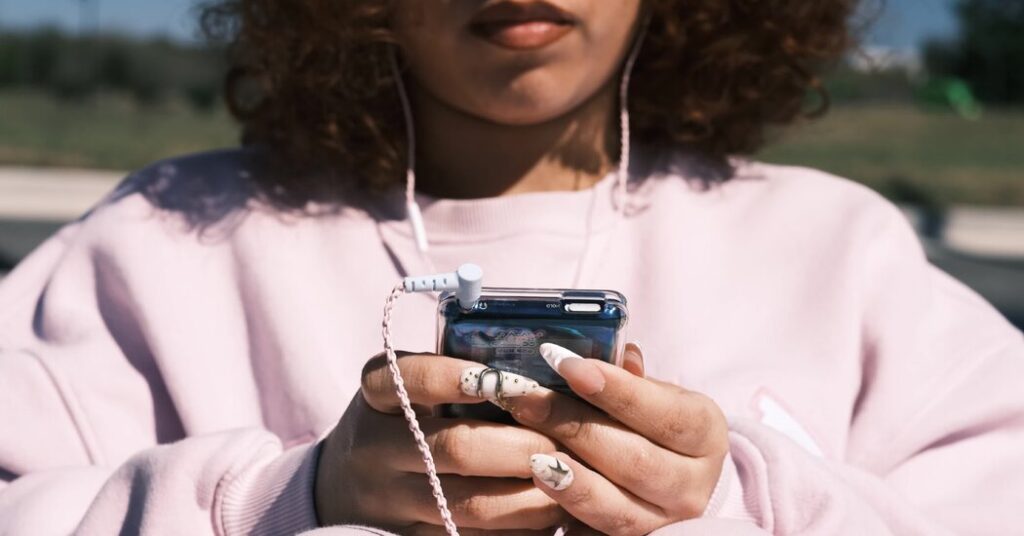
So in January, Ms. Richard bought a silver, third-generation iPod Nano from eBay for about $40. She immediately added Deftones’ 2000 album, “White Pony,” to her iPod and has downloaded 10 more CDs to the device since. The process of adding music to her iPod, she said, has been “so fun” and “like a little meditation.”
Over the past month, Ms. Richard has found another upside to her iPod.
“If I’m on my phone, I’m listening to music, then I get a notification, I click on that notification and I keep going into different apps,” Ms. Richard, a content creator in Raleigh, N.C., said. The iPod “just grounds me, and it feels convenient to be in one place at one time, instead of everywhere at once.”
The iPod, introduced nearly 25 years ago and discontinued in 2022, is finding new fans among people who may not have even been born when it was first released. Like digital cameras and other technology that defined the early 2000s, it has benefited from young music listeners’ nostalgia for a time when they were infants or toddlers, and when lives were — by today’s standards — more analog.
That has given the device a new lease in pop culture. Last year, for example, the TikTok star turned pop musician Addison Rae promoted her new single, “Headphones On,” through videos showing off a silver third-generation iPod Nano and offering fans an opportunity to win that iPod.
In an interview with GQ published in April, the rapper Nettspend included his iPod Nano in the 10 things he couldn’t live without. His playlist for the apocalypse, he said, included the hip-hop group Babyfather, the rapper Yung Lean, Willie Nelson and “maybe Mazzy Star.”
Last year, searches for “ipod” on eBay grew more than 8 percent from 2024, and the number of listings for some versions of the device increased about 30 percent, according to data from eBay. In 2025, some generations of the iPod sold at an average price 60 percent higher than in 2023, with some sellers asking for nearly $600 for a refurbished iPod.
Apple introduced the iPod, a digital music player that eventually upended consumer electronics and the music industry, in 2001. Its predecessors could store a few dozen songs; the first iPod, which had a steel frame, a white face and a tactile wheel, could store 1,000 songs. It cost $399.
Over the next two decades, Apple released more than 20 versions of the iPod, with some capable of storing tens of thousands of songs and others costing as little as $49. The company eventually pulled back on the device as it focused on the iPhone. As of 2022, the iPod’s final year, Apple had sold an estimated 450 million.
Apple declined to comment.
The resurgence of the iPod is a sign that “people want digital that’s not connected, but not necessarily analog,” said Tony Fadell, a former Apple executive who helped create the iPod. If the choice is “1,000 songs in my pocket, or unlimited songs in my pocket and 1,000 notifications every hour,” people don’t want the latter, he added.
“Apple should just bring them back — not the same way,” Mr. Fadell said. “I would do it differently. I would make it modern for the modern age.”
Mr. Fadell said he had made several designs for how an iPod might look or work in 2026. He declined to share more details but said, “You would not have the connection unless you really wanted it.”
Some young people want to disconnect. In a 2023 survey, 38 percent of U.S. teenagers said they spent too much time on their smartphone, and 36 percent said they had cut back on their smartphone use, according to the Pew Research Center.
“We have so many devices that do everything,” Elizabeth Hernandez, 22, said. “A lot of the time, that gets overwhelming.”
But the iPod is “one thing that has one purpose,” Ms. Hernandez said. She has a pink fourth-generation iPod Nano for her favorite songs at the moment and a silver seventh-generation iPod Classic that she downloaded all of her CDs onto. Now when she discovers new artists, like the pop band After, she listens to their albums in full, rather than skipping from song to song.
“I feel a lot more focused, a lot more plugged into what I’m doing,” said Ms. Hernandez, a senior at Eastern Washington University in Spokane. “I am disconnected from social media, but I feel more connected with myself,” she added.
Other young people have been attracted to the aesthetics of the iPod. Maxime Irlinger, a first-year university student in Montpellier, France, has about 20,000 followers on TikTok and was offered a gift last year from Rakufun, a Japanese shopping app. He hadn’t known that Apple made iPods with both clips and touch-screens, but then he chose the sixth-generation iPod Nano.
“I find this modern even though it’s really old,” Mr. Irlinger, 18, said. “I knew it, but I didn’t know it was that cool,” he added.
A video in which Mr. Irlinger clips his blue iPod onto his jeans, then shows it displaying the covers of albums by Charli XCX, Björk and the pop singer beabadoobee, is the most viewed on his account. But beyond being “a spicy touch for your outfit,” Mr. Irlinger said, the iPod is “a new way to experience music” so “we don’t depend on algorithms.”
Natalie Gamez, 26, bought her blue 5.5-generation iPod Classic about four years ago. Photos and videos of other people using the device inspired the purchase, as well as her desire to use streaming services less.
The time away from her phone — and with music by Beyoncé, Boyz II Men and artists she had loved in high school but forgotten about — helped her mental health and was like “healing your inner child,” Ms. Gamez said.
“Growing up, we’d listen to music, either on CD players or other MP3 players,” said Ms. Gamez, a certified nursing assistant in Lakeland, Fla. “It really helped for escapism. I feel like phones are not that anymore, with everything going on, with notifications, with social media. I feel like the iPods give us that back.”
So she gave her siblings, Emily, 13, and Clay, 15, iPods to reduce their screen time, too. Emily’s green third-generation iPod Nano was a hit at school after her district banned phones. She showed it to her friends, who were wowed by the ability to listen to all of their music on the device. Last year, three of her friends were given iPods for their birthdays or Christmas.
Emily said she liked her iPod more than her phone. Her reason was simple: “It’s just like, it’s older and it’s not something new. It’s different.”
Kalley Huang is a Times reporter in San Francisco, covering Apple and the technology industry.
The post Bring On Defunct: The iPod Enthralls Young Music Listeners appeared first on New York Times.