Since its founding in 2009, during the depths of the financial crisis, Kickstarter has been the place for budding entrepreneurs to rally strangers to support their dreams. Kickstarter, in turn, has made money by taking a commission from the crowdfunding campaigns on its site.
Global brands like Peloton, Oura and Allbirds raised funds on Kickstarter in their early days. Creators and actors like Issa Rae, Kristen Bell and Zach Braff have also used the site to bring projects to life.
But as time went on, Kickstarter struggled to retain its relevance. In 2022, revenue fell 20 percent. Everette Taylor took over as chief executive late that year.
Mr. Taylor, 36, now excitedly points to the ways Kickstarter has modernized its platform. Corporate giants like L’Oreal have used the site to gin up interest in new products. Last summer, a Chinese electronics conglomerate broke the record for the highest-funded project on Kickstarter, garnering more than $46 million for a UV printer.
“Last year was our best year of all time, despite the circumstances that we see in the economy,” Mr. Taylor said. In fact, the rise of the creator economy and side hustles may be reinforced by a shaky economy, with more people — by choice or necessity — doing their own thing, he said.
But the site that made its name as the place to raise a few thousand dollars for board games, comic books and quirky gadgets is now involved in funding rounds that put it up against well-heeled venture capital firms. It is also trying to gain the attention of creators who may be drawn to other platforms like Patreon, Substack and Spotify.
Kickstarter distinguishes itself in other ways: Its U.S. employees are fully remote and work a four-day, 32-hour week, with an active union. “I want people to live a very fulfilled life outside of work,” Mr. Taylor said. But when they clock in, he added, “you better come and bring it.”
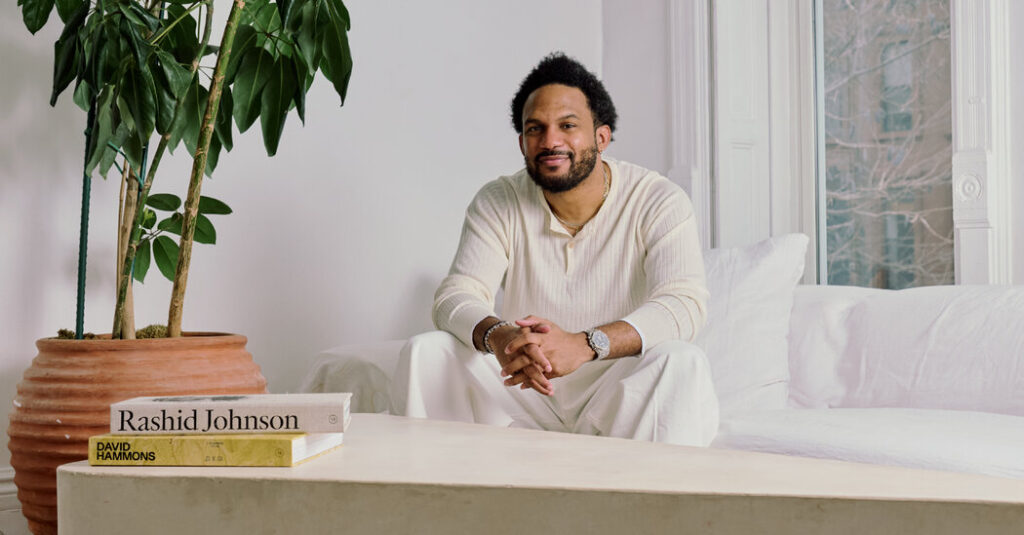
This interview, conducted in Mr. Taylor’s home office in Brooklyn, has been edited and condensed.
When you joined Kickstarter, you changed the business model and added new revenue streams. What was the thinking behind that?
It was important to professionalize the platform. People think about Kickstarter as, “Oh, you raise a few thousand dollars.” No, people are raising $20, $30, $40 million sometimes on the platform. There are large corporations, influencers and celebrities that use the platform. A lot of revenue is generated from these bigger projects.
I came up with Kickstarter 2.0, which was to create end-to-end creator support. It presented an opportunity where we could add new lines of revenue to Kickstarter.
Before, it was like, “Hey, run a Kickstarter, here’s your money, good luck.” Now it’s, “Hey, before you even launch your campaign, here are the tools to help you be more successful. Here’s marketing, here are new features while you’re launching.”
When tariffs came down from Trump, we built a tariff manager to help and support our creators.
With more multimillion-dollar projects on the platform, does venture capital start to become a competitor?
We support independence. It doesn’t matter if you can get venture capital or not.
We had LaRussell, who was one of the most popular independent artists, launch a Kickstarter. We had Charlamagne Tha God drop his graphic novel. These are people with resources who could easily sign and get capital. They’re choosing to remain independent.
We are a place that is welcoming those people who want to maintain ownership and stay independent.
Let’s talk about smaller projects. Is there a relationship between people turning to Kickstarter and the economic moment that we’re in?
There’s no coincidence that I’m thinking more about the smaller creators and the new creators right now because I see what’s happening in the world. People are being forced into entrepreneurship.
You get laid off again and again, and then you can’t find a job. What else are you going to do? I want Kickstarter to be a place where we welcome those people.
Can you tell from the types of projects on Kickstarter that people are being pushed into entrepreneurship?
Not to get political here, but a lot of funding was cut to arts programs. When you see art have its best year on Kickstarter in years, when you see film grow, when you see music grow, that’s directly correlated.
Unless you’re maybe doing A.I., venture capital has dried up for a lot of people, especially people of color and people who are different. Where are they going to turn? They’re going to come to Kickstarter.
If people reach for Kickstarter when the economy feels shaky, does the site just turn into a GoFundMe clone?
Love GoFundMe, by the way. We’ll never turn into GoFundMe because we don’t allow donation-based projects. Everything on Kickstarter is reward-based, creative crowdfunding. We will never have, “My grandma is sick. My house burned down. A tsunami hit our town.”
How is Kickstarter addressing the use of A.I., which many creators may be nervous about? Is there a line in the sand that you draw?
If someone’s not using A.I. in an ethical way, I don’t care how much money they’ve raised or how much money or revenue they’re driving toward Kickstarter — it’s a no. We won’t accept that. That’s where we draw the line.
If people want to be open and transparent and give credit and pay creators when they use their work, fine. Are there still going to be people who are upset that A.I. is being used on the platform? Absolutely. But you can’t win everybody over.
Let’s talk about the way Kickstarter works. The company is fully remote, with a four-day workweek. As many companies call people back to the office and hustle culture gains momentum, why run Kickstarter this way?
When I came into Kickstarter, we had a beautiful office. It felt like a kingdom.
Some of our most valued employees had moved upstate or moved across the country. I wanted to be empathetic at a time where a lot of C.E.O.s were like, “We need to make people return back to the office.”
I have a very high bar for work and excellence. As long as you’re meeting that bar, I want to make sure that you’re living a fulfilled and beautiful life.
Has it helped retention?
I definitely think so. But there’s this line that you have to walk.
I’ve never really talked about it, because typically I talk about, “Yay, four-day workweek.”
It’s not all good. You have to trust people to be responsible. We know that not everyone’s responsible. A lot of people don’t even work 40 hours in a five-day workweek. Now you’re cutting it down to 32 hours.
One of the challenges I’ve had to face as C.E.O. is people being attracted to Kickstarter for the wrong reasons.
We have attracted some of those people. If you’re not at Kickstarter for the right reasons, I don’t want you here.
How does a four-day workweek influence your management style? Do you have to be more hands-on?
The truth is, you cannot consistently get the same amount of work done in four days as you would five days. You just can’t. The math doesn’t math. The level of intensity, intention and velocity that you have to bring in everything that you do is extreme.
Tell me about your upbringing and how it shaped you.
I grew up in Southside Richmond. I’ve seen generations of poverty. I’ve seen the people that I love and care about most struggle. Growing up in Richmond, the idea of not being able to chase your dreams or do the things that you love is normalized.
I don’t want what I saw growing up — the drugs, the gangs, the violence, the poverty — to be the norm in our community. I care so much specifically about the Black community because we’ve been marginalized in so many ways and systemically set up for failure. My family was in that situation because of things that were out of their control, set up to fail.
What did you want to be when you grew up?
When you’re from the neighborhood I’m from, you thought you were going to do either of two things: play sports or rap. You don’t really think of anything else because you’re not exposed to it.
I got my first job at 14 working at Eastern National, and we served the bookstores and gift shops and all the national parks. I’m working inside these museums and I’m like, “Wait, is that a British accent I hear in real life?” I started meeting people from different parts of the world. I was working alongside people who had college degrees.
That opened me up to the world in a way that I hadn’t before because I got to meet people and learn a skill.
I’ve reported on how the pathways for Black executives seem to be narrowing. When it comes to corporate America gaining more Black chief executives, do you feel more optimistic or pessimistic right now?
When I joined as the C.E.O. of Kickstarter in 2022, I was like, “Man, this is going be an avalanche. People are going to see me kill it. They’re going to see Damola Adamolekun over there at P.F. Chang’s and now Red Lobster. They’re going to see Marvin Ellison at Lowe’s. Thasunda Duckett at TIAA.”
I thought we were just going to grow. What’s happened? It hasn’t grown.
I will always be optimistic because what other choice do we have? But at the same time, I see the changes in the world: how things have been rolled back with D.E.I., diversity and support for people of color. It’s nasty out here.
I’m going to play my part by giving people that look like me, and others, opportunities.
It’s time for the lightning round. Do you fund projects on Kickstarter?
In the past three years, I have backed 607 projects.
Have you ever posted one of your projects on Kickstarter?
Not yet. But soon. I have some ideas.
What is your favorite question to ask job candidates?
What is it that you want?
What is the last thing you asked A.I.?
I asked ChatGPT about the relationship between Stanley Whitney’s work and Henri Matisse’s work.
If you could switch careers, what would you be doing?
Making films.
What are you trying to learn more about right now?
I want to learn how to cook.
How many hours do you sleep?
It changes every day, but I’m getting seven to eight hours now.
And which hours?
Last night was like 9:30, 10 p.m. Sometimes it might be 2 a.m. I’m a C.E.O. But I’m also a 36-year-old single Black man in New York. I have a social life. So it’s a range.
Jordyn Holman is a Times business reporter covering management and writing the Corner Office column.
The post What It’s Like to Run a Fully Remote Company With a Four-Day Workweek appeared first on New York Times.