My big takeaway from the 2003 U.S. invasion of Iraq — which I deeply regret having supported — is that the United States should go to war only when it has to. It should not engage in preventative wars against nebulous threats based on suspect intelligence and without a clear endgame.
At one time, I had thought that President Donald Trump had reached similar conclusions. He denounced the Iraq War as “the biggest single mistake made in the history of our country,” criticized “nation-builders,” and vowed to “measure our success” by “the wars we never get into.”
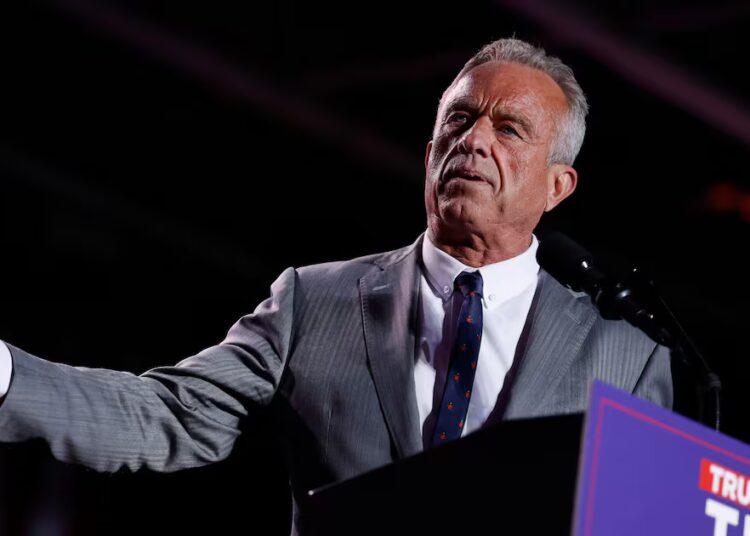
But Trump’s isolationist instincts have always conflicted with his militaristic impulses — his nonstop threats against other countries and his celebrations of U.S. military prowess. Once again, on Saturday, his militarism overpowered his isolationism as the “president of peace” launched another major attack on Iran — the second in less than a year.
Trump never delivered a full speech to explain why he was contemplating action or what he hoped to achieve. He made no attempt to marshal public support (one recent poll found only 21 percent support an attack on Iran). He did not ask Congress for authorization. Instead, he posted a brief video in the middle of the night after the U.S. and Israeli air strikes had already begun. His justifications for his actions were curious and unconvincing. In many ways, they were reminiscent of the strained — and ultimately discredited — justifications that President George W. Bush offered for his invasion of Iraq.
Trump said that “our objective is to defend the American people by eliminating imminent threats from the Iranian regime.” He cited two such threats: Iran’s nuclear and missile programs. Of course, just last summer Trump claimed to have “totally obliterated” the Iranian nuclear program. Now he’s insisting it is so far from obliterated that it poses an “imminent” threat. Yet there is no evidence that Iran has restarted enrichment since June, as Secretary of State Marco Rubio has conceded.
And there is no evidence that Iran is actively developing intercontinental ballistic missiles capable of hitting the U.S. The Defense Intelligence Agency warned last year that Iran could produce such a missile by 2035 if it chose to do so. But its missile production facilities and launch sites were severely damaged in June, and, while there is evidence of Iran rebuilding its capacity to manufacture short- and medium-range missiles, the evidence of ICBM development is lacking.
After explaining, unpersuasively, why Iran presents an “imminent” threat to the U.S. that justifies military action, Trump ended with a call for regime change: “Finally, to the great, proud people of Iran, I say tonight that the hour of your freedom is at hand … When we are finished, take over your government. It will be yours to take. This will be, probably, your only chance for generations.” In a brief phone interview with The Post shortly after 4 a.m., Trump reiterated that his chief concern is “freedom for the people.”
That is very noble, if completely out of character for a president who has abjured democracy promotion as a U.S. goal and most recently went into business with the remnants of Venezuela’s despotic regime after seizing its leader. It also appears at odds with Trump’s attempts to reach a nuclear deal that would inevitably entrench the Iranian regime in power. Is he now giving up hope of a deal, or will he be back at the negotiating table tomorrow if Iran’s leaders offer greater nuclear concessions than they have done to date?
Even if Trump is taken at his word that he genuinely seeks to liberate the people of Iran, what is his strategy for achieving it? This is where the biggest difference between Trump’s war with Iran and Bush’s war with Iraq becomes germane: Bush sent ground troops. Trump has not. That means U.S. casualties will be much more limited this time around, but it also means that the U.S. cannot topple the Iranian regime by force.
Initial air strikes were targeted at regime leaders, including the supreme leader, Ayatollah Ali Khamenei, and a number of them were likely killed. But Iran is a big country (population: 93 million) with a deeply entrenched regime backed by massive, and ruthless, security forces. Killing Iranian leaders is relatively easy for the U.S. or Israel, but toppling the entire regime would be very difficult, probably impossible with aerial attacks alone.
Trump incited the Iranian people to rise up after U.S. airstrikes end. But if Iranians take his advice and get slaughtered again, as they were in January, what is he going to do about it? How often can the U.S. bomb Iran?
While the U.S. and Israel have overwhelming military superiority for the attack on Iran, they do not have an endless supply of munitions. U.S. and Israeli stockpiles of guided-weapons systems, including air defense interceptors, have already been depleted by Trump’s 2025 attacks on Iran and on the Houthis in Yemen. The supplies could run dangerously low if the U.S. gets drawn into a protracted, inconclusive war with Iran. That, in turn, could create vulnerabilities for U.S. allies such as Taiwan.
Before Saturday’s developments, Vice President JD Vance told The Post there is “no chance” the U.S. would be drawn into a lengthy war in the Middle East. But isn’t that what Bush thought before the Iraq War? And President Lyndon B. Johnson before the Vietnam War? The truth is that wars are inherently risky and unpredictable. The U.S. should engage in them only if it absolutely has to. There is no reason to think this war is necessary.
The post The U.S. should wage war only when it must. This isn’t one of those times. appeared first on Washington Post.