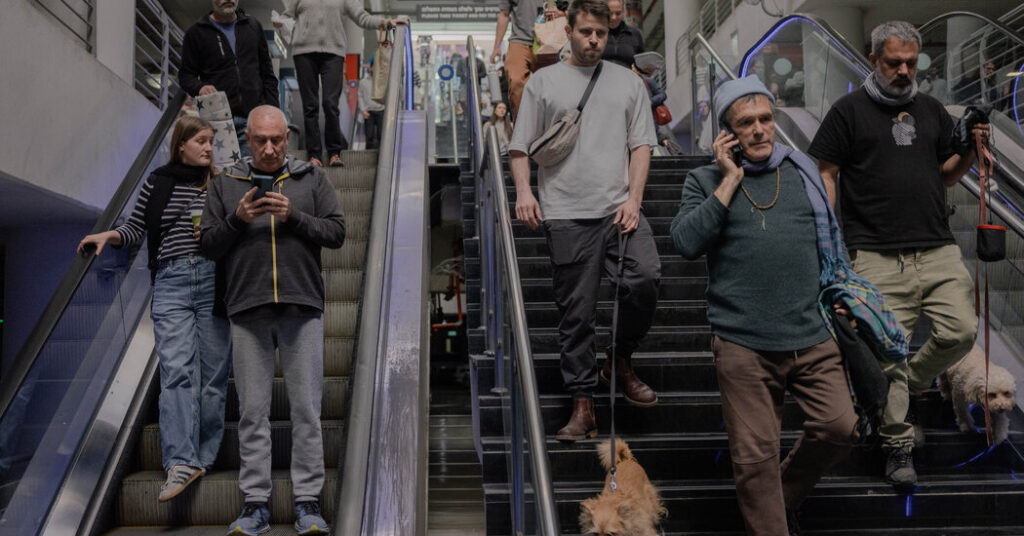
Sirens warning of incoming Iranian missile fire have sent people in Israel running to public and private bomb shelters, and fortified rooms in their homes.
But the missile barrages have also highlighted a shortage of protected spaces in a country that has been preparing for war with Iran for decades.
More than three million people in Israel live in places without “standard protection,” according to a report published in January by Israel’s state comptroller, citing data from early 2025. That finding underscores the vulnerability of nearly a third of Israel’s population should Iranian ballistic missiles strike near their homes.
The lack of safe spaces is particularly stark in Arab communities in Israel, where few working public shelters exist. Only 37 of the 11,775 public shelters are in Arab municipalities, and eight of those are not fit for use, the state comptroller report said.
“People are facing real danger,” said Atiya al-Asam, an activist leader in the Bedouin community in southern Israel. “They’re terrified.”
Many Bedouin communities in southern Israel, especially those that the Israeli government has not recognized, not only long suffered from a lack of shelters, but also planning and basic services like running water, sewers, electricity, trash collection and paved roads.
During the Israel-Iran war in June 2025, 32 people in Israel were killed and thousands of others were wounded, according to data compiled by the Israeli government. At the time, Israeli officials said that shelters and fortified rooms saved the lives of many people.
Since the June war, the Israeli military’s Homefront Command has conducted discussions about the need to increase the number of protected spaces and has worked with municipalities to improve existing ones, according to two Israeli security officials, who spoke on the condition of anonymity to discuss sensitive information.
Still, more than six million people in Israel have access to public and private shelters and fortified rooms, according to the comptroller’s report.
In Tel Aviv, one of Israel’s biggest and wealthiest cities, municipal officials expressed confidence about the number of shelters available to residents.
“We can always have more,” said Eyal Kedar, an official at the municipality working on emergency response. “But in terms of numbers, there’s enough for more than those living here.”
Adam Rasgon is a reporter for The Times in Jerusalem, covering Israeli and Palestinian affairs.
The post Iranian Attacks on Israel Shine a Light on Shelter Shortage appeared first on New York Times.