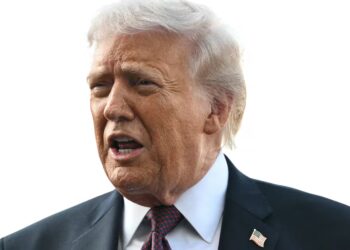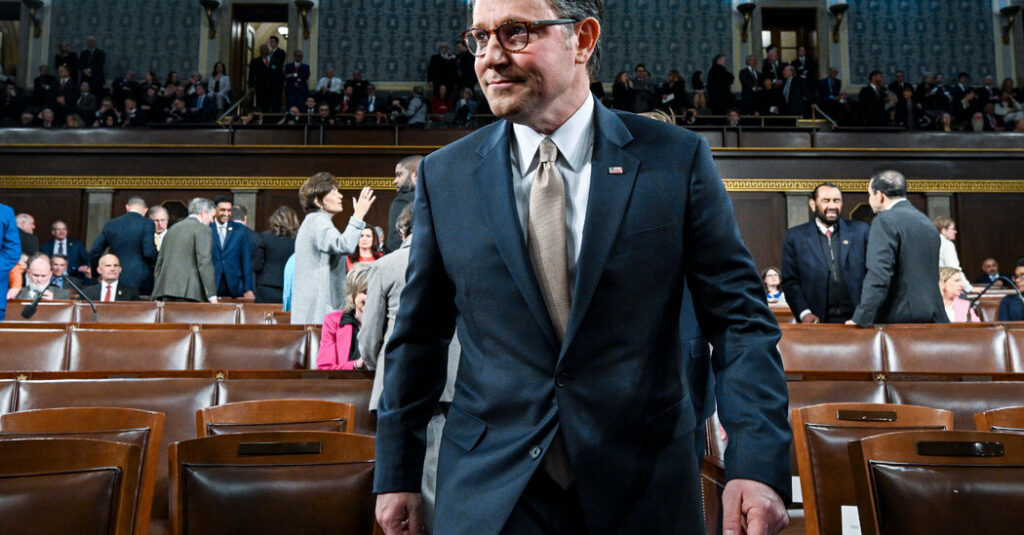
Members of Congress are weighing in on the United States’ attack on Iran, and Republicans and Democrats are significantly at odds.
Republicans largely praised President Trump for what they said was a critical operation targeting a country that had long threatened the United States and its allies. Many circumvented the issue of whether the president needed authorization from Congress to carry out an extended military operation.
Democrats warned that Mr. Trump was dragging the country into another protracted war in the Middle East and needlessly endangering American troops. Democrats and a small bloc of Republicans in the House and Senate had planned to force a vote next week on whether to restrain Mr. Trump from waging war in Iran without congressional approval.
Here’s how members are responding:
-
Speaker Mike Johnson, Republican of Louisiana, said Mr. Trump had exhausted “peaceful and diplomatic solutions” to thwart Iran’s nuclear ambitions, and now Iran was “facing the severe consequences of its evil actions.” He said that the Gang of Eight — the House and Senate leaders from both parties — were told this week that military action in Iran was a possibility “to protect American troops and American citizens in Iran.” He said that Iran and its proxies have “menaced America and American lives,” undermined U.S. interests and “threatened the security of the entire West.”
-
Senator John Thune, Republican of South Dakota and the majority leader, praised Mr. Trump for taking action, saying that Iran had “posed a clear and unacceptable threat” to the United States and its allies for years and had “refused the diplomatic offramps.” He said that Secretary of State Marco Rubio had provided updates on the operation over the past week, and that the administration would brief members of Congress on the attacks.
-
Representative Hakeem Jeffries, Democrat of New York, the House minority leader, said in a statement that Iran was a “bad actor” that must be “aggressively confronted” for its human rights violations and nuclear ambitions, among other things. But he condemned Mr. Tump for failing to seek congressional approval for the strikes. The Trump administration, he wrote, must explain its rationale and justification for the strikes, define the national security objective and “articulate a plan to avoid another costly, prolonged military quagmire in the Middle East.”
-
Senator Tom Cotton, Republican of Arkansas and the chairman of the Senate Intelligence Committee, supported the strikes, saying on social media that Iran sought to develop its nuclear capabilities, sponsored terror groups and waged war against the United States for 47 years. “The butcher’s bill has finally come due for the ayatollahs,” he wrote. “May God bless and protect our troops on this vital mission of vengeance, and justice, and safety.”
-
Senator Mark Warner of Virginia, the top Democrat on the Intelligence Committee, questioned the constitutionality of the strikes. “The Constitution is clear,” he wrote. “The decision to take this nation to war rests with Congress, and launching large-scale military operations — particularly in the absence of an imminent threat to the United States — raises serious legal and constitutional concerns.”
-
Senator Tim Kaine, Democrat of Virginia, who had planned to force a vote next week to curb Mr. Trump’s ability to strike Iran, called the strikes a “colossal mistake.” He said the Senate should “immediately return to session” and vote on his resolution. “Every single senator needs to go on the record about this dangerous, unnecessary and idiotic action,” he said in a statement.
-
Representative Thomas Massie, Republican of Kentucky and an ardent opponent of spending U.S. taxpayer money on overseas military conflicts, described the strikes on social media as “acts of war unauthorized by Congress.”
-
Senator Roger Wicker, the Republican chairman of the Senate Armed Services Committee, praised Mr. Trump in a statement for taking “decisive action” against Iran, calling the strikes “a pivotal and necessary operation to protect Americans and American interests.” He defended the president, saying the goals of the attacks were clear. He did not say whether Mr. Trump should seek congressional authorization to continue striking Iran.
-
Senator Jack Reed of Rhode Island, the top Democrat on the Armed Services Committee, said Mr. Trump had “thrust our nation into a major war with Iran” without seeking congressional authorization. He warned that Iran was “weakened, but far from incapable,” and could launch counter strikes and cyberattacks. “Our forces and our allies must be fully prepared for a sustained and dangerous campaign,” he added.
-
Representative Ro Khanna, a Democrat of California and a sponsor of the bipartisan war powers resolution, urged lawmakers in a video and a written statement to convene Monday to vote on the measure. “Trump has launched an illegal regime-change war in Iran with American lives at risk,” he said. “Every member of Congress should go on record this weekend on how they will vote.”
-
Senator Lindsey Graham, Republican of South Carolina, a close ally of the president who for years has favored intervention in Iran, said on social media that the operation “will be violent, extensive and I believe, at the end of the day, successful.” He repeated the president’s call to the Iranian people to overthrow their government, and addressed members of the U.S. and Israeli militaries, writing that “if you are injured or fall, I believe with all my heart that your sacrifice makes your country and the world a better and safer place.”
-
Senator John Fetterman, Democrat of Pennsylvania, who has broken with his party on issues involving Israel, came out in favor of the attacks on Saturday. “President Trump has been willing to do what’s right and necessary to produce real peace in the region,” he wrote on social media.
-
Senator Bill Cassidy, a Republican in a heated primary race in Louisiana, said that the president’s decision to strike Iran “presumably was based upon a clear and present danger to the United States,” and called the attack “a planned execution that does not put the United States in a forever war.”
-
Senator Ruben Gallego, Democrat of Arizona, a former Marine who deployed to Iraq, condemned the attacks, saying on social media that the United States could support the Iranian people and the democratic movement in the country “without sending our troops to die.” He said Americans should not have to pay “the ultimate price” for “a war that hasn’t been explained or justified to the American people.”
-
Representative Sara Jacobs, Democrat of California and one of the few members who sits on both the House Armed Services and Foreign Affairs committees, said that the president was “setting us up for another endless war” and endangering U.S. troops. “Trump sold the American people a false bill of goods by promising to start no new wars, and then he turned around and started a regime change war in Iran,” said Ms. Jacobs, whose district in the San Diego area is home to thousands of Navy service members.
Robert Jimison and Catie Edmondson contributed reporting.
Megan Mineiro is a Times congressional reporter and a member of the 2025-26 Times Fellowship class, a program for early-career journalists.
The post Here’s What Members of Congress Are Saying About the Attacks on Iran appeared first on New York Times.