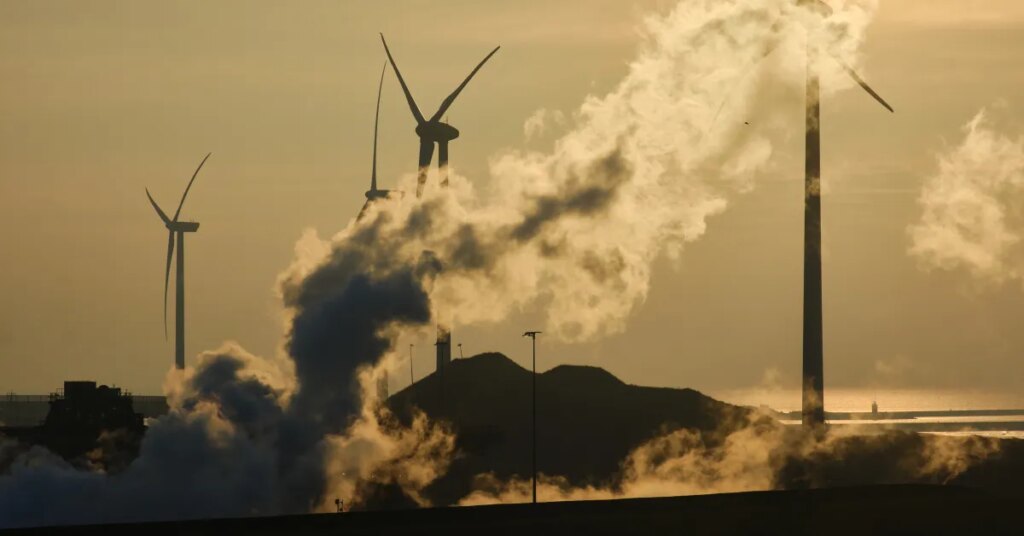
There’s a fight underway about how to characterize this moment in energy and climate. Depending on who you ask, we’re living through an era of energy security, energy addition, or climate realism. The long-standing phrase energy transition remains operative for much of the world—though others reject it.
[time-brightcove not-tgx=”true”]
Earlier this week, I opened a panel discussion at the MIT Energy Conference asking what phrase best describes this moment. The answer, it turned out, was that there may not be one.
“Too many people view one of those words or phrases as being [a] stovepipe for focus and discussion,” said former U.S. Energy Secretary Ernest Moniz. “And I think the real message is it’s all one conversation, and if we don’t address all those issues essentially at the same time… we will be disappointed in the progress in any of those dimensions.”
It would be easy to dismiss the growing salad of phrases as pure semantics. At a recent dinner, I had an informal debate with a banker about whether the climate narrative matters. Markets, which are shaped by economics and policy, ultimately determine where capital flows and what gets built, he argued. That’s true of course. But markets are also shaped by narratives that suggest to investors and businesses what the future will look like and where they should allocate resources.
At this juncture, the narrative isn’t entirely clear. In much of the world, and especially for the climate-concerned, the phrase energy transition still reigns. That implies that both economics and policy will favor clean technology in the near term. For policymakers in national capitals, energy security has become a primary phrase because of concerns that geopolitical disruption could hamper access to energy. That narrative favors any domestic energy source, so long as access is reliable. In industry, the phrase super cycle has once again caught on, reflecting the rapidly growing demand for just about any energy technology. “We’re at the beginning of a multi-decade super cycle,” said Roger Martella, the Chief Corporate Officer at GE Vernova, on the MIT panel. “The entire world needs electricity.”
There is truth to each of these narratives, but none of them fully captures all of the factors at play on its own. And there are many reasons for this narrative divide.
Geopolitical pressures mean energy is increasingly fragmented across geographies with different energy dynamics playing out in different places. Concern about unreliable gas suppliers pervades Europe, for example. The demand for electricity for AI is not just enormous but hard to predict with precision. How fast AI use grows depends on a range of sociopolitical factors—from citizen backlash to stalled permitting—as much as it does on technology and economics. And political pressures have created a state of flux. In Asia, the energy transition persists as governments continue to push to address climate change; in the U.S., climate change has become a forbidden phrase in the White House.
There are some key similarities between the threads. In any scenario, we will need more power. Solar and storage does well under most frames because it’s easy to install and relatively cheap. Natural gas wins in all but the most aggressive energy transition scenarios because of its mix of reliability, price, and lower emissions profile compared to other fossil fuels.
But as you get deeper the picture gets more complex. And all of these dynamics depend on a mix of economic indicators combined with the story we tell ourselves about what comes next. In the book Narrative Economics, Nobel Prize-winning economist Robert Shiller shows how viral stories, or narratives, spread and drive economic events like booms and busts. “Narratives are major vectors of rapid change in culture, in zeitgeist, and ultimately in economic behavior,” he wrote in a 2017 paper.
The truth is that we’re in the midst of a major zeitgeist shift and we don’t know how today’s many narratives may converge to define the next era. This has resulted in an odd dynamic. Markets see enormous opportunity for any energy source that might meet AI-driven electricity demand. At the same time, the chaotic and confusing state of play has made companies and investors reluctant to make big capital investments. Make no mistake: whichever narrative wins out will shape the future of energy and climate. Until then, investors and businesses will need to hold multiple narratives simultaneously.
The post The Story We Tell About Energy Will Determine Its Future appeared first on TIME.