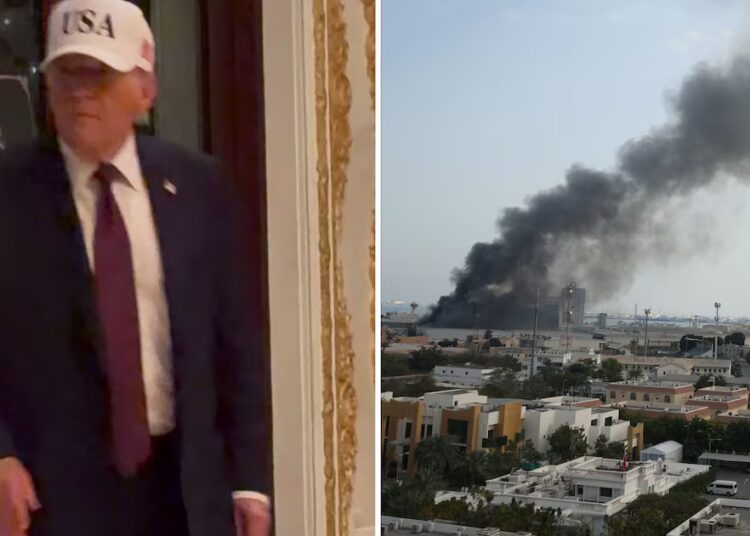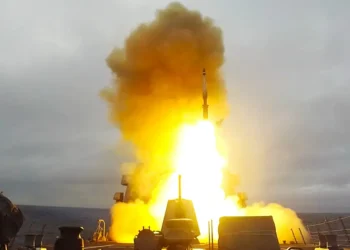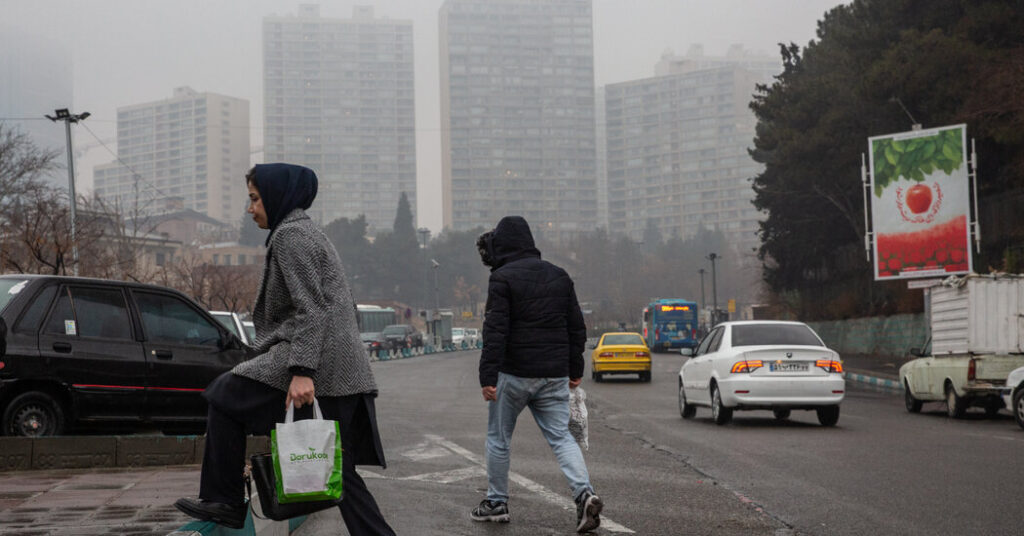
As American and Israeli fighter jets pounded Tehran and other Iranian cities on Saturday, a busy workday in the country, the government provided little guidance to its millions of citizens about what to do and where to go for safety, more than a dozen residents said.
People fleeing their homes had few places to shelter, and parents who frantically called and rushed to schools to fetch their children said that even the principals and teachers had received no emergency directions.
In telephone and text interviews in the hours after the United States and Israel conducted a massive coordinated attack, many Iranians said they had been left to fend for themselves. It was hours before the government released a statement about the attack, and even then it was rich with rhetoric condemning its enemies and thin on advice for its people.
State television said little about how to stay safe from the bombs. Instead, it broadcast revolutionary songs and war tunes that dated to the Iran-Iraq war of the 1980s and denunciatory messages of about the United States and Israel.
Iran’s Supreme National Security Council said in a statement that schools and universities would be closed until further notice, banks would remain open and government entities would work at 50 percent capacity. The statement added that Iran “had prepared all the needs of the society in advance and there is no need to worry.”
By midday, many people in Tehran, a city of about 15 million people, were trying to flee by car. Highways leading out of the city were backed up for miles, residents said. Many of those who stayed behind formed long lines outside bakeries and gas stations.
Gelareh, a 36-year-old resident of Tehran who like many Iranians interviewed spoke on the condition that her last name not be published for fear of retribution, said she was trying to flee north to the shores of the Caspian Sea with her husband and family. She said in an interview from Tehran that they had packed quickly when the attacks began and rushed out of their home, only to find stifling traffic.
Communications were also severely disrupted, with land lines down across the city. Most mobile phone services were out of commission. NetBlocks, an organization that monitors internet connectively around the world, reported that online access was severely disrupted across Iran.
The feeling of government neglect, many Iranians said, began in the days before the attacks.
Iranians had tried to prepare. They anxiously flocked to gas stations, maxing out their subsidized monthly gas rations. They rushed to banks to withdraw cash, only to be told there was none. They shared homemade infographics on what to do during airstrikes and how to collect emergency supplies.
“We are living hour by hour, not moving away from the television and our phones,” said Roya, a 62-year-old translator. “Iranian people are completely on their own,” she added. “We are helping each other. The government is no-show.”
Anxiety surged on Friday with the news that some European and Asian countries, including China, were asking their citizens and dual Iranian nationals to leave Iran and that some airlines were canceling flights to Tehran.
Tehran’s mayor, Alireza Zakani, had said that the city’s subway stations and underground parking complexes could act as bunkers, but no preparations for amenities like portable bathrooms, ventilation or heat were set up. After a 12-day war in June in which the American and Israeli forces targeted Iranian nuclear facilities, the municipality installed giant speakers in the city for emergency sirens.
No food shortages were being reported, but sky-high inflation at nearly 60 percent has made many basic items like beef, chicken, eggs and dairy inaccessible to middle- and working-class Iranians. One grocery store posted a picture on social media that said it would accept payments in installments for legumes and diapers.
On social media, lists with what to stock up on and how to survive power and water cuts went viral as the threat of an attack loomed. “What to put in an emergency bag by the door,” read one list. “Hygiene in difficult conditions,” read another.
The new sense of urgency came on top of the trauma and grief Iranians were still feeling after the government launched a violent crackdown in January on protests against the government and the dire economic conditions. At least 7,000 people were killed over three days, according to rights groups that said the numbers could be significantly higher.
New protests began on Feb. 21, despite the violence, with students at universities across the country calling for the government to be overthrown. The campus protests spread to a dozen major cities, targeting the supreme leader, Ayatollah Ali Khamenei, with chants like “Khamenei is a murderer.”
Kiana Hayeri contributed reporting.
Farnaz Fassihi is the United Nations bureau chief for The Times, leading coverage of the organization. She also covers Iran and has written about conflict in the Middle East for 15 years.
The post As U.S. Bombs Tehran, Some Iranians Feel Abandoned by Their Leaders appeared first on New York Times.