Nearly half of adults in the United States have hypertension, or high blood pressure — but many of them, an estimated 11 million people, don’t know it. The condition is a leading cause of preventable death, increasing the risk of heart disease, kidney disease and stroke. “When we think about preventable diseases, hypertension is one of the greatest because it affects so many organs,” said Tamar Polonsky, a cardiologist and director of preventative cardiology at the University of Chicago Medicine.
Luckily, with medication, “we can get almost the majority of people down to a very reasonable blood pressure,” said John Bisognano, a cardiologist at the University of Michigan Health Frankel Cardiovascular Center. The challenge is that hypertension is silent — there are often no symptoms until the condition has triggered other health problems — so regular blood pressure checks are essential. “There are so many people who have hypertension and don’t know,” Polonsky said.
Left unchecked, here’s how blood pressure quietly damages the arteries — and eventually organs throughout the body.
Arteries
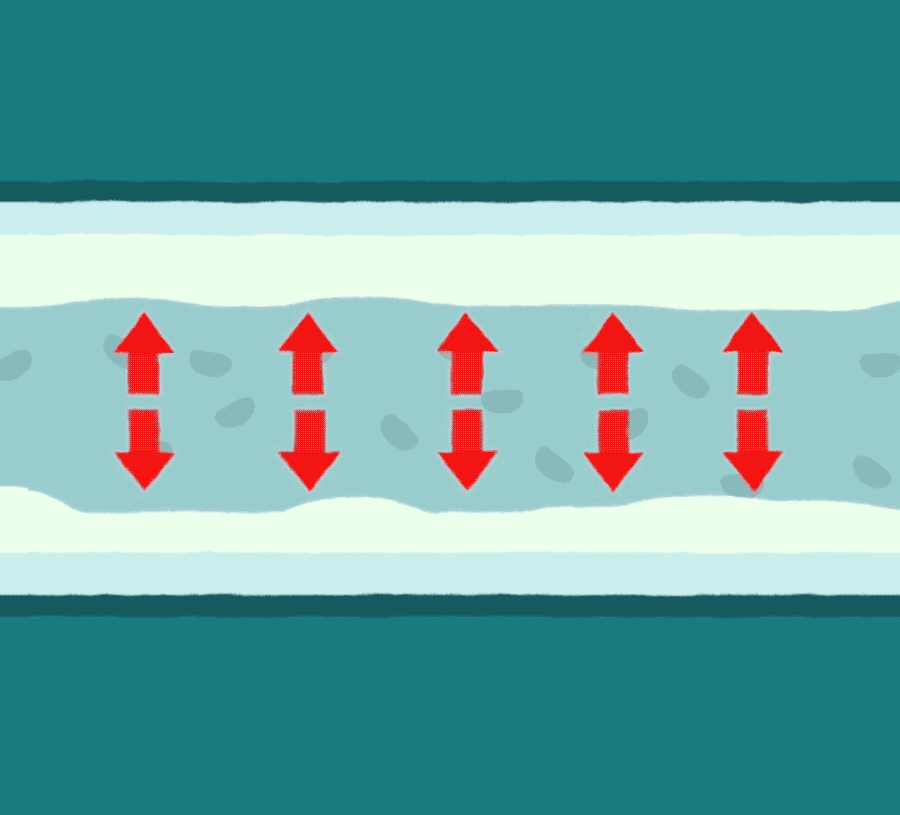
There are different types of arteries, the blood vessels that typically transport blood away from the heart, including large elastic arteries such as the aorta, medium-sized muscular arteries, and tiny arterioles and capillaries. If untreated, high blood pressure causes arteries throughout the body to thicken.
These thickened arteries function less efficiently, making it more difficult for them to deliver life-sustaining blood to the body. They become stiffer and narrower and can rupture, increasing risk of medical emergencies such as stroke or aortic dissection, a tear in the inner layer of the aorta.
Chronic high blood pressure can make smaller arteries, such as capillaries, less flexible, which means they won’t dilate in response to exercise or other times when greater blood flow is needed, Polonsky said.
It also damages blood vessel walls, creating conditions that allow cholesterol and fats to accumulate and form plaque. As plaque builds, a process called atherosclerosis further thickens the arteries. “Those plaques either cause continuous narrowing of the coronary arteries, or the plaques rupture — sort of like popping a blister full of fat,” Bisognano said. If plaque or a blood clot blocks blood flow, a heart attack can occur.
Heart
As it does to the arteries, high blood pressure causes the heart to thicken and enlarge, said Wanpen Vongpatanasin, a cardiologist and director of the hypertension section in the division of cardiology at UT Southwestern Medical Center. This can lead to heart failure, Vongpatanasin said, which is a chronic condition where the heart weakens and struggles to pump an adequate amount of blood. Hypertension is one of heart failure’s biggest risk factors: As high as 91 percent of heart failure patients have high blood pressure first, some research has found.
Hypertension increases heart failure risk because a heart that is thick and stiff can become overworked. This makes it less efficient at pushing out blood, which can cause back pressure and give people shortness of breath, Bisognano said.
This process occurs “over many, many years,” Polonsky said. As the heart continues working harder to pump blood to the rest of the body, people may start to experience fluid accumulation in the lungs and limbs. Without regular blood pressure checks, this damage can happen slowly without a person realizing it, she said.
Brain
Hypertension is a leading risk factor for stroke. Ischemic strokes are most common and occur when there’s a blockage in an artery to the brain. Early treatment can help prevent ischemic strokes. “It’s the years and years of high blood pressure that cause that kind of stroke to happen,” Bisognano said.
Weakened blood vessels in the brain can also rupture, causing a hemorrhagic stroke, which is less common but typically more serious. “In the same way that if the water main from your street to your house ruptures so your house doesn’t get any water, if the blood vessel to a piece of brain ruptures, there’s no longer any more blood flow going to that piece of brain, and that brain ultimately dies,” Bisognano said.
Hypertension also seems to have a long-term effect on a person’s cognitive function and may contribute to the development of dementia. “There are several clinical trials, actually, that show that good control of blood pressure can prevent development of cognitive impairment and dementia,” Vongpatanasin said. The most recent blood pressure guidelines from the American College of Cardiology and the American Heart Association note that treating high blood pressure may slow cognitive decline.
Eyes
Smaller arterioles leading to the eyes also can thicken, Bisognano said. “And again, a thick artery is not a good artery, it’s not an efficiently acting artery,” he said. This can disrupt blood flow in the retina.
The retina is “vital for good vision,” said Sanjay Kedhar, an ophthalmologist with the UCI Health Gavin Herbert Eye Institute. Lack of blood flow can cause damage and, if enough accumulates, lead to a complication called hypertensive retinopathy, which can cause blurred vision or even loss of eyesight.
Hypertensive retinopathy might be one of the first red flags for the condition. “It is not uncommon that an eye doctor looks in the eye and sees [hypertensive retinopathy], and asks the patient, how’s your blood pressure, have you had that checked recently?” said Harry Quigley, an ophthalmologist in the glaucoma division at the Johns Hopkins Wilmer Eye Institute.
High blood pressure can also damage the optic nerves in the eyes, potentially leading to vision loss, Kedhar said, as well as causing fluid buildup under the retina, which can distort your vision.
Sex organs
Untreated high blood pressure affects blood flow to the sex organs just as it does other parts of the body, possibly causing sexual health problems.
“Like any cardiovascular issue, [hypertension] has the potential to contribute to erectile dysfunction,” Polonsky said. Plaque buildup in the arteries can further decrease blood flow to the sex organs, she explained, which may also lead to erectile dysfunction.
“We understand sexual dysfunction in women so much less,” Polonsky said, but it’s thought that reduced blood flow to the vagina could also cause a loss of sex drive.
Kidneys
High blood pressure can create a complicated situation to develop in the kidneys. As blood flow to these two organs is impaired by less-efficient arteries, “the kidney sometimes produces a hormone that can actually increase blood pressure,” Bisognano said.
More forceful blood flow to the kidneys can cause too much to start filtering through and overwhelm them, explained Jordana Cohen, an associate professor of renal-electrolyte and hypertension at the Perelman School of Medicine at the University of Pennsylvania. One specific way it does this is by taxing the glomeruli, small blood vessels in the kidneys that act as filters to remove waste. Long-term stress to these vessels can contribute to the development of kidney disease, Cohen said.
Chronic hypertension harms the kidneys, but a hypertensive emergency — a sudden, severe jump in high blood pressure — is especially dangerous, Cohen said. This condition, which usually occurs if a person hasn’t been taking their prescribed blood pressure medications, “can directly harm the blood vessels in the kidney, which are quite fragile, and can cause permanent damage,” she said.
Legs
Hypertension can contribute to the development of peripheral artery disease, an artery-clogging condition where blood flow is reduced in the limbs. Just as high blood pressure can damage the arteries leading to the heart and brain, “it can do the same to the lining of the arteries in the legs, making them more susceptible to plaque buildup over time,” Polonsky said.
Plaque in the arteries further limits blood flow to the legs, potentially leading to leg pain, cramps and difficulty walking. Over time, a person might compound this problem by walking less and less due to discomfort, Polonsky said.
What you can do
As alarming as this sounds, there’s positive news: If you do have hypertension, there’s plenty you can do to manage it. Heart-healthy lifestyle changes such as not smoking, getting regular physical activity and following the Dietary Approaches to Stop Hypertension (DASH) diet— which prioritizes vegetables, fruit, whole grains, lean proteins and low-fat dairy — have been shown to help keep blood pressure levels within a healthy range.
There are also hundreds of medications that treat hypertension, which your provider may recommend depending on how high your blood pressure levels are and other risk factors you may have, such as coronary heart disease. These medications are effective — with many available as inexpensive generics — and “we’re just so fortunate” to have so many options, Bisognano said.
Illustrations by Emma Kumer and Daron Taylor/The Washington Post.
The post What high blood pressure does to your body appeared first on Washington Post.