President George W. Bush’s misguided invasion of Iraq in 2003 changed the trajectory of American politics in ways few could have foreseen at the time. If not for the war, Democrats would probably not have vaulted Barack Obama, who campaigned on his anti-war stance, to the presidential nomination in 2008.
And if not for the war, Republicans would probably not have chosen Donald Trump in 2016. The costly, drawn-out intervention badly undermined the Republican establishment and, by extension, Jeb Bush’s campaign for the office his brother once held. Trump shocked the political world 10 years ago this month by criticizing the Iraq War before a Republican audience in deep-red South Carolina and handily winning the state.
After all those twists and turns, the United States is back in a position remarkably similar to that in 2003. Again, a Republican president is massing ships and planes in the Persian Gulf. Again, the target is a Middle Eastern dictatorship that is hostile to the U.S. but not strong enough to dominate the region. Again, the purported reason for preemptive attack is some combination of stopping the country from possessing weapons of mass destruction and creating a better future for its people by changing its government.
The point isn’t that a war with Iran would look the same as the war in Iraq. Unlike the Bush administration, Trump isn’t assembling a huge ground force; the plan seems to involve extensive bombardment, not a sustained physical occupation. But wars rarely go as planned, and even a more limited war could echo in unpredictable ways.
At least the Bush administration defended its Iraq policy at length to the American people. At least Congress debated and authorized the use of force. And at least the U.S. launched the war at a time when the Middle East seemed like the main source of threat to American security — and when the U.S. was so dominant on the world stage that it had plenty of military power in reserve.
The last point is key. Almost no one thinks that the Middle East, with its relatively low economic output and declining importance to the U.S. energy supply, is as critical to American security as it was during the war on terror or the Cold War. The Obama, Biden and Trump administrations have all emphasized the need for the U.S. to focus its attention elsewhere.
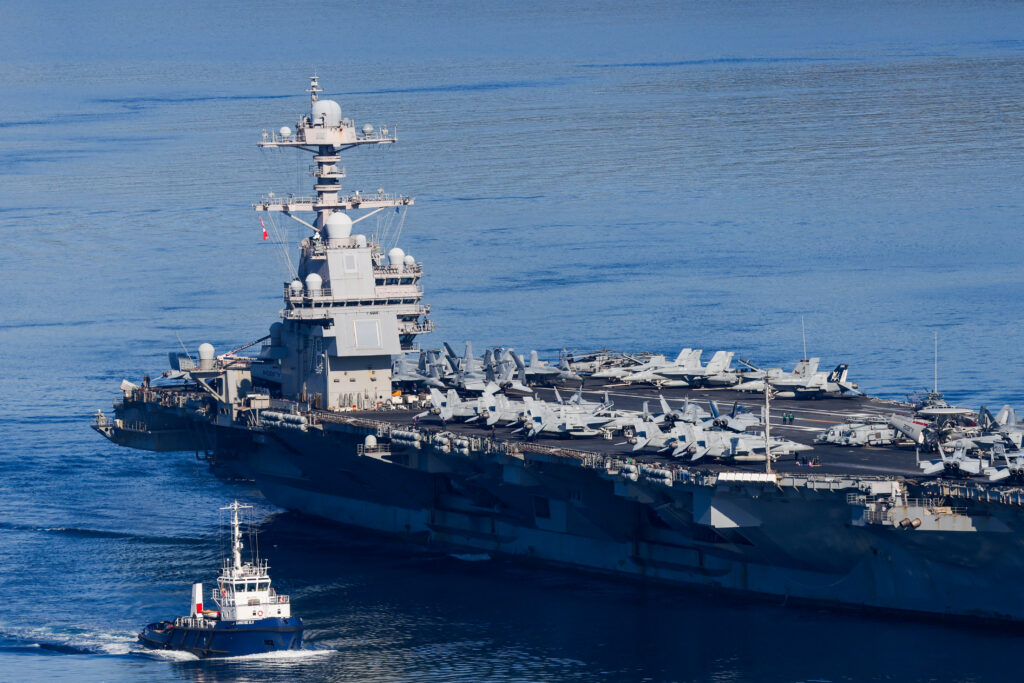
Yet preparations for war with Iran have pulled about a third of active U.S. Navy ships and a potentially even greater share of U.S. air power back to the region. This at a time when the U.S. is also supposed to be deterring threats from much stronger powers — China and to a lesser extent Russia — that actually have the capacity to dominate larger and more critical regions of the globe.
The administration’s justifications for a second attack on Iran in less than a year oscillate. Last June, Trump intervened in Israel’s “12-day war” to attack Iranian nuclear sites with weapons only the U.S. possesses. That allowed him to broker an end to the conflict and gave the U.S. more leverage to broker a ceasefire between Israel and Hamas in Gaza.
A new attack this year would put the U.S. in the position of starting a war with Iran rather than finishing one that was in progress. It would also yield diminishing returns if Iran’s nuclear capabilities are the target. While the administration might have been exaggerating last year when it insisted that Iran’s nuclear sites were “obliterated,” the combined Israeli-U.S. assault clearly did serious damage. Most credible reporting indicates that Iran has not made major strides to reconstitute its program since then.
Tehran has been bludgeoned and isolated since its proxies started a war with Israel in 2023. For some advocates of war, that’s a reason to attack now — to change the regime while it’s vulnerable. But that seems like flying too close to the sun. There is no permanent peace in the world; the best the U.S. can hope for is that its rivals are weak and contained. Iran is in that position now. Why roll the dice on the Middle East’s balance of power with a regime-change war when the status quo is acceptable?
Top military officials are reportedly warning of munitions shortages if the U.S. goes to war with Iran. A limited strike on nuclear facilities is one thing; a sustained campaign to remove the regime is something else. That’s where the trade-off with Russia and China comes in. The Pentagon would rely on the same scarce munitions to shoot down Iranian missiles that would be needed to defend U.S. forces during a crisis in Eastern Europe or the Western Pacific. Even Israel’s 12-day war with Iran meaningfully cut into the Pentagon’s air-defense supply; a new war with Iran might last much longer.
The Trump administration’s Venezuela intervention to arrest Nicolás Maduro was a model of using limited force — the incursion only lasted a few hours — to generate maximum leverage against an uncooperative regime. But that light footprint was possible precisely because the administration stopped short of all-out regime change, instead settling with Maduro’s No. 2 as the country’s new leader. Removing the entire Bolivarian regime, much less installing a new one, would have required a much greater U.S. investment of military resources.
If Trump’s mooted Iran attack goes sideways, it likely won’t be in exactly the same way as Iraq, with thousands of U.S. military deaths over nearly nine years of war and occupation. Trump has learned from that fiasco. The worst-case scenario would likely involve an inconclusive conflict that levels parts of Iran but doesn’t bring in a friendlier regime — and burns through so many munitions that America’s interests in other parts of the world become dangerously exposed.
What might the political fallout from such a debacle look like? Well, the most prominent right-of-center figure lobbying against war with Iran is Tucker Carlson. The influential firebrand has grown increasingly fixated on Jews and Israel as Americans’ feelings about the Jewish state have cooled. If Trump won the Republican nomination in 2016 in part because of Republican voters’ disenchantment with the GOP leadership that attacked Iraq, watch out for a failed war of choice in Iran boosting Carlson’s chances of taking over the party.
The post The rotten case for war with Iran appeared first on Washington Post.