PARIS — Just a 10-minute walk from Notre-Dame Cathedral, the bakers union headquarters looked like every other stone building on the Île Saint-Louis. But once through the enormous wooden red doorway, you knew you were in the right place.
On the ground floor, the smell of buttery pastries wafted from a test kitchen packed with students. There was flour everywhere. Sacks of it lined the hallways. Dusty white footprints marked the carpeted stairway to the judges’ chambers. And outside, you could spot the bakers — not students but bona fide professionals — by the flour on their clothes.
They arrived on foot and by e-bike, bread van, Tesla, taxi and maxi-scooter. They carried baguettes in paper bags, flour sacks and enormous boxes. Some just tucked them loose under one arm.
One of them was holding the best baguette in Paris.
Thursday marked the 33rd year of the Grand Prix de la Baguette de Tradition Française, the French capital’s most revered bread competition. Only “baguettes de tradition” are allowed to enter. The legal designation means the dough is made with only four ingredients: flour, water, yeast and salt. The competition specs go a step further; each loaf must meet strict standards for size, weight and salt content.
From 10 a.m. to 1 p.m., 143 contestants delivered their entries, vying for the grand prize of 4,000 euros and the opportunity to supply bread to the French president’s residence for a year.
It’s a tremendous honor. “Bread is god here,” said Sara Kavelin, the director of tours for Paris By Mouth.
10:35 a.m.
Gwenaëlle Lohezic, 28, was the first contestant to arrive. It was her first foray into the competition, which skews overwhelmingly male (as does baguette baking in Paris). A woman has yet to win.
Journalist Lindsey Tramuta, who wrote the book “The Eater Guide to Paris,” said that statistic doesn’t surprise her, although it is “obviously unfortunate.”
“There are women in the bakery scene, but not every bakery does baguettes,” Tramuta said.
Lohezic said she entered the competition as a challenge to herself.
“Winning is a big word, but yeah, I hope to make Top 10 anyway,” she said. “That would be cool. We’ll see.”
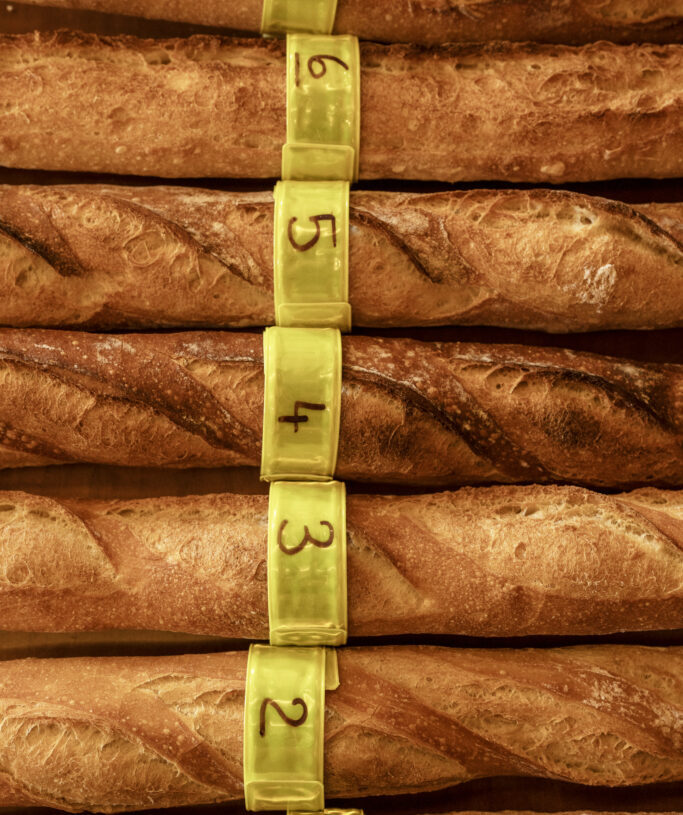
In the front hallway, volunteers greeted contestants and reviewed their entry forms to verify their association with a local bakery. Staff members stood ready in sanitary gloves. They walked each pair of baguettes between the drop-off table and a station for tagging via a numbered slap bracelet. Once ID’d, baguettes were passed along for measurement, and then again to be weighed.
Those last two steps are crucial. Thirty pairs of baguettes that did not meet the strict length and weight requirements were taken to a table of rejects, no longer destined for glory but a local charity. The 113 remaining pairs that did pass were lined up for phase two: the blind tasting.
11:20 a.m.
Around a meeting room overlooking the Seine, tables were arranged with scoring rubrics, carafes of water, a cutting board with a serrated bread knife, and a plastic bowl — the competition’s answer to the spit bucket at a wine tasting.
The best baguette would be decided that afternoon by a panel of industry experts, journalists, previous winners and a few civilian enthusiasts selected by lottery. They would grade entries by five criteria: appearance, cooking, inner texture, smell and taste. Each group of judges would get five baguettes at a time to assess, and the highest-ranking breads would be tasted again in a second round.
The aesthetics are critical. Judges assess details such as the crunch of the outer shell and whether the air pockets in the soft inner “mie” are uniform.
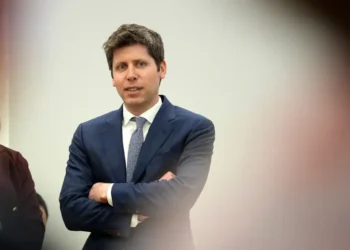
“It has to look a bit like what we would call a beehive,” said Nicolas Bonnet-Oulaldj, a deputy mayor of Paris serving as an emcee and judge of the event.
Bonnet-Oulaldj said he can spot a bad baguette right away.
“You can smell it because there’s too much acidity,” he said, which is often explained by the baker adding too much yeast.
During the competition, “it’s kind of dangerous to taste bad baguettes,” he continued. “If you get too much acid in your mouth, it’ll ruin the taste of the better baguette to follow.”
Believe it or not, France has been dealing with a bad bread problem for decades. The first flare-up struck in the 1990s. Bakers were under increasing financial strain and bound by the country’s price cap to keep bread affordable for the public. To keep costs low and speed up production, some bakers began using chemicals, preservatives and cheaper flour. The result was an industrialized product with a longer shelf life — and it was tarnishing the baguette’s reputation.
In 1993, the French government passed Le Décret Pain (the Bread Decree) to officially elevate high-quality baguettes from their lesser counterparts. The new designation stated that a “baguette de tradition” must be made by hand with only its four core ingredients and sold in the place where it’s baked. It also allowed bakers to charge more for their efforts.
The first baguette Grand Prix was held the following year.
But the baguette was not out of the woods. “Bread consumption has been falling over the years,” said cookbook author David Lebovitz, who has lived in Paris since 2004. Despite the baguette gaining UNESCO “Intangible Cultural Heritage” status in 2022, the French are eating fewer baguettes, while the cost of doing business continues to climb for bakers. Even with the loosened pricing, “the average profit is like eight cents per baguette,” Lebovitz said.
Competitions like the Grand Prix — along with public service announcements — might not stop bakeries from disappearing, but it can serve as a reminder to support local boulangeries, preserving the heritage of the baguette and elevating the profiles of bakers in the process.
“I would never buy a baguette at a place that didn’t say ‘boulangerie,’” Kavelin said. “If the word ‘boulangerie’ is on the facade, that means that the bread has to have risen under that roof.”
The distinction matters. “There’s a lot of bad baguettes out there that are baked off-site or frozen and reheated in the bread shop,” Kavelin said.
11:45 a.m.
By the time Gilles Gane arrived at the competition, he’d already been up for close to 12 hours. Normally he wakes up at 12:30 a.m. to get to work by 2:30 to start baking. He was all smiles at check-in, joking with staff as he handed over his baguettes. The baker for Maison Leparqhas been entering the competition for 20 years. He came in 10th place in 2020.
Gane, 46, began baking at 19, first dabbling in pastries before trying his hand at bread. Once he started, “I never gave up,” he said.
On his way in, Gane passed Marie France Abot, who had just delivered an entry for her family’s bakery, Le Fournil de Guillaume, which opened in 1974. Her son, Guy, has been in charge of the baking since her husband died. She’s watched him enter the competition “over and over,” she said. “I hope this time it pays off.”
2:30 p.m.
Bonnet-Oulaldj picked up a small slice of baguette and ripped it in half. He patted the bread’s spongy innards with his thumbs and took a minuscule bite. He paused for a beat, his brain catching up with his taste buds, then tossed the rest into the discard bowl and wiped the crumbs from his rubric sheet.
To survive the afternoon’s onslaught of carbohydrates, he had to pace himself.
It was essential to refresh one’s palate between competing loaves, but Bonnet-Oulaldj knew better than to fill up. Too much water would inflate his stomach, a rookie move with dozens more to judge.
While the baguettes are just begging for a slather of French butter, they must be assessed in their purest form: plain.
Mickaël Reydellet picked up a baguette with the care of a collector inspecting the blade of an antique sword. He turned over the loaf, taking in its different angles. His sleek black turtleneck was pristine, not a trace of flour in sight, though he is a baker. Reydellet, 42, won the competition in 2025 and 2016. He said he was amazed by all of the media coverage the prizes earned him; Eva Longoria came to try his bread last year.
Across the table, a judge from a family-owned mill in Northern France counted the number of scores (the cuts a baker makes in the bread dough before baking that allow it to expand) on each loaf. All but one had five short diagonal nicks that yielded a spiraling effect. The exception was a baguette with a single stroke across its entire length. It was less beautiful all around, with fat, blunt ends compared with its tapered neighbors.
It displeased the judges.
5:30 p.m.
The deliberation room was buzzing. Tables were cleared of spent bread. Competition staff fussed over final details. Judges had switched from water to coffee.
“It’s not tiring, it is a pleasure,” Bonnet-Oulaldj said. He was not tired of baguettes, either. He would eat more with dinner, and again with his meals the next day.
Bonnet-Oulaldj summoned the room’s attention. The winners had been decided.
In first place: Sithamparappillai Jegatheepan of the boulangerie Fournil Didot in the 14th arrondissement. It was the bakery’s first win.
Bonnet-Oulaldj silenced the room to deliver the news over speakerphone.
“No!” Jegatheepan said when he heard he’d won.
“Are you sure you have the right bakery?”
9 a.m. Friday
Jegatheepan, who owns two bakeries in Paris, is originally from Sri Lanka. It’s not uncommon for an immigrant to win; the 2023 Grand Prix winner,Tharshan Selvarajah, is also from Sri Lanka, and contestants from Algeria, West Africa and Tunisia have also earned the prestigious award.
“Truly talented bakers do emerge in a big way, and often they’re in neighborhoods that are kind of on the fringes,” journalist Tramuta said. “In some cases, they have been in more remote neighborhoods … and bring attention where it can really help.”
In anticipation of new business, Jegatheepan said he and his team made 1,000 baguettes, up from their usual 600. Each cost 1.30 euros, about $1.50. They looked like winners: deep golden brown, dusted with Rétrodor flour from Moulins Viron, a sixth-generation mill that uses organic, stone-ground wheat.
Knock on the shell, and you’d hear the telltale sound of a perfectly baked specimen. Rip into it, and you’d find small air pockets — beehive-coded — so that your butter clings to the surface. Bite in, and you’d enjoy a pleasant chew, followed by soft nuttiness and a wink of sweetness.
The winning baguette didn’t taste like a surprise. It wasn’t a wheel reinvented. It was textbook. The best a baguette could be.
The post Inside the cutthroat competition for the best baguette in Paris appeared first on Washington Post.