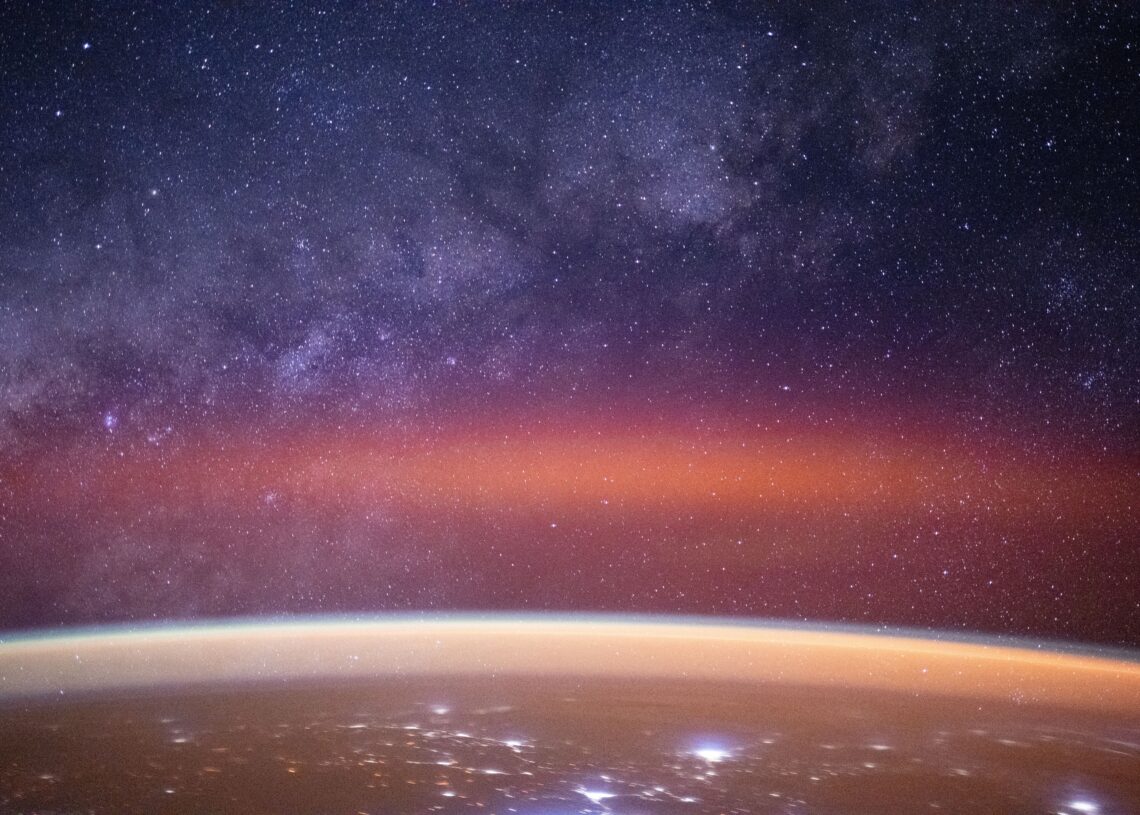
In the beginning, the Bible tells us,
God divided the light from the darkness.
And God called the light day, and the darkness He called night.
And so it has been ever since — until now.
Here in the 21st century, we humans are on the cusp of turning night into day — and bidding good night to the stars that have guided us home for thousands of years.
Two little-noted applications under review by the Federal Communications Commission would, if fully implemented, fundamentally remake the night sky. But the FCC, the satellite regulator, appears to have fast-tracked approval without much of a pause to weigh the benefits of these proposals against the harms they could cause to life on the planet.
A start-up called Reflect Orbital proposesto use large, mirrored satellites to redirect sunlight to Earth at night, with plans to bathe solar farms, industrial sites and even entire cities in light that could, if desired, reach the intensity of daylight. At the same time, Elon Musk’s SpaceX wants to launch as many as a million satellites to serve as orbiting data centers — 70 times the number of satellites now in orbit. We could have a million points of light streaking across our skies at night.
The public comment periods for the proposals close on March 6 and March 9.
To be sure, there’s a lot of hype in these proposals. Musk is known to make wild forecasts, and SpaceX has launched not quite a quarter of the Starlink satellites for which it originally sought approval. Reflect Orbital expects to launch its first satellite in April, but its grand vision is largely “aspirational,” as its young founder, Ben Nowack, told me.
There’s also a lot of promise in these proposals. Moving data centers into space could advance AI capacities without devouring land, water and energy on Earth, while reflected sunlight could boost our clean energy supply and help with everything from food production to search and rescue.
But at what cost?
Scientists warn about metal pollution in the atmosphere depleting the ultraviolet radiation-blocking ozone layer, as well as diminished ability to detect near-Earth asteroids, debris and collisions. Above all, they expect a massive increase in light pollution. Even before anybody contemplated a million-satellite mega-constellation and satellites that intentionally brighten the Earth at night, a 2021 study found that the “skyglow” effect from orbiting bodies had increased light pollution by 10 percent. And that’s on top of terrestrial light pollution, which has been increasing up to 10 percent per year since 2011.
This untimely light contributes to the loss of insect and bird populations. It disrupts migration, the seasonal patterns of plants and the circadian rhythms of animals ranging from sea turtles to mountain lions. Humans lose sleep because of artificial light, which potentially contributes to obesity and cancer. Light as faint as a full moon has been shown to alter our sleep patterns. Reflect Orbital aspires to produce for its customers the light of up to 1,000 moons by 2028 and 360,000 moons by 2035.
Then there’s the philosophical question: How will it feel if we can no longer gaze upward and see Orion, Ursa Major or the other constellations our ancestors have traced since Ptolemy? How will we perceive our place in the universe if we can no longer take in the twinkling starlight that began its voyage to us before the Pyramids rose in Egypt?
Ruskin Hartley, head of DarkSky International, said he worries the new satellite plans will eliminate something that “has been part of the human experience for as long as we’ve been humans.”
Weak international rules leave much of the regulation of satellites to the countries that launch them. In the U.S., which produces by far the most satellites, this falls to the FCC, which bases its decisions on things such as radio-frequency interference. The FCC has mostly exempted satellites from the National Environmental Policy Act, which requires federal agencies to take into account environmental considerations. In fact, the current FCC has proposed strengthening the exemptions for satellite operations. Satellite operators including Amazon, whose founder owns this news organization, support that effort. And bipartisan legislation that just cleared the Senate Commerce Committee would further speed approval of new satellites.
In short: There is nothing left to protect the night.
Reflect Orbital’s Nowack describes a scene right out of sci-fi: An extremely bright star appears on the northern horizon and makes its way across the sky, illuminating a 5-kilometer circle on Earth, then setting on the southern horizon about five minutes later, just as another such “star” appears in the north. To make the night even brighter, a customer could make 10 “stars” appear at once in the north by ordering them on an app.
Two such artificial stars are in development in Reflect Orbital’s factory. Nowack showed them to me on a Zoom call. The first to launch is 50 feet across, but he plans later to build them three times that size. If all goes according to plan, he’ll have 50,000 of them circling the Earth in 2035 at an altitude of around 400 miles.
Nowack plans to start selling the service “in mostly developing nations or places that don’t have streetlights yet.” Eventually, he thinks, he can illuminate major cities, turn solar fields and farms into round-the-clock operations for any business or municipality that pays for it. He likened his technology to the invention of crop irrigation thousands of years ago. “I see this as much the same thing,” he said, arguing that people would no longer have to “wait for the sun to shine.”
If Reflect Orbital succeeds — a big “if” for a company that has yet to launch a single satellite — it would by definition increase light pollution when it illuminates areas that have been in the dark. But Nowack said he can light cities with “less total photons spilling into the environment than streetlights, with the same illumination level on the ground.” As for its effects on birds and other creatures, he said, “we’re going to be doing these studies with the first satellites.”
If he does those studies, he will likely discover what Mike Parr, president of the American Bird Conservancy, can already tell him: “There’s an overwhelming amount of information that suggests that birds are affected during night migration by light.”
SpaceX’s orbiting data centers, some 300 to 1,200 miles above the Earth, would individually be less noticeable than Reflect Orbital’s reflectors, because they don’t intentionally direct sunlight toward Earth. But the sheer number of them, and SpaceX’s ability to launch a large volume of satellites, means these could alter the night sky more quickly. “Launching a constellation of a million satellites that operate as orbital data centers is a first step towards becoming a Kardashev II-level civilization— one that can harness the Sun’s full power,” the company boasts in its FCC filing.
SpaceX and the FCC didn’t respond to my requests for comment. SpaceX said little in its FCC filing about how it would limit the light pollution from its million satellites, beyond its assurance that it has been “developing industry-leading brightness mitigations.” But while SpaceX and others have found ways to reduce the amount of light their ordinary satellites reflect toward Earth, “these orbital data centers are probably going to be a lot larger,” said Roohi Dalal of the American Astronomical Society, and “when you make something bigger, it’s going to get brighter.”
Dalal said the new SpaceX satellites would compound problems for the $1 billion Vera C. Rubin Observatory, which is just coming online in Chile and will map the universe with the largest camera ever built. Studies indicate satellites will impair its ability to measure dark matter and fill its images with streaks. “The biggest potential for this observatory is what it’s going to discover that we weren’t expecting to see, and that’s challenging when you have satellite streaks going through,” Dalal said.
And astronomical interference may be the least of it. “Earth’s orbit is on track for a catastrophe,” an astronomy professor and a space lawyer wrote last week in the Conversation, an academic news site, about SpaceX’s proposal. In their long list of cultural and environmental harms, they noted that the average satellite lasts only five years, requiring constant launches to replace them and depositing “vast quantities of metals into the stratosphere” when the decommissioned satellites burn up. On Feb. 19, German scientists reported that they had documented a discarded SpaceX rocket releasing a plume of chemical pollution as it reentered the atmosphere.
Maybe the significant gains to humanity from these new satellites are worth the losses to astronomy, to the atmosphere, to biodiversity, to human health and to the night sky. Reasonable people can disagree about that.
But nobody is making that cost-benefit calculation, even though the actions of American satellite companies are altering the environment in every country on Earth. Instead, the FCC gives satellites a “categorical exclusion” from environmental review because, it claims, satellite operations “normally do not have significant effects on the human environment.”
You don’t have to be an astronomer to know that’s just incorrect. You only have to look at the night sky.
The post We’re about to turn night into day. Is that a good idea? appeared first on Washington Post.