Elderly women going to bed in their winter coats. Unlit streetlamps hanging over pitch-black city streets. Emergency services setting up heated tents with drinks and snacks.
Such scenes are typical in Ukraine as Russia bombards power and heat networks. Now they are being replicated across Russia, but the culprit is the country’s deteriorating public utilities, not enemy fire.
Since December, a dozen major blackouts and central heating cutoffs across Russia, from the Murmansk region in the European Arctic to the Pacific Coast, have left hundreds of thousands of Russians with no electricity or heat for days during an unusually brutal winter.
Russia’s utilities suffer from chronic underfunding, made worse by resources being diverted to the war, and breakdowns have become more common.
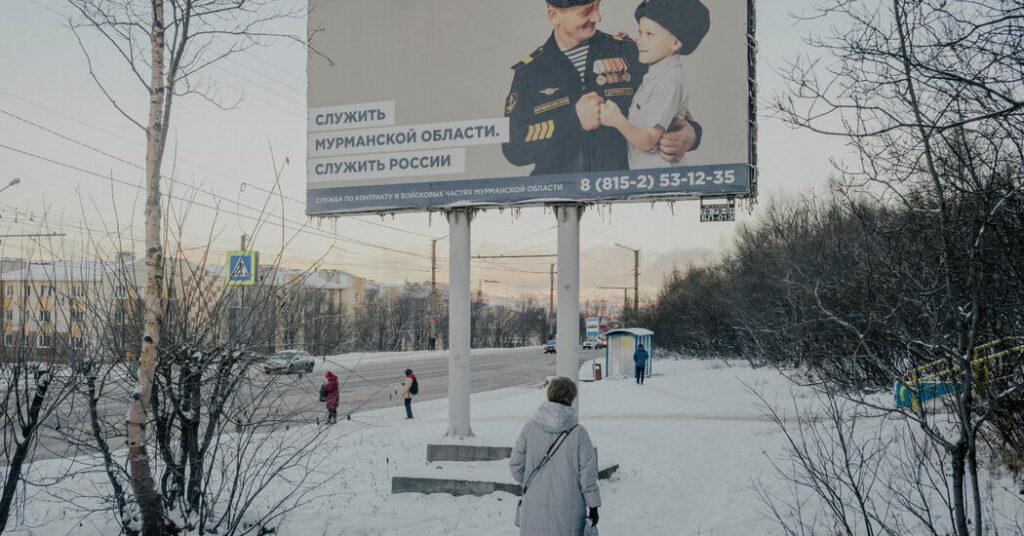
“Murmansk feels like a frontline city,” said Violetta Grudina, a local activist now living in exile in Lithuania, who keeps in touch with many people in the city. “Ukraine has been left in the dark while it’s being bombed by Russia. Murmansk is the same but no one is bombing it.”
From across the country, Russians have been sending messages and videos of bursting pipes and freezing, darkened homes to Yevgeny Stupin, formerly an elected member of Moscow’s city assembly, who publishes scenes of the infrastructure breakdown every day in his Telegram account.
There has been little public protest. In an exceptional case, a dozen angry residents in the Siberian city of Omsk last month stopped their cars and blocked a road to attract the attention of the local authorities, who have not been able to fix the central heating main for over two weeks. The protesters were later fined for an “illegal gathering,” according to local media.
The Kremlin’s repression of any expressions of discontent, particularly if it concerns opposition to the war, has spooked people into submission, said Mr. Stupin, who opposes the war and now lives in exile in Germany.
President Vladimir V. Putin told a government meeting last year that Russia needed to spend 4.5 trillion rubles (about $59 billion) by 2030 on upgrading utilities — less than half of what his government advised in an official strategy in 2022. A 2024 report by the state-owned Sberbank said improving the heating systems alone, let alone the electrical grid, would require several times the figure Mr. Putin cited.
But even the promised funds have not reached the utilities. The federal budget slated just 150 billion rubles, or less than $2 billion, for them last year, and an official report by the Russian Audit Chamber in December found that only one-third of that had been allocated.
Investment in utilities, education and health care have all fallen by the wayside as the rising cost of the war has swelled military spending.
“A lot of people are aware of this connection to the war but they are too scared to speak out,” Mr. Stupin said.
In Murmansk and Severomorsk, Arctic Ocean port cities, at least 73,000 people struggled without electricity for five days after power pylons collapsed in late January.
Andrei Chibis, the Murmansk region governor, attributed the biggest blackout in years to “frost and winds.” That drew a flood of angry rebukes on his Telegram account, citing years of neglect. Ms. Grudina, who lived in the region all her life until she fled Russia in 2022, said she had never seen “locals so livid with the authorities.”
Within days, an official inquiry revealed that some of the pylons, meant to last no more than 40 years, were 60 years old.
The days-long blackout also disrupted central heating, forcing some schools and day cares to shut down, while others continued to teach without lights at a time of year with only a few hours of sunlight each day. The Russian Army set up stations in Murmansk to serve hot meals, and city authorities pitched heated tents to offer snacks.
“It’s really bad: We have no water and no power. You can’t have a shower, can’t cook a meal or bathe your child,” one resident sheltering at a library in Murmansk told state television.
In nearby Severomorsk, the base for the Russian Northern Fleet, city streets were pitch-black.
Three weeks after the blackout, neighborhoods in Murmansk still suffered sporadic heating cuts.
In eastern Siberia, over 1,300 people in the remote town of Bodaybo were left without heat or running water at the end of January, after a water main froze, according to officials. With temperatures hovering around minus 30 degrees Celsius (minus 22 Fahrenheit), officials declared a state of emergency. Pro-Kremlin activists collected tents, sleeping bags and other aid in the regional capital, Irkutsk.
It took utility services three weeks to fully restore heating to all homes. People stocked up on electric heaters, but those do little more than make conditions survivable. Residents, bundled up in winter coats indoors, told state television that even with the heaters running, they often had to leave some rooms in their homes below freezing.
Natalya Rotkina, a 57-year old wellness professional, had no heating at her home in Bodaybo for almost a week, after an earlier system breakdown in December.
“We had heaters on and slept in shifts to watch out for the electricity. We were scared the wiring might catch fire,” she said by phone from Bodaybo. “We have some heating disruptions more or less every winter but this kind of collapse — we have never seen anything like that.”
Top Russian officials have been open about the deplorable state of utilities.
Irek Faizullin, Russia’s minister for construction and utilities, told Parliament in 2024 that 40 percent of the country’s utilities were in serious disrepair. A senior pro-Kremlin lawmaker warned Parliament last year that “the number of accidents is going to grow” unless Moscow makes fixes.
Utilities have been a drag on the Russian budget for years, worsened by widespread corruption and a lack of transparency, said Vladimir Milov, an economist and former deputy energy minister. Mr. Milov, another dissident living in exile, said the war in Ukraine had made Russian utilities even more vulnerable.
“The money that was promised to upgrade the utilities network has gone to fund the war,” he said.
Alina Lobzina contributed reporting.
The post Russians Shiver as War Worsens Underfunding of Heat and Power Systems appeared first on New York Times.