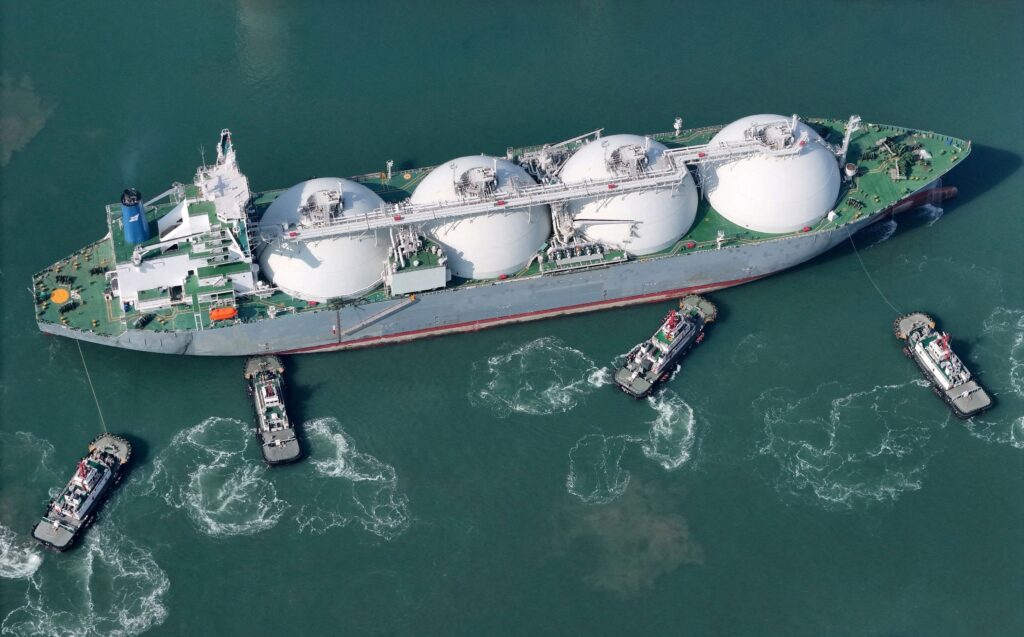
The Trump administration has handed a $370 million windfall to one of the world’s largest exporters of natural gas by allowing the company to claim an “alternative fuels” tax incentive for operating some of the planet’s most heavily polluting ships.
Financial disclosures made Thursday by liquefied natural gas (LNG) exporter Cheniere reveal that the IRS green-lit the payment earlier this year, ruling that the company’s tankers powered by liquefied natural gas that ship the fossil fuel worldwide qualified for the incentive.
The IRS decision was met with sharp criticism from environmentalists and bewilderment from tax experts, who said the alternative-fuels incentive was never meant to be used on the massive vessels. Most U.S. tankers carrying LNG use the “boiloff” from fuel they are shipping to power their engines, as Cheniere’s vessels do.
“This is very questionable,” Zorka Milin, the policy director at the nonprofit Financial Accountability and Corporate Transparency Coalition, said of the IRS ruling. “I am not sure how they could reach this conclusion.”
The methane emissions from tankers burning LNG, according to scientists, are a significant driver of climate change.
Cheniere declined to respond to detailed questions from The Washington Post. The IRS and the Treasury Department did not immediately respond to questions.
The fossil fuel giant received the credit for the period spanning 2018 to 2024, according to Cheniere’s disclosures, suggesting other LNG firms could also receive the same credits retroactively. The incentive expired at the end of 2024.
Cheniere invoked a George W. Bush-era tax break that was created to promote more energy efficient and environmentally friendly vehicles and boats during a time of concern about U.S. energy independence, before the fracking boom transformed the country into a major exporter of LNG.
The 50 cents per gallon alternative-fuel tax credit was used to boost biodiesel and ethanol as a fuel for autos. The tax code also specifies that it can apply to natural gas-powered “motorboats,” which federal regulations define as vessels shorter than 65 feet. Tax experts say the credit was widely understood not to apply to bunker fuel for giant shipping vessels.
“Cheniere has apparently succeeded in convincing the IRS that its city-block-sized ocean tankers are motorboats,” said Lukas Shankar-Ross, an advocate at the environmental group Friends of the Earth. “It is hard to understand how they could get away with that.”
There appear to be no other public records of LNG exporters claiming the credit for powering their hulking vessels. Cheniere first disclosed that it was seeking the tax break in a financial filing last year.
The company’s filings suggest its efforts to claim the credit predate the Trump administration. But tax officials did not rule in its favor until after Donald Trump returned to the White House.
Company CEO Jack Fusco donated at least $250,000 to Trump campaign committees in 2024, according to donor records. He was among the oil and gas executives at an April 2024 dinner where Trump urged them to collectively contribute $1 billion to his campaign, The Post previously reported, arguing that it would be a “deal” considering all of the taxation and regulation he would help them avoid.
Sen. Jeff Merkley (D-Oregon), in a statement to The Post, called the IRS decision to grant Cheniere the $370 million cash payment “a vivid example of Trump rewarding the fossil fuel companies that bankrolled his reelection” and “the latest in a pattern of pay-to-play donations leading to favorable treatment by the Administration.”
The company’s latest annual report, issued Thursday, says that its “use of LNG as transport fuel in our operations enabled us to claim federal alternative fuel excise tax credits totaling $370 million for the period spanning from 2018 to 2024.”
The company wrote that it had not claimed the tax credit by the end of last year “because there were inherent uncertainties associated with the realizability of these claims.”
Earlier this year, according to Cheniere’s annual report, the IRS “issued a closing letter to us indicating completion of their review, confirming our eligibility and issuing final cash payment.”
When Cheniere first disclosed that it was seeking the credits in its annual report last year, it wrote that the move was justified because the company is using LNG to power its ships as a means to “mitigate our emissions” and offer “a substitute for diesel and heavy fuel oils, which have higher emission factors.”
But industry experts said that burning LNG is standard in the industry and diesel has long accounted for only a tiny fraction of the fuel burned by LNG tankers.
“When LNG carriers burn LNG for propulsion, it’s not an alternative fuel, it’s the fuel,” said Kirsten Sinclair Rosselot, an environmental performance analyst who runs the consultancy Process Profiles.
The post Fossil fuel giant wins $370 million tax break for burning gas as an ‘alternative fuel’ appeared first on Washington Post.