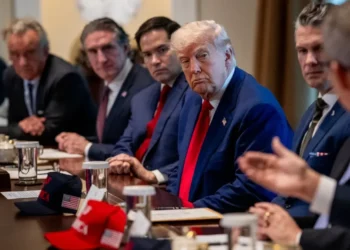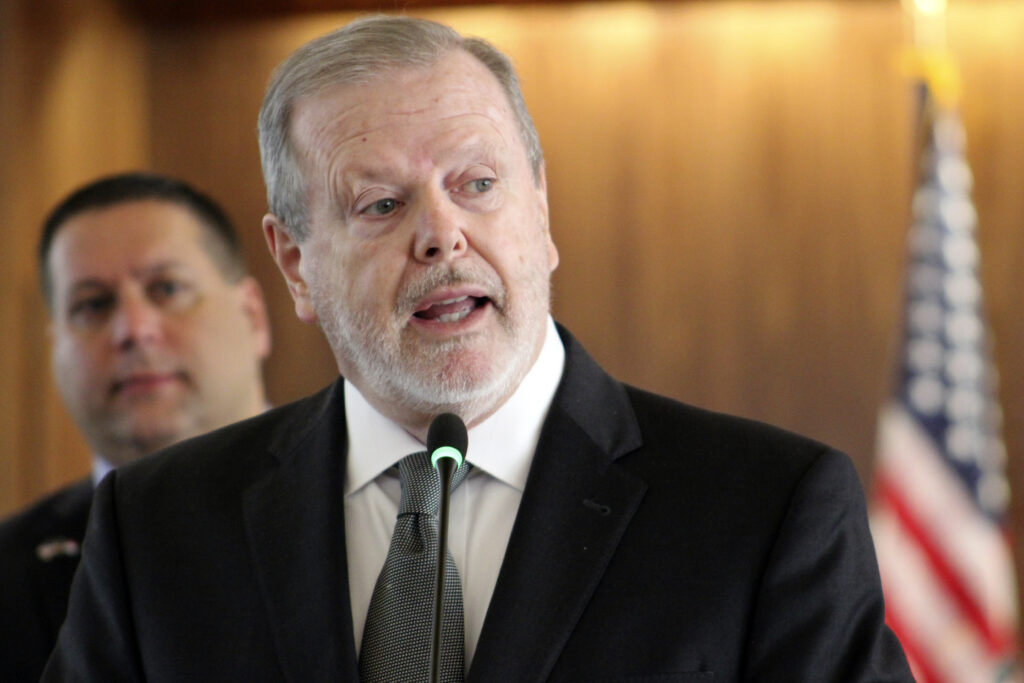
As North Carolina’s longtime state Senate leader weighed President Donald Trump’s push to redraw the congressional map last year, his team privately hoped to get something in return, according to two people familiar with their thinking.
The GOP Senate leader, Phil Berger, was facing a formidable primary challenge from a popular sheriff. And Berger’s team thought redistricting would help secure Trump’s endorsement, said the two people, who like some others spoke on the condition of anonymity to discuss private conversations.
In an interview, Berger vehemently denied any quid pro quo and said he never spoke with Trump to seek his support. But several weeks after he helped pass the new map meant to net one more House seat for Republicans, the president made an unusual endorsement in a local race.
“Phil Berger has my Complete and Total Endorsement for Re-Election,” Trump wrote on social media, making no mention of redistricting in a long list of Berger’s accomplishments. He urged Berger’s opponent — a staunch ally who chaired Trump’s 2020 campaign in North Carolina — to drop out.
The race shows how the power of Trump’s endorsement can advance his agenda. But it could also end up demonstrating Trump’s limits as Republicans are bracing for electoral losses. With days to go until the March 3 primary, one of the most powerful Republicans in North Carolina is locked in a tough fight for reelection, despite Trump’s help.
Challenger Sam Page, the longtime Republican sheriff of Rockingham County, could end up unseating Berger, according to state GOP operatives — an outcome that would upend North Carolina politics. Berger, who has led his chamber since 2011, has more resources behind him, but his team has privately indicated they are worried the Senate leader could lose his race next week, people familiar with their outlook said.
The race for Senate district 26 has become the most interesting primary on the North Carolina ballot next week — a test of Berger’s clout in the Republican Party he helped lead from minority to supermajority in the state Senate and whether Trump’s endorsement can shore up an establishment figure facing a serious challenge.
The millions of dollars flowing into the race have turned heads in North Carolina, signaling the competitiveness and importance of a single primary.
“This is what you normally see in a congressional race, if that,” GOP strategist Jonathan Bridges said.
Berger is in some ways an unusual candidate for a Trump endorsement — a political insider who has little relationship with the president and was not a clear bet to win. In an interview, Berger said he didn’t know whether redistricting was part of Trump’s calculus because he “never had a conversation with the president until the day he called to endorse me.”
He supported redistricting, he said, to help elect another member of Congress who would support Trump’s policies.
“Absolutely not,” he said of accusations he backed the redraw to secure an endorsement.
Trump launched an unprecedented mid-decade redistricting push last summer to try to ensure Republicans maintain control of Congress as he has openly expressed concern that Democrats could investigate him if they win back one or both chambers. Trump’s efforts set off a national gerrymandering war that has stretched across numerous states with ripple effects on midterm races — including in North Carolina.
Page said he got a call from Trump in December, the day he filed to formalize his candidacy. The president offered Page a job in Washington; the sheriff said he was flattered but committed to staying in the race.
Page reminded Trump that Berger once supported his rival, Ted Cruz, in the presidential primaries. He touted his own loyalty: “I’ve been with you since 2016,” he recalled saying. Trump liked the cowboy-hat-wearing sheriff and — by Page’s account — once declared him to be “right out of central casting.”
But Page said Trump told him he was backing Berger “because he’d helped him with the mapping, the redistricting.”
“I understand how things work,” Page said later in an interview, emphasizing his support for Trump.
The White House declined to comment. Emma Hall, a spokeswoman for the Republican National Committee, said the president’s endorsement is “the most powerful in modern political history” and that Trump “reserves the right to back the candidate he believes will win and advance his agenda.”
Berger argues his lengthy leadership in the state capital gives him the relationships to get things done and bring state money to his district. Page, who has served as county sheriff since 1998, says Berger is too cozy with lobbyists and that the district needs a conservative who will “take on the Raleigh establishment.”
“This is David versus Goliath,” said Patrick Sebastian, a GOP consultant running top outside groups boosting Page and opposing Berger.
Berger did not say how much he is spending, but some Republicans said there are concerns the race will divert resources from other state legislative contests in the general election. Berger responded that some officials have ignored or underestimated primary challenges — and he didn’t want to make the same mistake.
“I have for almost two decades now been the person most responsible for raising money for the Republican caucus effort in the general election. … We will have the resources that we need,” he said. “The folks that have donated to me in the past understand that job one is for me is to ensure that I win my primary. Job two is to deal with the general election.”
Strategists said early voting numbers have looked encouraging for Page. His stronghold is Rockingham County, and turnout there has been unusually high.
One reason Trump’s endorsement hasn’t been decisive, some Republicans suggested, is that both candidates have Trump bona fides to tout. Berger’s website features Trump’s stamp of approval front-and-center, while Page’s campaign website calls him a “passionate supporter” who led Sheriffs for Trump in 2016.
The race also features two candidates who have built their own brands in the area over decades. Much of the race has revolved around local issues, such as backlash to a casino that Berger-backed legislation would have brought to Rockingham County a couple years ago. Berger abandoned the idea and said there are no plans to bring it back.
A loss for Berger would be “an earthquake in North Carolina politics,” said Morgan Jackson, a veteran Democratic strategist in the state.
“The most powerful Republican in North Carolina for the last 15 years has been Phil Berger,” Jackson said, “and if he were to go down in a primary, after having spent [millions] … and Trump’s endorsement … I’m not sure what the equivalent is.”
The post Why Trump got involved in a state senate race — and why he might lose appeared first on Washington Post.