There are certain women designers who seem to spawn their own cults of consumers: shoppers who see themselves in their work (and their myth), and feel a visceral connection to their clothes. Phoebe Philo is one such name. Mary-Kate and Ashley Olsen of The Row are others.
And for years, between 1994 and 2016, so was Consuelo Castiglioni of Marni.
A shy Italian whose hair always seemed to be slipping its moorings, Ms. Castiglioni turned her family’s fur business into an in-house couturier for the mind-in-the-sky creative class. She was an expert at embracing the idiosyncratic and the slightly odd; at taking the ingredients of Op Art and midcentury modern furniture and making them into the sort of fashion that seemed to announce a true original.
But then Marni was bought by a conglomerate (Renzo Rosso’s Only The Brave) and not long after, Ms. Castiglioni departed. Her successor, Francesco Risso, transformed the brand into a haven of extreme — and often extremely wacky — experimentation. It was fun to look at, but often impossible to wear. Last year, Mr. Risso was replaced by the Belgian designer Meryll Rogge, who, in her debut show on Thursday, took Marni straight back to its roots.
Ms. Rogge, it turns out, was as much a fan of Ms. Castiglioni’s Marni as any of the original fans. As a young woman, she bought a Marni skirt to wear to her brother’s wedding (or so she said backstage before the show). As a young designer working for Marc Jacobs, she spent her first paycheck on Marni shoes. Little wonder then that, as the new creative director of the house, she embraced not just the brand’s archives but its foundational ethos, filtered through a contemporary lens.
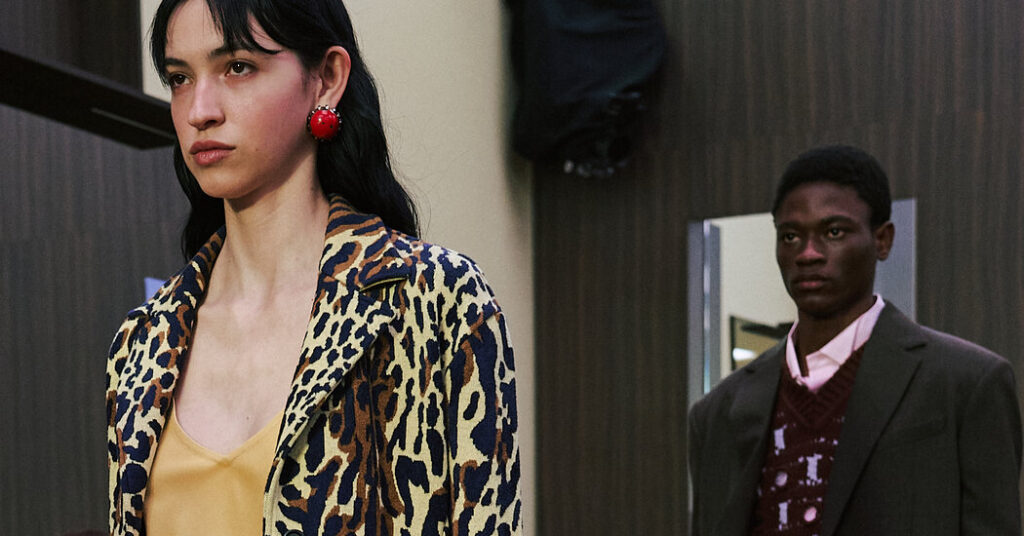
The once-and-now-future Marni dots were there, in giant mother-of-pearl paillettes on tank tops and pencil skirts. So were the 1970s stripes in different sizes on shirts and trousers. So, too, were the funky color combinations: baby blue and mud brown; Creamsicle and new-leaf green; gold and steel gray.
A leopard-like coat inspired by a design in a 1996 collection was remade in knit, not fur. Leather skirts and pants were secured by industrial snaps. Waistlines were dropped to the hips, and tops often cropped to show the slip underneath. Men’s shirts dangled to the knees.
Nothing matched, but everything went together. If it was less sophisticated than the original incarnation, it was still both offbeat and functional — and now Ms. Rogge can start to make it her own. You could practically hear the sighs of satisfaction from the Marni-obsessives in the room.
Vanessa Friedman has been the fashion director and chief fashion critic for The Times since 2014.
The post The Cult of Marni Returns appeared first on New York Times.