You’re reading The Checkup With Dr. Wen, a newsletter on how to navigate medical and public health challenges. Click here to get the full newsletter in your inbox, including answers to reader questions and a summary of new scientific research.
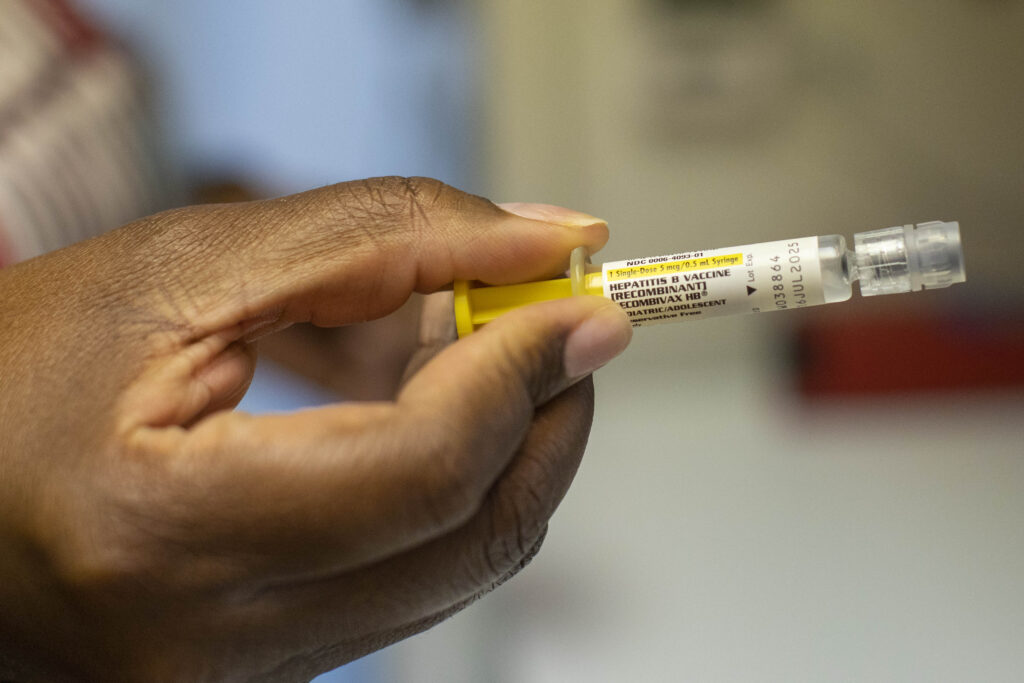
Many readers are incensed that federal health officials may go after vaccines containing minuscule amounts of aluminum salts. As I wrote this week, the allegation that these vaccines cause harm is simply not supported by credible evidence. Meanwhile, people are exposed to far more aluminum every day through food and drink than from vaccines.
Several people, however, raised thoughtful follow-up questions, which I wanted to address here. Enrique from D.C. said he does not believe Health Secretary Robert F. Kennedy Jr.’s false claims that aluminum in vaccines causes autism. But he worries about how persuasive those arguments have become. “A lot of people seem convinced,” he wrote. “If that’s the case, why not just take aluminum out of vaccines the way manufacturers removed thimerosal?”
Enrique raises a fair point. Last year, advisers to the Centers for Disease Control and Prevention recommended that influenza vaccines no longer contain thimerosal, a mercury-based compound widely used as a preservative in drug products. In practice, the shift was minimal. The agency estimates that 96 percent of flu shots were already thimerosal-free, as the compound was used primarily in multidose vials at large vaccination clinics.
Moreover, thimerosal has not been included in other routine childhood vaccines since 2001. Removing it from vaccines therefore had little real-world effect on supply or access.
Aluminum salts are a different matter entirely. The ingredient is used to strengthen the immune response. At least seven routine vaccines rely on them, and they have been part of vaccine formulations since the 1920s. Eliminating aluminum would not mean removing an optional additive; it would mean reengineering the vaccines themselves.
That process would not be quick. Manufacturers would need to design new formulations, conduct preclinical testing and complete large clinical trials to demonstrate safety and effectiveness. Kennedy and his advisers have also indicated they may require each component of combination vaccines to be tested independently against a placebo, with extended follow-up. Such requirements would add years to development timelines.
Moreover, it would require hundreds of millions of dollars. Why would a company make that investment in a climate where the administration is openly hostile to vaccines and apparently shifting goalposts on approval standards?
“Why are there some vaccines that use aluminum and some that don’t?” asked Kate from Maryland. “Is there a biological reason why it’s needed in some cases and not others?”
Yes, there is. Vaccines made from live, weakened viruses generally do not require aluminum because the virus itself replicates just enough to provoke a strong immune response. Examples include the vaccines against rotavirus; measles, mumps and rubella (MMR); chicken pox; and the oral polio vaccine.
By contrast, many other vaccines contain only a piece of the virus or bacteria, often a purified protein or sugar from its outer surface. That component is what teaches the immune system to recognize and fight the real pathogen. Because these vaccines do not contain a live organism, the immune response they trigger can be weaker. Aluminum helps amplify that response. Scientists call such enhancing ingredients “adjuvants.”
Vaccines that protect against multiple diseases in a single shot often require less adjuvant than single-component vaccines. That is because each component provides its own stimulus to the immune system. When several antigens are combined, the overall immune activation is greater, so less additional boosting is needed.
A recent JAMA analysis illustrates this point. One dose of the combination vaccine Pentacel, which protects against diphtheria, tetanus, whooping cough, polio and Haemophilus influenzae type B (HiB), contains about 0.33 milligrams of aluminum. By contrast, administering comparable vaccines separately can total up to 0.725 milligrams.
This is worth emphasizing because administration officials have advocated separating combination vaccines. Doing so would actually increase aluminum exposure while also adding the burden of more injections, more clinic visits and higher health care costs.
“Pediatrician here,” wrote Rick from Ohio. “I seem to recall that there was a big study that found evidence for aluminum being linked to asthma in kids. What’s your take — is Kennedy on to something here?”
I believe Rick is referring to a 2023 study published in Academic Pediatrics that found an association between aluminum exposure from vaccines and asthma. The study has been roundly criticized for its methodological shortcomings. Key factors that strongly influence asthma risk, including family history, socioeconomic background and environmental exposures, were not adequately controlled. It also did not appropriately account for differences in feeding, such as breastfeeding versus formula, which affect aluminum exposure. When the data were reanalyzed with additional adjustments, including feeding method, the association was no longer observed.
Subsequent research examined the same question using larger datasets and more robust designs. A 2026 review in Pediatrics found no link between aluminum-adjuvanted vaccines and asthma. And a separate large 2025 Danish study of more than 1.2 million children followed over 24 years found no association between aluminum exposure from childhood vaccines and 50 health outcomes, including autism and asthma.
Daniel from Indiana posed a question about compromise: “In my view, removing aluminum from some vaccines would calm fears and help preserve trust in others,” he wrote. “Don’t you think that’s a trade-off worth considering?”
I understand Daniel’s point, but here’s the problem: The current campaign against aluminum salts is only one front in a broader effort to narrow vaccine recommendations and normalize distrust. Under Kennedy’s leadership, the CDC has already pulled back broad recommendations for vaccines such as influenza and rotavirus. Those shots do not contain aluminum. Neither does the MMR vaccine, which Kennedy has repeatedly questioned.
Nor is this limited to older, traditional vaccines. Kennedy has also attacked the mRNA covid vaccine, at one point referring to it as “the deadliest vaccine ever made.” If the premise is that removing one ingredient will defuse misinformation, the record suggests otherwise. The target keeps shifting.
Which brings us back to a more fundamental question: Why curtail access to vaccines that have been shown to save lives? The World Health Organization, in a recent analysis reaffirming the safety of aluminum-containing vaccines, estimated that childhood immunization has prevented at least 154 million deaths over the past 50 years. To withdraw these protections is not a compromise; it is a capitulation that will dismantle one of the most consequential public health achievements in modern history.
The post Answering your questions about aluminum in vaccines appeared first on Washington Post.