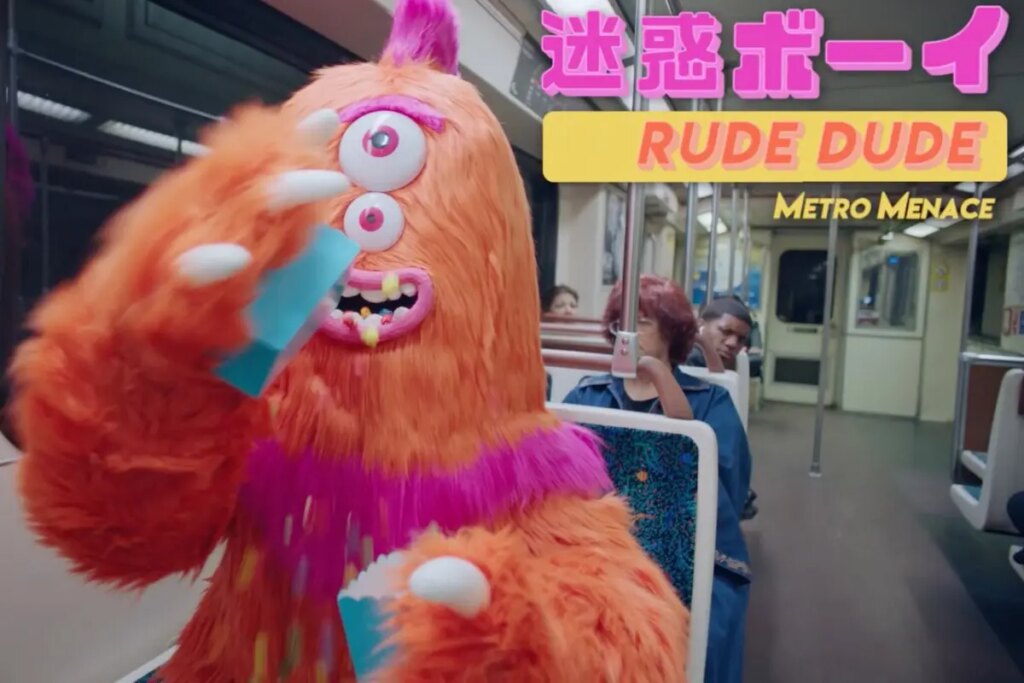
Before LADOT’s now-viral poop-emoji campaignstarted shaming riders who had bad behaviors on the bus, another LA transit agency had already gone fully off the rails — with a giant orange menace named Rude Dude.
Yes, really. Back in 2017, LA Metro rolled out its “Metro Manners”campaign, a trio of anime-style PSAs starring a purple-haired superhero called Super Kind, who bursts into song to battle a rule-breaking monster terrorizing bus riders.
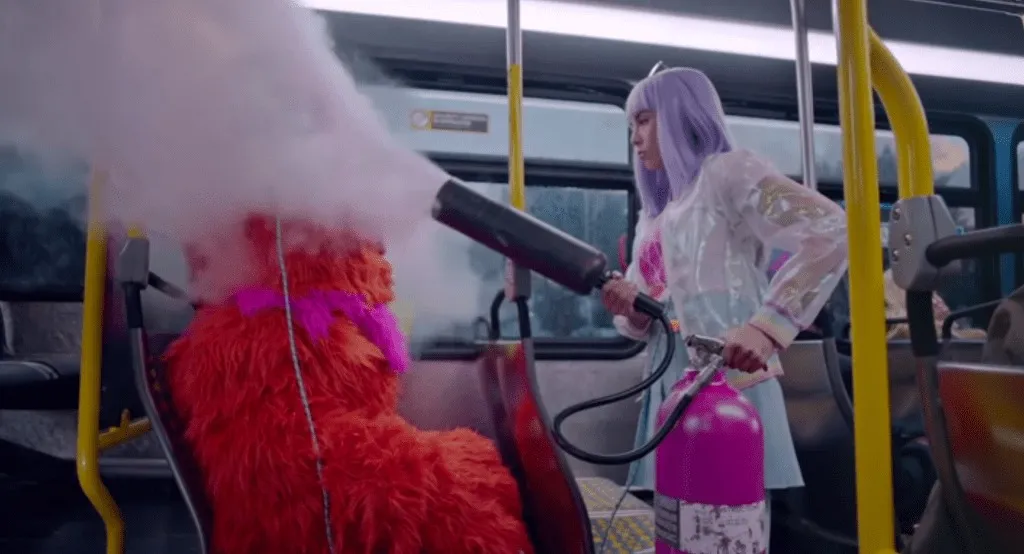
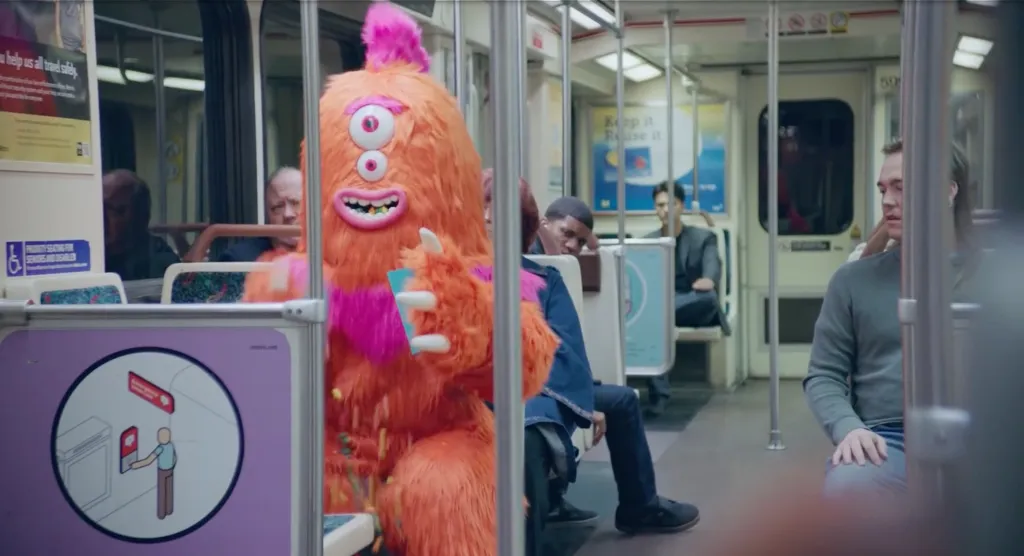
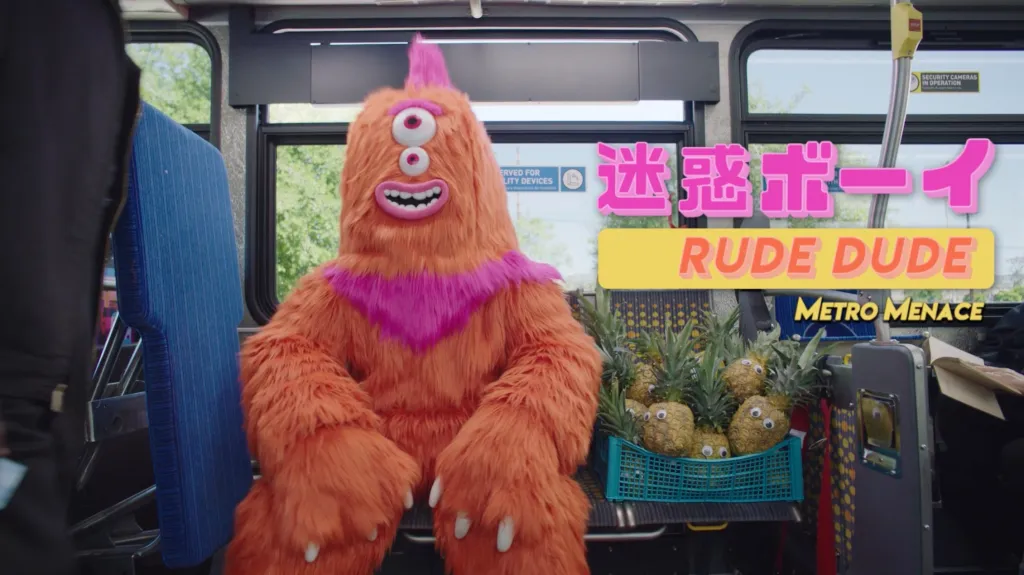
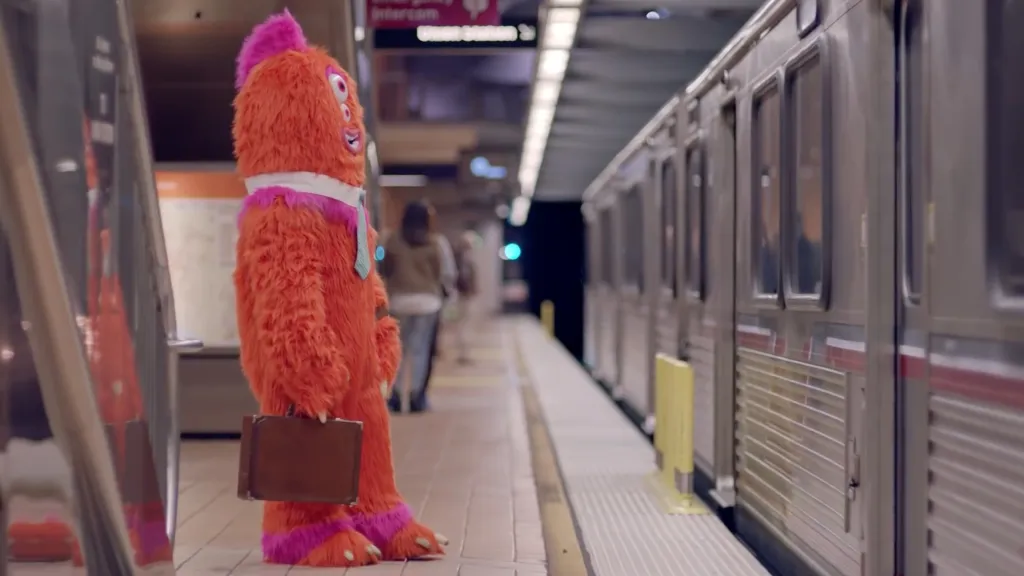
His crimes weren’t criminal, just deeply annoying: seat hogging, aisle blocking, eating on board, hauling junk everywhere and generally acting like public transit is his living room.
The videos, directed by YouTube filmmaker Mike Diva and featuring online star Anna Akana, leaned hard into bright colors, J-pop vibes and cartoon chaos.
In one scene, Super Kind literally vaporizes Rude Dude’s pineapple stash with laser eyes while polite commuters applaud.
The quirky approach won attention, and confusion.
Some riders loved it, calling it funny, nostalgic or “so cringe it’s good.” Others said it completely missed the mark, saying that the people blasting music, littering or causing problems aren’t exactly the same people watching etiquette cartoons online.
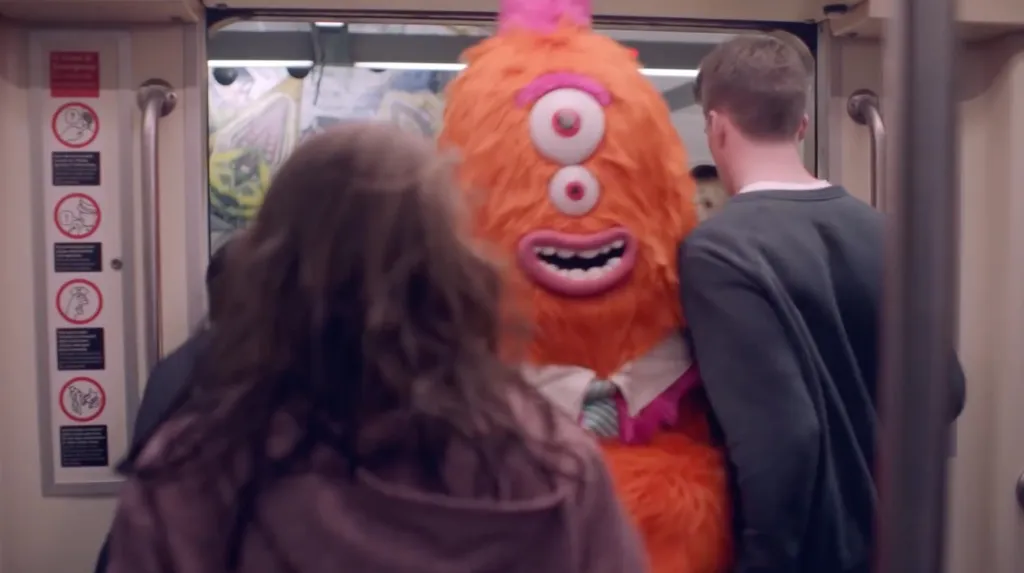
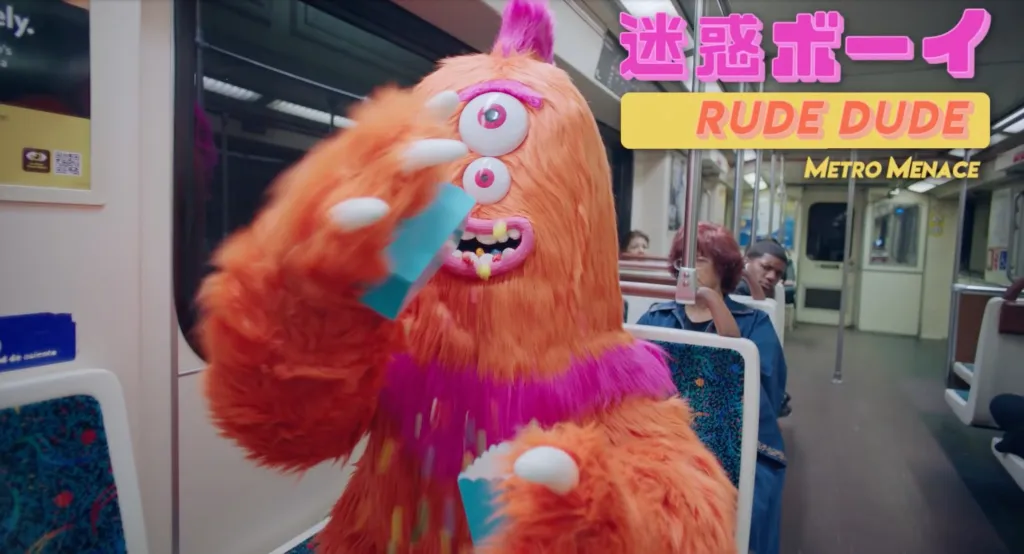
A recurring complaint: the ads seemed designed for people who already had manners. And many said what actually deters bad behavior isn’t PSAs, it’s enforcement.
Despite the mixed reception, Rude Dude didn’t fade quietly into the transit archives.
Metro turned the orange troublemaker into a mini brand. Hats, shirts, backpacks, notebooks, water bottles and even kids’ gear featuring the character are still sold through the agency’s online shop. At one point, Metro even raffled off themed TAP cards.
Metro did not respond to questions about how much the campaign cost or whether or not the shaming videos worked.
As The Post recently reported, LADOT rolled out a series of ads featuring smiling poop emojis to shame pooping on the bus, as well as drinking, listening to loud music and not paying bus fair.
The spots lean less anime fantasy and more sketch art, but the underlying strategy is familiar: shock people into paying attention to everyday civic behavior.
Taken together, the Rude Dude saga and the poop campaign suggest something distinctly Los Angeles: when officials can’t easily fix quality-of-life problems, they try to brand them.
Ask riders what they actually want, and most won’t say “more cartoons.” They’ll say cleaner vehicles, safer streets and visible enforcement.
If nothing else, LA’s transit bureaucracy has established a pattern: When behavior gets messy, the messaging gets weirder.
The post Before LADOT’s viral poop PSA, Metro had its own bizarre mascot called ‘Rude Dude’ appeared first on New York Post.