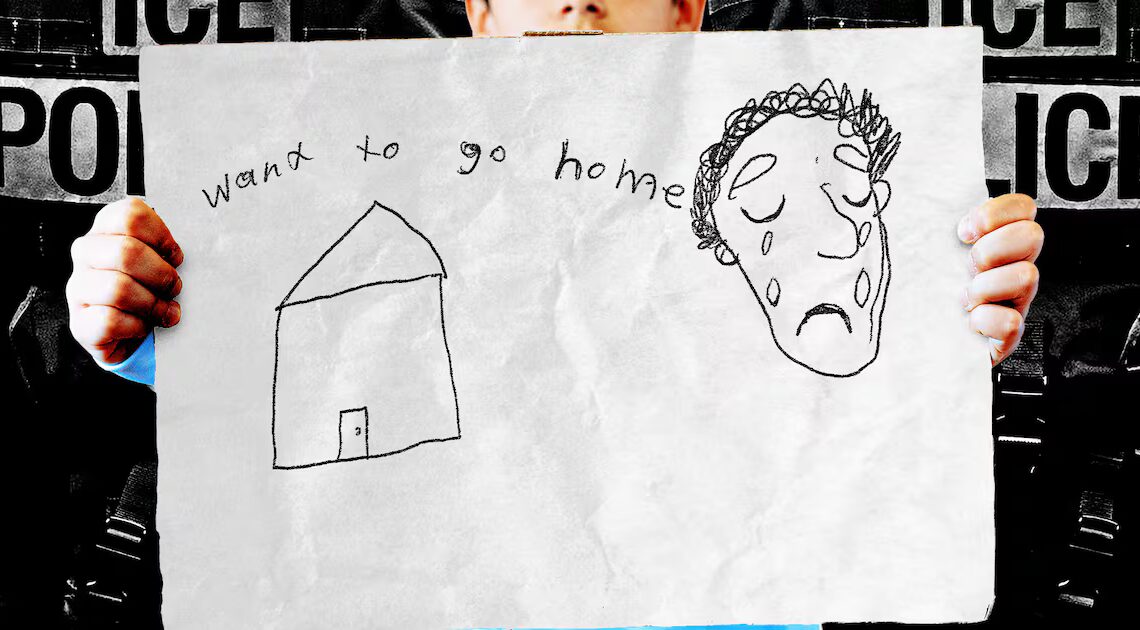
Heartbreaking drawings by children held inside a notorious immigrant detention facility lay bare the misery behind its walls—as guards stand accused of seizing their artwork to silence them.
The sketches, obtained by ProPublica after they were smuggled out of the South Texas Family Residential Center in Dilley, Texas, include a pencil drawing of a wobbly bus carrying stick figures, below which a child has written in Spanish: “Me quiero ir”—“I want to leave.”
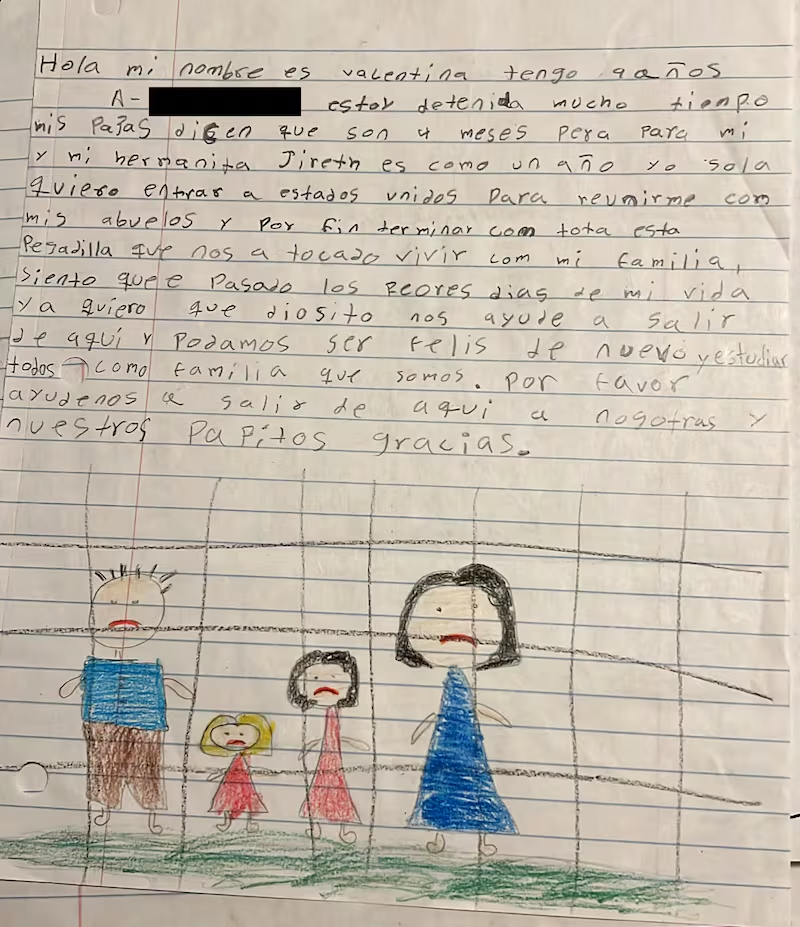
Nine-year-old Valentina drew her family as three frowning stick figures trapped behind a wire fence, alongside a plea to God to help them escape “this nightmare.”
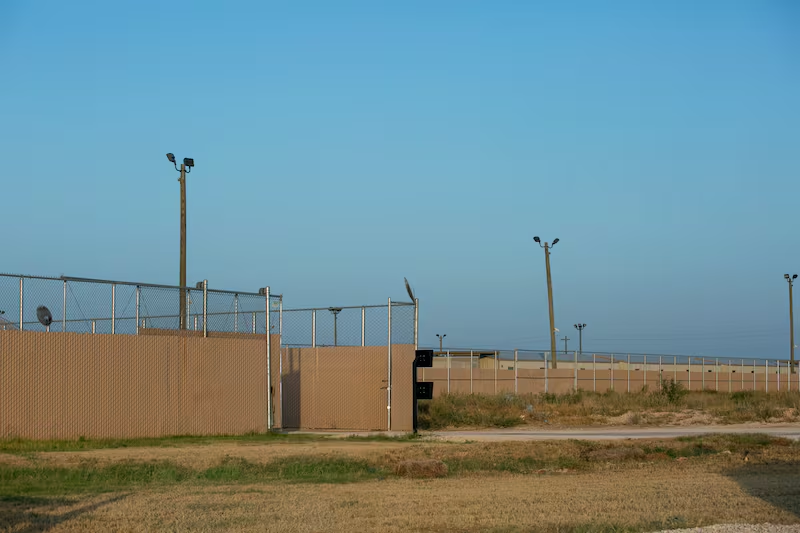
Dilley holds roughly 1,400 people behind a metal fence in a cluster of trailers and dormitory buildings 80 miles southwest of San Antonio.
The facility has been the subject of intense scrutiny since the detention of five-year-old Liam Conejo Ramos sparked national outrage in January.
More than 3,500 people have cycled through since the Trump administration restarted family detention last spring; advocates estimate roughly 800 of those currently held are children.
Liam was found to be unresponsive and barely able to open his eyes during a late January congressional visit. His father told lawmakers the boy had stopped eating and repeatedly asked for his mom.
Now ProPublica is reporting that guards have been conducting room sweeps—sometimes with as many as eight to 10 officers—seizing crayons, colored pencils, drawing paper, and artwork, including one child’s drawing of Bratz dolls.
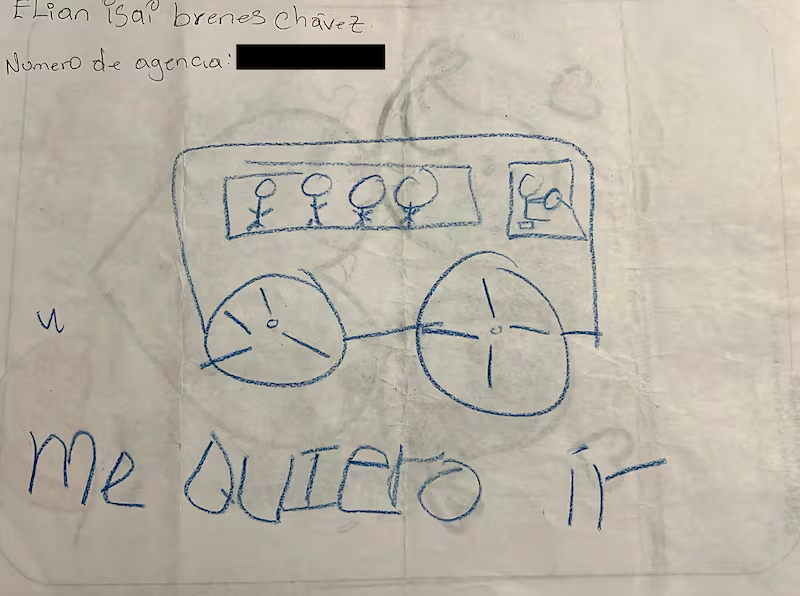
Former detainees and their lawyers say the crackdown intensified after the children’s letters and drawings drew widespread public attention following Liam’s detention.
With access to Gmail and other Google services in the facility library now blocked, detainees say they have been left increasingly unable to contact lawyers and advocates.
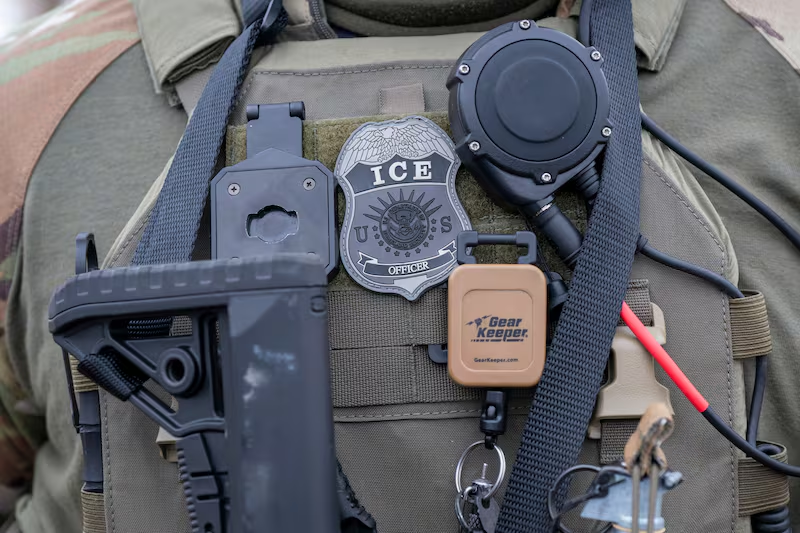
Guards have also been hovering within earshot during video calls with relatives and reporters, according to multiple former detainees.
Among those who found a way to preserve the children’s testimony was Christian Hinojosa, held at Dilley for four months alongside her 13-year-old son, Gustavo, before the pair were released in early February.
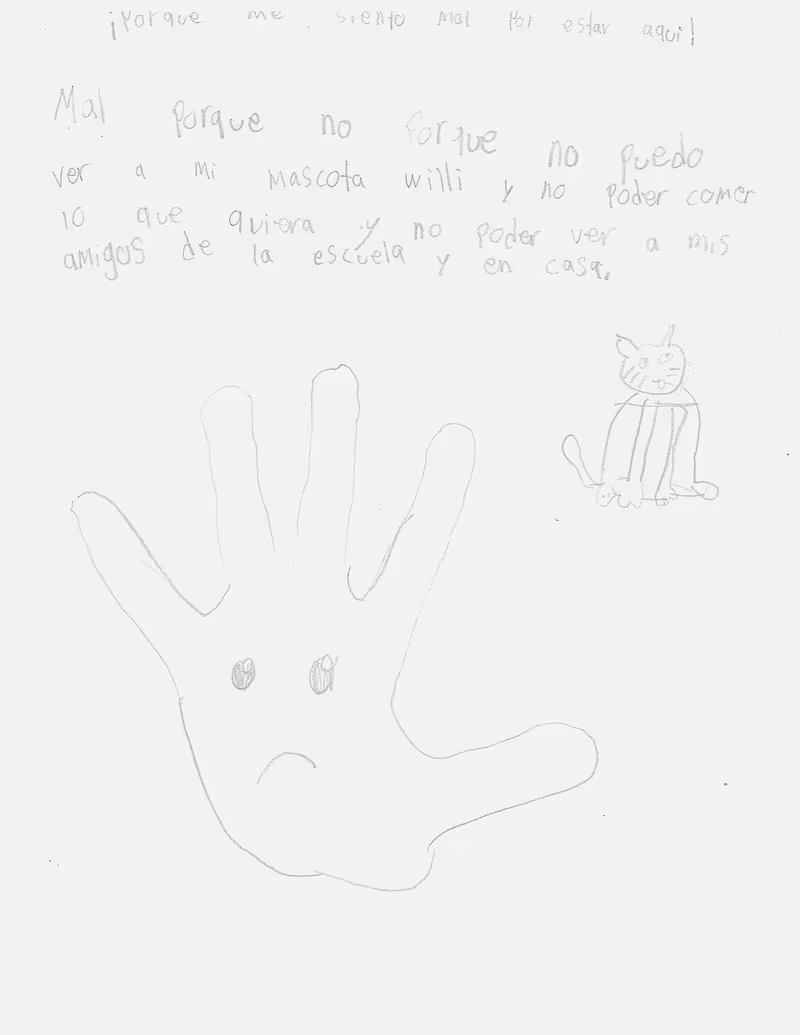
When guards arrived outside her room to search, she quickly slipped an envelope containing the drawings and letters inside her CoreCivic-issued jacket. “Thank God the weather was cool,” she told ProPublica.
The crayons her family had purchased at the commissary were gone afterward. “Even knowing that we had paid for those ourselves,” she said, “they removed them.”
Hinojosa walked out of Dilley with 34 pages of drawings and letters. “We were looking for help,” she said. “We were looking to be heard.”
Seven-year-old Mathias Bermeo wrote one of the letters she carried out: “I’m writing this letter so that you can hear my story. I need you to help us I have been detained for 23 days with my mom and my 3-year-old sister. I cry a lot I want to get out of here go back to my school they don’t treat us Well here there are many children we are kidnapped help!”
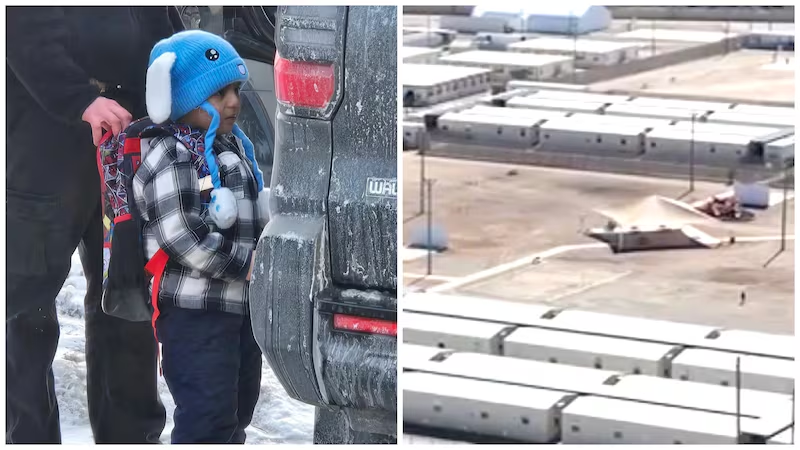
Texas Rep. Joaquin Castro, 51, who has visited Dilley twice, said he had no difficulty believing the accounts. “I’ve heard similar stories myself,” he said, adding that guards had repeatedly warned detainees not to speak to him. “Yes, I think there’s a lot of secrecy there.” His spokesperson said detainees had described “the inhumane and horrific conditions” inside.
The facility has been beset by health concerns. At least two measles cases were confirmed there in early February. More than 1,000 medical care complaints have been lodged since the administration reopened the center, according to a Texas nonprofit, and at least one lawsuit alleging inhumane conditions has been filed.
A spokesperson for private prison operator CoreCivic, which runs Dilley under a federal contract, told the Daily Beast that “nothing matters more to CoreCivic than the health and safety of the people in our care.”
In a statement to ProPublica, CoreCivic “vehemently denied” destroying or confiscating any drawings or supplies.
A DHS spokesperson denied that children’s letters were being destroyed, telling the Beast, “These comparisons of ICE detention facilities to concentration camps are gross and insulting to Holocaust victims. ICE is not destroying children’s letters.”
DHS claimed that in one instance, a mother assaulted detention center staff and resisted a guard. The agency said that as part of the investigation into the alleged assault, everything in the mother and daughter’s cell was seized.
Neither party addressed whether Google services had been blocked or whether guards were monitoring calls.
The post Tiniest ICE Victims’ Heartbreaking Pleas for Freedom Exposed appeared first on The Daily Beast.