Late last week, the Supreme Court struck down President Donald Trump’s tariffs imposed under the federal International Emergency Economic Powers Act (IEEPA) as unlawful. The Court did not, however, say how or when — or whether — the Trump administration will be required to return the money that was collected from the tariffs.
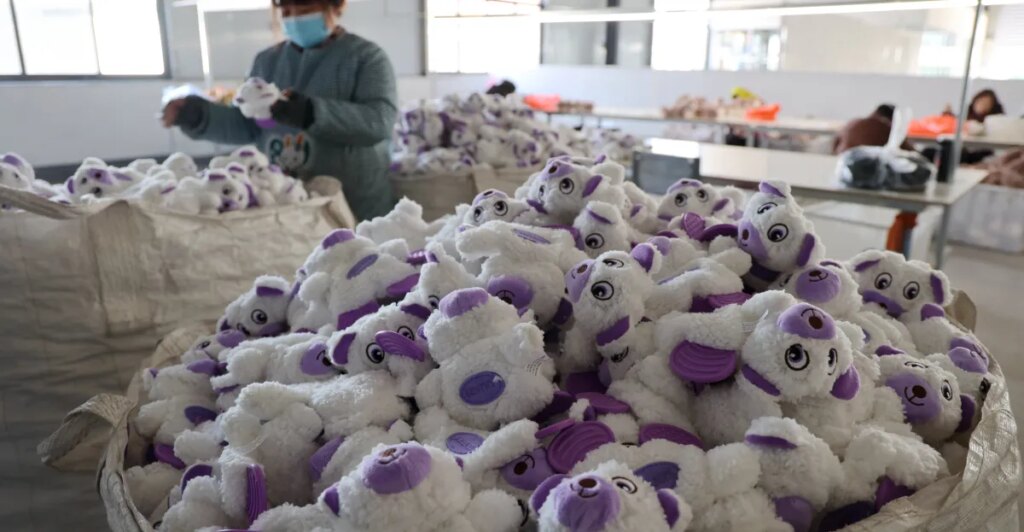
And for some small businesses, it was a lot of money. Learning Resources, which produces educational toys and is based in Illinois, relies on Chinese manufacturers to make their toys. With US tariffs on Chinese goods reaching a whopping 145 percent last year, Learning Resources senior vice president Stephen Woldenberg told Today, Explained co-host Noel King that the company had to pay upward of $10 million.
Woldenberg’s company ultimately took Trump to court; on Friday, the Supreme Court ruled in Learning Resources v. Trump that the tariffs were illegal.
Below is an excerpt of Woldenberg’s conversation with Today, Explained, edited for length and clarity. There’s much more in the full episode, so listen to Today, Explained wherever you get podcasts, including Apple Podcasts, Pandora, and Spotify.
What was your reaction and the family’s reaction [to the ruling]? Did everyone go out for drinks?
It was surreal. We were not expecting a ruling on Friday, so I was actually in a one-on-one with my father, who’s the CEO, and at about 9:02, 9:03, I was refreshing the SCOTUSblog website. And I saw that it was about tariffs and so I interrupted him. And so from there it was a whirlwind, but one of the most gratifying parts of the ruling was the reinforcement of rule of law in our country.
How much did y’all have to pay in tariffs since they were announced about a year ago?
We’ve paid in excess of $10 million and the payments were still coming due up until Friday. In 2024, we paid just over $2 million in tariffs. Those were Section 301 tariffs that were imposed in the first Trump administration. Those continued into 2025. It was the incremental [increase] that was really disruptive.
“We’ve paid in excess of $10 million.”
When a product arrives in the US, the importer of record is responsible for paying the tariff. These tariff rates ranged all the way up to 145 percent at its peak, and that’s quite disruptive. No company can afford to pay 145 percent tariff and still sell a product at a price where a consumer would actually buy it. And so as these tariff rates spiked, it became increasingly more difficult to plan and execute on our business.
The bargain that you would’ve had to strike, as I understand it, is that in order to sell in the United States, you would’ve had to be charging your customers double or triple for a toy?
At its peak? It was. We were looking down the barrel at having to do that. In order to fund the tax bill, we had to cut expenses elsewhere. We had to cut marketing expenses, investments. We had to look to slow hiring, all to fund the tariff tax bill.
Like so many businesses, we crave certainty. And so when we didn’t have certainty into what our tax bill was going to look like, it became much more difficult to make investment decisions. It became much more difficult for us to move forward on investing in innovation, which is really what drives our business.
Coming into 2025, we were already working on resourcing our supply chain. The president was very clear on the campaign trail he was going to impose tariffs. We didn’t think it would get that far. We felt like it would settle in a little below that, but nevertheless, we took him seriously, and at his word, and we were beginning to look at resourcing our supply chain. So we already had people working on this project. However, after the tariff rate spiked 145 percent for goods manufactured in China, we really had to double down. It was make or break for us.
Did you ever consider moving manufacturing to the United States?
We’ve looked into it. It really isn’t possible in our industry at a price where a consumer would buy the product. When we’ve looked to manufacture products in the US before, we’ve sent items out for quotes, and they typically come back with prices that range from 10 to 20 times higher than what we would pay if we manufacture the product overseas.
We make products that, generally speaking, are under $40 for the consumer market. It’s difficult to imagine that consumers would buy our products at the price we would have to sell them at if we manufacture them in the US. And this is confirmed to us because if it was possible, we would see our competitors doing it. And we’re not.
The Supreme Court says [these tariffs were] not legal. Does that mean that your business is getting some money back?
We expect to. The administration has been clear several times in court and in writing that they [expected] to pay back the tariffs if the Supreme Court ruled [against it].
We’re going to let the process play out, but we know one thing, it was not difficult for them to take the money, and so we expect that they should be able to just turn the tubes around and send it right back to us.
What does the future look like for your company now?
The government reimposed tariffs over the weekend under a different statute: 10 percent on Friday, and then increased to 15 percent on Saturday. We didn’t expect or anticipate that after the ruling tariffs would go away.
Our general perspective on this is that if this is a revenue-raising exercise, they should go to Congress. Have Congress vote in daylight and allow people in the US to see the decision they have made to raise taxes on Americans.
If it’s really a national security concern, they should focus on the products that are most vital to national security, whether it be chips or cars or whatever it might be. But don’t take down toys in the process.
The post Meet the toymaker who helped take down Trump’s tariffs appeared first on Vox.