At the age of 30, I became an editor. On my first day, while I was at lunch, a colleague tossed a photocopy of an essay onto my office chair, with a passage underlined. She’d highlighted a quote from a letter that Harold Ross, the founding editor in chief of The New Yorker, wrote to Katharine White, who ran the magazine’s fiction department: “An editor’s life is certainly a life of disappointment.”
My colleague presented me with that morose aphorism because she wanted me to know that I was crossing a bridge. No longer would I be the one generating the words. Now my work would be to sublimate the ego: to squeeze the best writerly selves out of staff members, to give them ideas, to kill their infelicities and rescue them from their errors, to soothe and to prod, often in the same breath.
After several years, I realized that wasn’t me. I missed my own byline, the ability to prosecute arguments that were my own property. What I lacked was the gift of self-effacement. This week brought the death of the most elegant practitioner of self-effacement I’ve ever known.
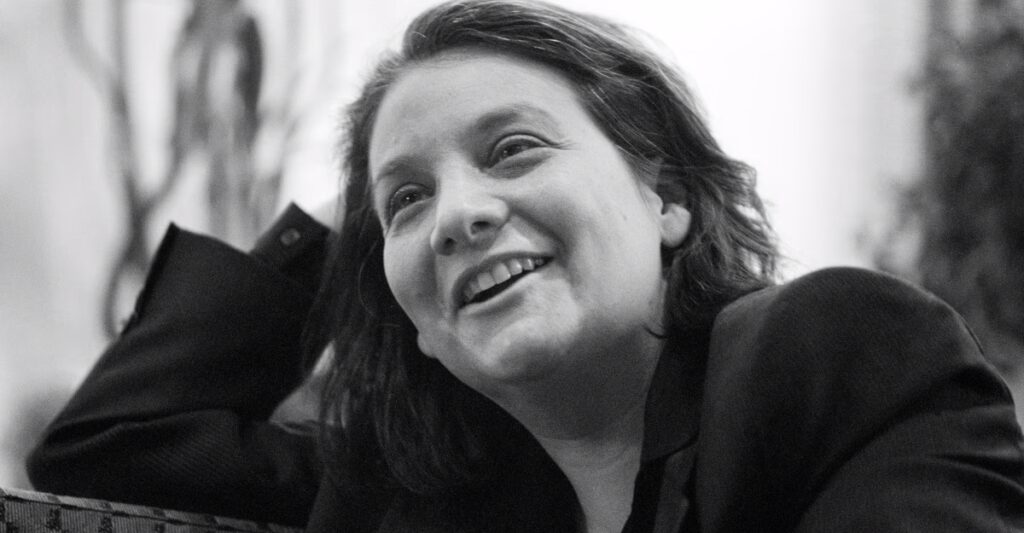
Ann Godoff, the founder of Penguin Press and the editor of Ron Chernow, Zadie Smith, Salman Rushdie, and Thomas Pynchon, would have despised this obituary. More than any publisher of her generation, she consistently made best sellers out of prestige titles. But for all her gifts for marketing, she abhorred seeing her name in the newspaper and went to great efforts to prevent it from happening. As far as I know, in an infamously leaky industry, she never talked with the press, even off the record. She avoided book parties as if the gossip and small talk absorbed at them might malignly implant in her lungs. She cared passionately about the aesthetic of book jackets; less so about her own self-presentation. During the decade I worked with her, I so craved her approval that I always thought twice before expressing my gratitude, for fear that it might be received as the inauthentic palaver she detested.
[Read: How Toni Morrison changed publishing]
Just after I graduated from college, I remember first hearing writers trumpet the name Ann Godoff. One of the great clichés about book publishing is that editors are too busy lunching, too obsessed with marketing, to ever touch the words on the pages that they put between covers. But Ann was famously fastidious. She signed up only authors who could hold her full attention. Even though that attention felt beyond my reach, I began to desperately want to work with her.
Almost 20 years later, I sent her a draft of the first book of mine that she would publish—about the existential threat posed by Big Tech. She invited me to lunch at a sushi restaurant in Tribeca. Yoko Ono was at the next table. In the middle of the meal, she unsheathed a memo, single-spaced and sprawling across two pages. Sentences were crossed out and adjectives inserted with a pen. She pushed her glasses to the tip of her nose and began to read.
During my own editing stint, I came to understand writers as prisoners of their own minds, pressed up against the bars of the words they have already committed to the page. Writers suffer from a cognitive impairment that limits their ability to see flaws in their prose.
At our lunch, Ann told me, “You need to swing harder.” I had wanted to artfully meander into my arguments, but the structure I deployed deflated my thesis—at least, that’s what she was graciously implying as I piled up husks of edamame on my plate. “Write two paragraphs at the beginning of each chapter, where you spell out your argument,” she said. It felt like counterintuitive advice. She wanted the “nut grafs”—journalistic parlance for the early part of the piece that drives home the theme—to bludgeon the reader before I let them get comfortable in their easy chair.
Our lunch was a dream sequence out of a Maxwell Perkins biopic. But I wasn’t sure about her instructions, which rejected every piece of conventional wisdom I had ever absorbed about structure. Because she was Ann Godoff, I didn’t push back. I went home to give it a shot. After a week of revising, her memo began to acquire the force of revelation. With that one instruction, she transformed the tone of my book; everything snapped into place.
[Read: The bigger the publishers, the blander the books]
Although Ann abhorred attention, she wasn’t a recluse or introvert. She loved the telephone. I could call her without scheduling time, and she would pick up. Ann didn’t know writers just by their work. She loved hearing about my most recent interview with a politician; she wanted to know what I thought might happen in the next election. Because she listened so closely, she began to understand me better than I knew myself. She would call with ideas for my next book project and muse about the arc of my career, the type of relationship that she wanted me to develop with readers. The fact that she thought about my future was insanely flattering, but also deeply motivating. I wasn’t producing a commodity in a transactional relationship. I was her writer, under her meticulous stewardship.
The essence of editing is ethics; it’s the act of caring for the expression of the thoughts of another as if they were your own. For one book cover, she went through 37 different proposed designs before settling on the one she felt best conveyed the spirit of the project.
I would call Ann with anxieties about my manuscripts and she would allay them. “I’m afraid I’ve written a hagiographic section,” I told her. “Don’t worry. I kill hagiography for fun,” she replied, which would have made me fear for how she might have edited this essay. One of her authors, the poet Mary Oliver, once wrote, “Attention is the beginning of devotion.” Ann Godoff’s rigor was love.
The post The Rigor and Love of a Great Editor appeared first on The Atlantic.