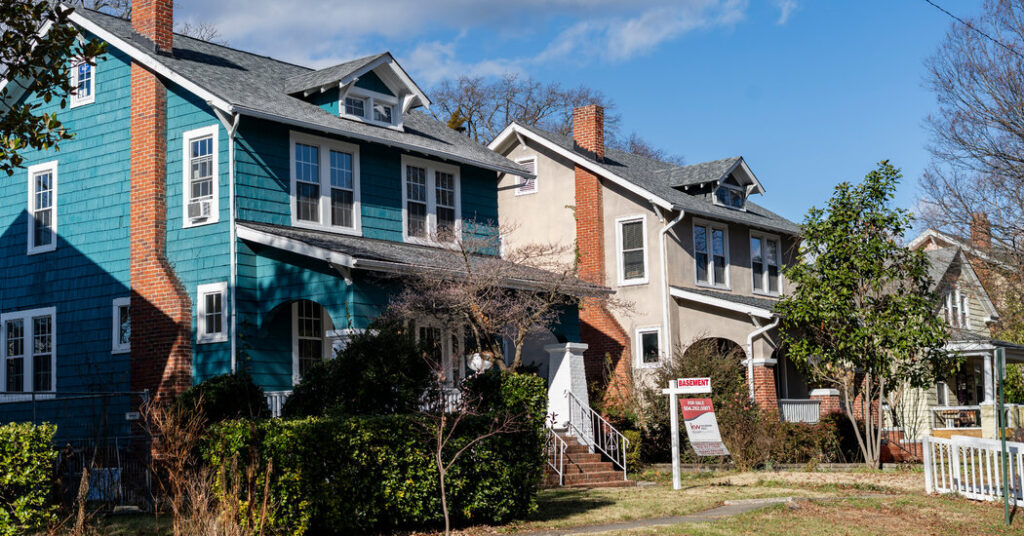
Mortgage rates have fallen below 6 percent for the first time in more than three years, offering a glimmer of hope that a frozen housing market may be set to thaw.
The average 30-year mortgage rate in the United States fell to 5.98 percent, the mortgage-financing giant Freddie Mac said Thursday, down from nearly 7 percent around the same time last year. The last time the rate was below 6 percent was in September 2022.
“That amounts to hundreds of dollars’ reduction in mortgage payments,” said Stijn Van Nieuwerburgh, a professor of real estate at Columbia Business School.
Mortgage rates peaked at just under 7.8 percent in October 2023 and drifted down gradually, stifling the market for Americans struggling to afford to buy homes as well as for homeowners reluctant to sell. Housing is a crucial driver of the U.S. economy, serving as the most important asset for millions of American households.
A mortgage rate at 6 percent or lower “gets people off the fence,” said Danielle Hale, the chief economist at Realtor.com, a listings site. But she added that there was no particular marker that would suddenly activate the housing market.
“It’s not a light switch,” she said. “I’d say it’s more of a dimmer switch.”
The evidence is patchy on whether lower mortgage rates have meaningfully spurred more transactions. Sales of existing homes jumped in December but fell back sharply in January, in part because of worse-than-usual weather, according to the National Association of Realtors.
“We have not yet seen a catalyst for an inflection in housing activity,” Richard McPhail, the chief financial officer of Home Depot, said on a call with investors this week. The company, the nation’s largest home improvement retailer, reported flat quarterly sales and said that homeowners were worried about jobs, prices and general economic uncertainty.
The housing market began to freeze during the pandemic, as ultralow interest rates encouraged buyers to snap up homes when the economy reopened. The spurt of activity sent home prices soaring. Many homeowners also refinanced their mortgages to lock in lower rates, which made them reluctant to sell as rates then rose sharply.
Price gains have since eased, rising less than 1 percent in December from a year before, according to Cotality, a real estate services provider. But prices remain relatively high in many regions.
Housing has become so expensive that a majority of Americans feel it is out of reach, a recent New York Times/Siena poll found.
In his State of the Union address on Tuesday, President Trump highlighted falling mortgage rates “since I took office,” but those rates are heavily influenced by inflation, economic growth and moves in the 10-year Treasury bond yield, over which the president has little direct influence. Facing political pressure to address rising housing costs, Mr. Trump has ordered Freddie Mac and Fannie Mae to buy up to $200 billion in mortgage-backed bonds.
The Trump administration has floated other measures to make housing more affordable, like discouraging institutional investors from buying homes, but analysts say those ideas would not be enough to meaningfully thaw the market.
“Proposals that work to boost demand don’t help the problem,” said Nancy Vanden Houten, the lead U.S. economist at Oxford Economics. Instead, she suggested ideas that might help supply, like an expansion of low-income housing.
“Home buying is not affordable for a lot of people,” she said, and “a decline in rates below 6 percent is not going to change that.”
The Senate and House both advanced legislation last year aimed at increasing the supply of housing, but Ms. Vanden Houten said more was needed at the state and local levels, like tax breaks and zoning changes that would make it easier for developers to build.
A recent report by Oxford Economics noted that California and Oregon, two of the most expensive states to buy homes, have eased zoning laws. And Los Angeles has lowered barriers to construction of accessory dwelling units, also known as “granny flats.”
Analysts are optimistic that more activity will take place this year, especially in the spring buying season.
More Americans now have a mortgage rate above 6 percent than those with a rate below 3 percent, according to Realtor.com. That suggests that more supply could come online as rates fall, with fewer homeowners feeling trapped by mortgages with far lower rates than what they would face if they sold and become buyers.
With the days of ultralow rates long gone, home buyers have reset their expectations about what a good rate is, Ms. Hale said. Many may have to consider moving because of family or job changes.
“The more time has passed since that rate was locked in,” she said, “the more likely it is that life has happened.”
Gregory Schmidt is a Times business editor overseeing coverage of the European economy. He is based in London.
The post U.S. Mortgage Rates Fall Below 6% for First Time in Years appeared first on New York Times.