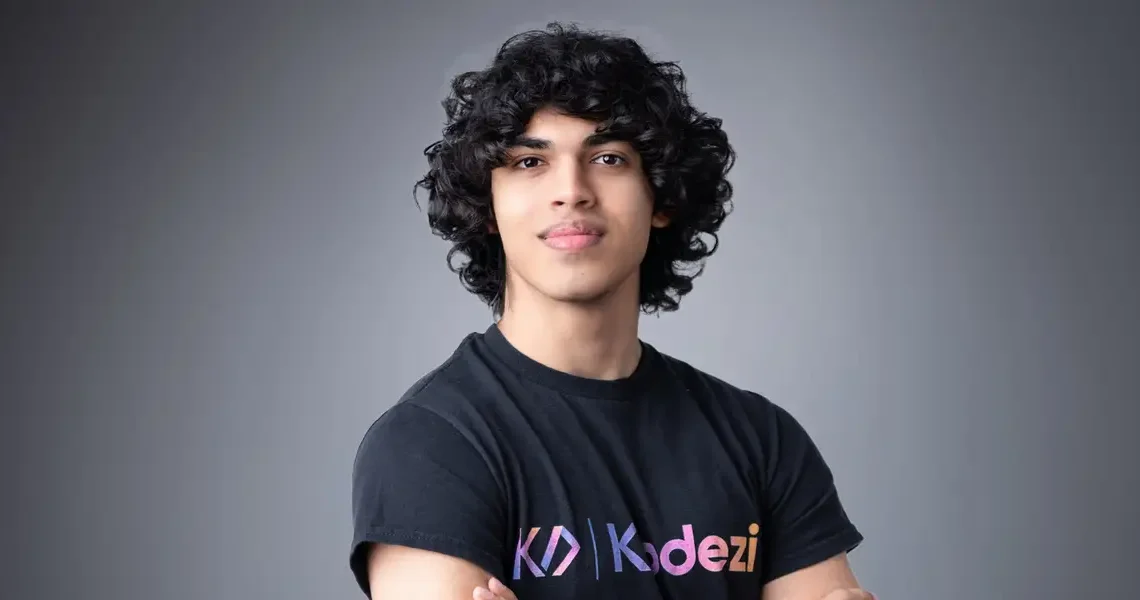
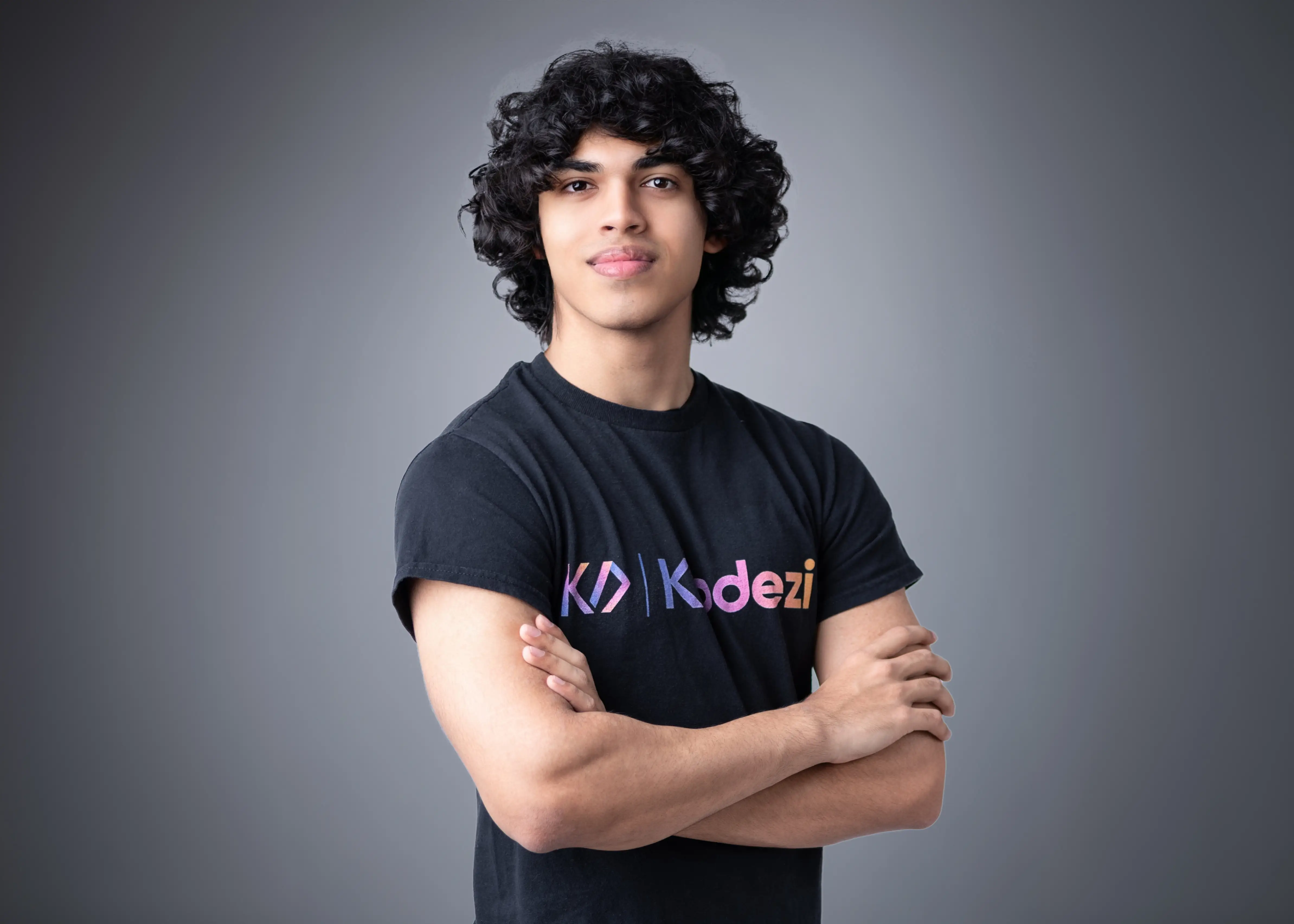
This as-told-to essay is based on a conversation with Ishraq Khan, the 22-year-old CEO of Kodezi in the San Francisco Bay Area. It’s been edited for length and clarity.
I moved to the US from Bangladesh with my family in 2011. My path to becoming a teen founder of an AI company began with my interest in programming.
When I moved, my dad bought me a laptop, and I stumbled across YouTube. One video I watched was a coding tutorial, which led me to start learning to code and fall in love with it.
During my freshman year of high school, I was in computer science, and I realized students spent too much time debugging code in class. I wondered, why isn’t there a Grammarly for programmers that automatically fixes coding mistakes?
I spent a lot of time trying to figure out machine learning, how we could have code fix itself, and how to automate an entire process. It took me almost a year, but I got it to work in a prototype.
This was the start of my company that I’m now running full-time at 22.
By my senior year, I took my first VC call
A VC reached out to me and said they were interested in what I was building, but there was no monetization, so I realized I should focus on something even bigger, which turned into my company, Kodezi.
To start an AI company at 17, the biggest step I took was writing emails. I realized you can email anyone by Googling their email address. I emailed CEOs, startup founders, AI researchers, and venture capitalists.
I reached out to try to get internships and learn from people who were further ahead than me. Over time, those emails evolved into conversations about what I was building with some really big names.
I found an event called Orlando Synapse, and I emailed and said, “I’m a senior in high school, and I don’t have $500 for a booth. Is there any way I can come for free? This is what I’m building.” Someone replied within a few hours and said, “Sure, here’s the free booth.”
I posted on LinkedIn that I attended the event and got one of my first angel investors
I received a $20,000 investment before I turned 18.
My biggest challenge was getting others to say yes from an investment standpoint, because back then, there was no ChatGPT, and AI’s use cases were still seen as experimental.
It was difficult to convince investors to back an AI-first code platform coming from a teenager. There was skepticism not just about the technology, but about whether I could execute at that level. Once generative AI became widely adopted, the narrative around what we were building became much easier to understand.
I raised $800,000 before I turned 19 and $2 million before I turned 22
One of my strategies to achieve this was learning how to answer three questions from investors:
- What are you building?
- Why does this matter?
- Why will this be a billion-dollar company?
I also needed to figure out how to convince them that I was the right person to do it.
I overcame investor rejections by framing the calls as me interviewing them, rather than me being interviewed. I started trying to understand who they are, why they invest in these companies, and what their goal is. This helped me decide whether they were the right fit.
Another challenge was deciding whether to go to college or work full-time at my company at 17
I applied to 60 colleges, got into more than a dozen, including Ivy League schools, and ultimately decided to skip college completely.
“I really want to go to college” was still the answer I’d give people, and when investors asked, I’d say, “I don’t really know, maybe…” My uncertainty about it was one reason some investors were uncertain.
I realized I’d probably hate myself if I did go to college, because I wouldn’t have the same opportunities, and I could always go to college later. If I wanted to build an AI company after I graduated, thousands of others would’ve already done the same.
A lot of my friends would be graduating from college and then would find jobs, but this was me finding my job now
I don’t have regrets about skipping college. I do think college provides a built-in social environment that’s hard to replicate. It’s easier to make friends when you’re surrounded by peers in the same life stage.
That said, the people I spend time with now are builders — young founders, owners, operators, and ambitious executives who are obsessed with creating something meaningful. That shared mindset is powerful.
There’s always an opportunity cost, and for me, that trade-off was worth it.
For other aspiring AI company founders, I recommend doing whatever you’re doing as quickly as you can
Without feedback from people who aren’t your friends, you won’t truly know whether what you’re building connects with people.
Also, don’t strive for a metric like “success” that will limit you. Rather than chasing external success, chase internal excellence, because that will lead to a successful outcome.
When I’m 30, I see myself still building my company
I think the world needs more innovation, and that’s where younger founders will come into play, specifically with the rise of AI tools.
I’ve now been running the company for six years. We’ve grown to over 35 employees. My next goal is to dominate the code maintenance layer for enterprise companies.
I want Kodezi to become the default system companies rely on to keep their codebases healthy over time. If writing code is like building a car, then maintaining it requires a mechanic. Our mission is to become the automated mechanic for software.
Read the original article on Business Insider
The post I founded an AI startup while still in high school. I’m now 22 and have raised over $2M — I have no regrets about skipping college. appeared first on Business Insider.