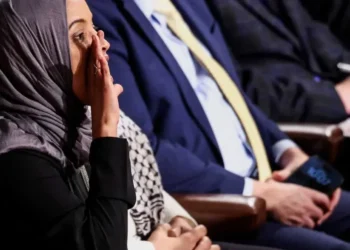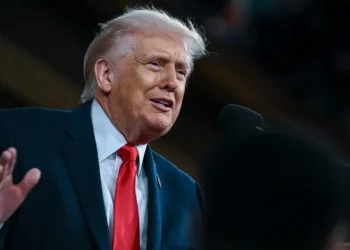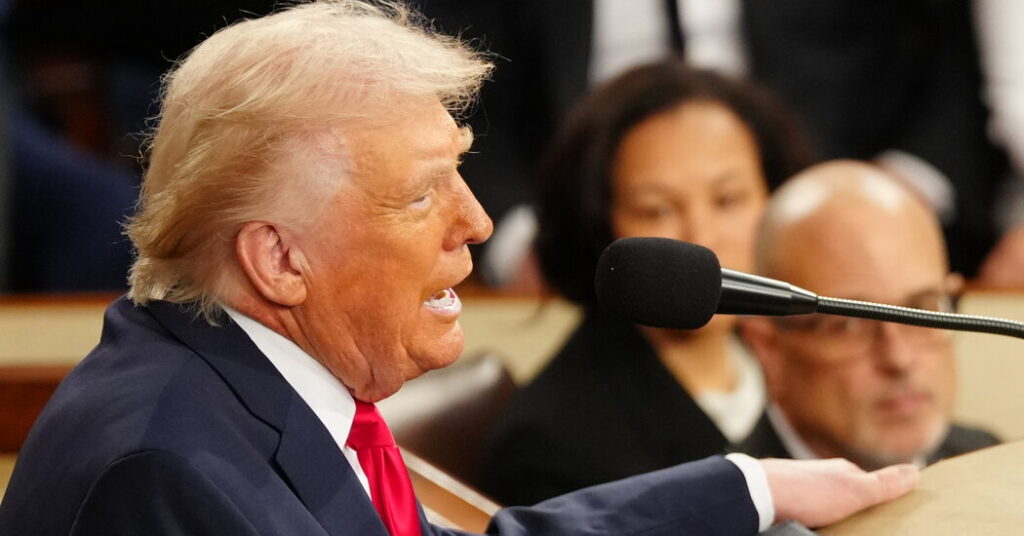
During his State of the Union address on Tuesday, President Trump said he would expand access to workplace retirement plans for millions of Americans who didn’t already have one, a longtime goal of policymakers in both parties.
Tens of millions of Americans do not have access to workplace retirement plans, many of them lower-income employees at smaller businesses. While they can save through individual retirement accounts at brokerage firms, access to pretax savings via their paychecks could encourage more of them to save.
“Next year, my administration will give these often forgotten American workers — great people, the people that built our country — access to the same type of retirement plan offered to every federal worker,” Mr. Trump said during his address.
Federal workers can save through the Thrift Savings Plan, a program with very low fees and a small collection of index-like investments.
The White House said it would use its existing administrative authority to create a universal, portable savings account, though future legislation could strengthen it.
Teresa Ghilarducci, a labor economist and longtime proponent of universal retirement accounts, said such accounts would use a framework that the Treasury Department already deployed during the Obama administration.
In 2015, President Obama created starter retirement savings accounts called myRA accounts. The first Trump administration shut that effort down in 2017.
The new accounts would most likely be operated by the same low-fee investment managers that oversee the Thrift plan, and workers would be able to enroll through an online service in the Treasury Department.
Employers are also likely to encourage enrollment during orientation for new employees, a process that Dr. Ghilarducci hopes would become as automatic as Social Security. People may eventually be able to opt in on their federal tax returns.
But what makes this plan groundbreaking, she added, is that it would take the employer out of the equation, enabling any worker to join. That could make signing up easier for the roughly 60 million people without access to workplace plans.
“It’s huge,” said Dr. Ghillarducci, who co-wrote a book, “Rescuing Retirement,” that outlined such a proposal.
But many workers without access to plans also lack the wherewithal to save because of their low incomes. Matching contributions could help induce them and then bolster those savings.
During his address, Mr. Trump also mentioned a federal matching contribution of up to $1,000 a year. There are at least two ways that could work, and there is a good chance that there would be income restrictions on any match.
An existing law will create a “saver’s match” starting next year. That match will be a tax credit that is refundable, meaning you would get the money even if you didn’t owe much (or any) taxes to the federal government. The money would go straight into a retirement savings plan.
That “up to” language that Mr. Trump used relates to the math in the law, which says that to get the maximum $1,000 match, you need to save $2,000. If you save less, you will get proportionally less.
Your income also needs to be low enough to qualify, either in full or in part. No household with over $71,000 in income will do so.
Congress could also pass new legislation, including a current bill that has bipartisan support. It would give employed people an automatic contribution of 1 percent of their salaries and then a matching contribution up to 4 percent, also via a refundable tax credit.
Eligibility would phase out at or above the median income. The median household income in the United States is about $84,000.
The post Trump Proposed a New Retirement Plan With Up to a $1,000 Match. How Might It Work? appeared first on New York Times.