
An IT specialist was lured to a Border Patrol station for a routine job—and arrested the moment he walked through the door.
He was then held for a month in the notorious “Alligator Alcatraz” detention camp.
Angel Camacho, 43, is a systems engineer with a postgraduate telecommunications qualification, who has spent nearly a decade living and working in the United States and is raising children who are U.S. citizens.
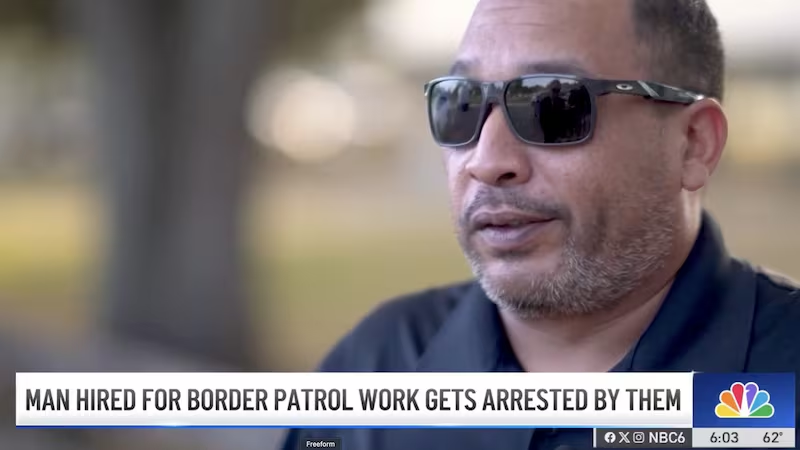
Last month, a Customs and Border Protection (CBP) employee emailed his employer to arrange a site survey for a new intercom system at the agency’s Dania Beach station in Florida, requesting his driver’s license for a security check and confirming he was “approved” for entry.
“We just need to know what time he is coming, so we can be prepared,” the January 5 email read.
And prepared they were—to put him in handcuffs, and wheel him off to the state’s notorious detention camp, which is billed as inescapable due to being surrounded by alligators and snakes.
“I say, ‘Good morning. I’m Angel,’” Camacho told NBC6 Investigates. “And they say, ‘Oh yes, we are waiting for you.’ They say, ‘I have to detain you.’ I said, ‘What are you? Joking?’”

It was no joke. Camacho is a Venezuelan asylum seeker with no criminal history who arrived on a tourist visa in 2016, subsequently received temporary protected status, and has since applied for permanent residency as the husband of an American citizen, with whom he is raising U.S.-born children.
“I have a work permit, Social Security number, driver’s license, pay my taxes every year,” he told the outlet. But under Kristi Noem’s deportation machine, the absence of a green card appears to have been enough.

He spent a night in Border Patrol custody before being transferred to Florida’s Everglades immigration detention center for what became a 30-day stint.
Alligator Alcatraz was opened in July, with President Donald Trump vowing it would hold “some of the most menacing migrants, some of the most vicious people on the planet.”
In reality, NBC6 found, three-quarters of the men held there have no criminal conviction whatsoever, and only 7 percent have been convicted of violent offenses. “That’s the worst nightmare I’ve ever been in,” Camacho said. “That’s not a place for nobody, especially if you never commit any crime.”
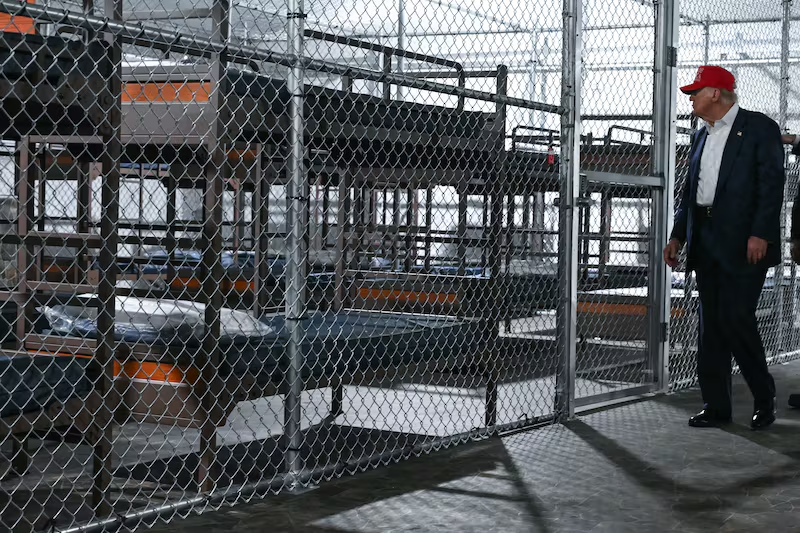
After 30 days, he posted $5,000 bond and walked out wearing an ankle monitor—a relatively fortunate exit from a system that Noem, 54, has become the public face of.
Under Noem and Trump’s mass deportation drive, the Daily Beast revealed earlier this month that habeas corpus applications—legal demands for release from unjust detention—had increased 9,932 percent in a single year, from 66 per month in January 2025 to 6,621 in January 2026, according to an analysis of federal court data.
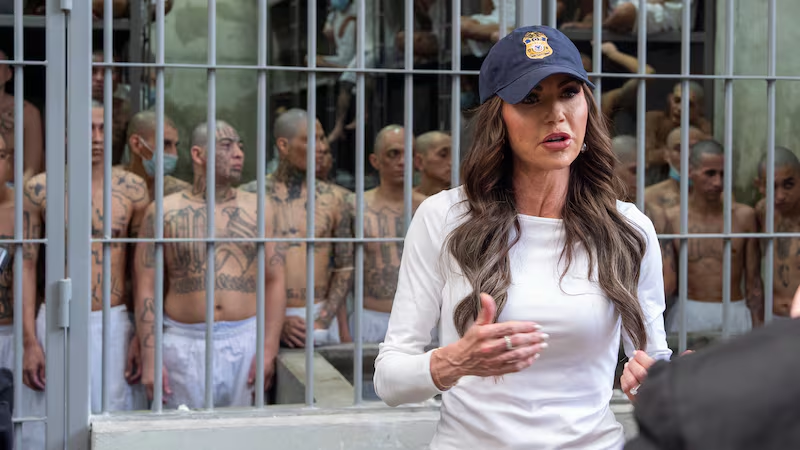
Studies show roughly 75 percent of those swept up by ICE have no criminal record, giving the lie to the administration’s repeated claim that it is targeting the “worst of the worst.”
Retired immigration attorney Dan Kowalski told the Beast that lawyers are currently winning around 95 percent of habeas cases—and that judges are growing visibly furious with the Justice Department’s resistance.
Florida is no exception. Habeas petitions in the state’s Southern and Middle federal districts have climbed from an average of five a month to nearly 400 in January alone, NBC6 found.

Camacho’s own verdict on why he was targeted was as bleak as anything in a court filing. “Because it was easy,” he told NBC6. “They didn’t catch me doing anything wrong. I just went there to work, and it was too easy for them to catch me and say, ‘This is an immigrant.’”
The Daily Beast has contacted DHS and CBP for comment.
The post ICE Barbie’s Goons Lured IT Worker to Do a Job—Then Arrested Him appeared first on The Daily Beast.