How does Netflix define a podcast?
The original programs it began rolling out last month — including the comedy interview podcast “The Pete Davidson Show” and the sports podcast “The White House With Michael Irvin” — are not available in audio form, nor on podcast players. They arrived alongside a slew of well-established video chat podcasts (licensed from other companies), the common thread of which appears to be two or more people conversing in a studio, typically with the presence of visible microphones. (In fact, the streamer’s new icon signaling podcast content is simply an image of a microphone.)
Netflix’s embrace of video podcasting, a major escalation of its rivalry with YouTube, is both a lifeline to a certain sector of the industry and a further wrinkle in podcasting’s long-running identity crisis. Originally built for audio consumption, the medium’s biggest hits — including those recognized at the Golden Globes in January — increasingly resemble the televised radio broadcasts and network talk shows of the last century.
Even some hosts of the podcasts now being distributed on Netflix are having trouble wrapping their heads around the new state of affairs.
“Podcasting is an audio medium — the video portion is just a component of it,” said Charlamagne Tha God, a co-host of the radio show and podcast “The Breakfast Club,” who called himself a “podcast purist.” Although “The Breakfast Club” was among several podcasts that Netflix added from the networks iHeartMedia, The Ringer and Barstool Sports last month, Charlamagne said he prefers to call the Netflix version of his show a “vodcast.”
Compared with the average YouTube podcast, Netflix’s originally produced shows are a touch more telegenic, with richly appointed sets shot with high-resolution cameras. On “The White House,” Irvin, the former National Football League wide receiver, hosts animated postgame discussions with professional athletes in an opulent white parlor between a bar and a pool table. On “Bridgerton: The Official Podcast,” another Netflix original that recently introduced video, the host Alison Hammond and stars of the hit costume drama discuss the newest season in plush emerald green chairs set in front of an immersive blue-screen image of the Bridgerton estate.
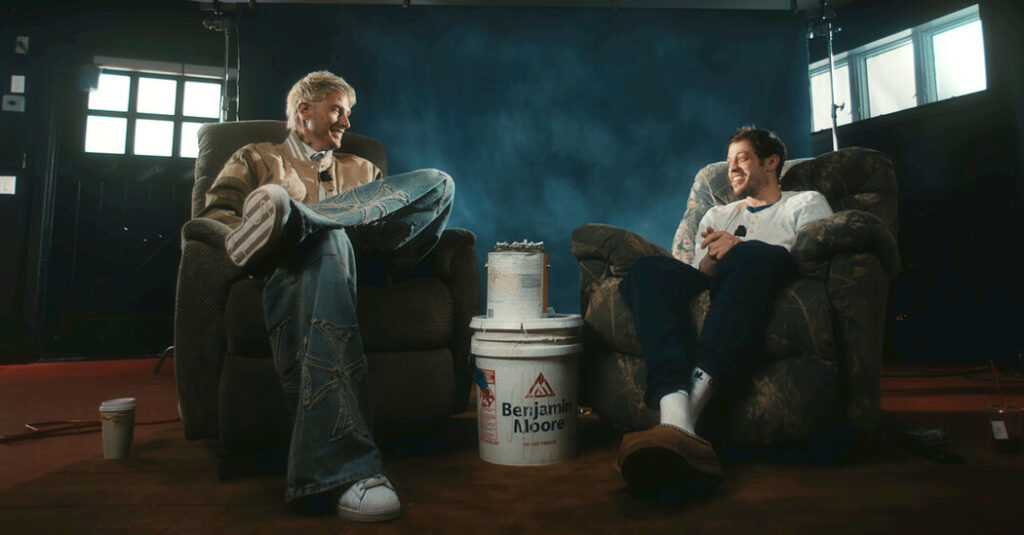
Of the new series, Davidson’s, shot in a minimalist garage set at his home in Los Angeles, is the most visually inventive. Its content echoes bro-friendly predecessors like “The Joe Rogan Experience” and “This Past Weekend With Theo Von.” (From the premiere, featuring the musician MGK: “Remember when we went to that after party with the furry walls, dude?”) But it has a subtly cinematic visual style — hidden microphones, dynamic lighting and sophisticated camera movements, including some hand-held — that might appeal to subscribers who are accustomed to fancier production values.
The company does not seem to be imposing a singular house style. Brandon Marshall, the former N.F.L. player and the co-host and executive producer of “The White House,” said he had taken a relatively stripped-down approach with the podcast to emphasize that it is not traditional Netflix fare.
“When you turn on your Netflix, I want you to be able to tell the difference between a podcast and a studio show with a billion-dollar budget,” Marshall said. “A podcast is something totally different. The way I’m approaching it is to lean into that, to actually dumb it down more.”
A spokesman for Netflix declined to comment for this article. On an earnings call in January, Ted Sarandos, Netflix’s co-chief executive, said: “We think about video podcasts like a modern talk show. But instead of having a single brand-defining show, you have hundreds of them.”
Netflix announced its foray into podcasting last October, with an agreement to bring several Spotify-owned video podcasts — including “The Bill Simmons Podcast” and “The Big Picture” — to the platform. Those podcasts, like the others Netflix has licensed, are also available in audio versions on podcast players. On the earnings call, Sarandos said the company had been “super pleased” by the early response from customers and that more originals were on the way.
Jen Sargent, the former chief executive of Wondery, an Amazon-owned podcast network, said Netflix’s strategy is an inexpensive way to increase its share of household viewing time.
“More than getting into podcasts, they’re trying to defend their hold on attention in the living room,” she said. “They’re buying frequency at a lower cost than prestige TV.”
Whereas Netflix has been willing to pay more than $10 million per episode for a prestige television show, seasons of which are typically released in binge drops, it can pay a small fraction of that amount for a podcast that will keep viewers coming back for new episodes multiple times per week.
The more frequent publishing cadence may help it capture audiences who are interested in topical news and culture programming, a demographic the company has struggled to win over in the past, including via a string of short-lived late-night talk show experiments hosted by comedians like Chelsea Handler and Norm Macdonald.
Podcasts could also fuel Netflix’s nascent ad tier, introduced in 2022, which generated $1.5 billion in revenue last year (out of total revenue of $42.5 billion) and the company projects will bring in $3 billion this year. If its shows are a hit, Netflix could charge advertisers a premium rate for host endorsements.
The distinction, or lack thereof, between Netflix’s original video podcasts and the conventional TV talk shows they are emulating has caused some confusion about how or whether the shows will be covered by Hollywood unions. After initially launching without union coverage, “The Pete Davidson Show” recently signed with SAG-AFTRA, the actor’s union, under its contract that covers podcasts, SAG-AFTRA announced earlier this month.
Adam Cooper, a lawyer who represents both talk show hosts and podcasters, said he saw no real difference between a video podcast like Davidson’s and a traditional network talk show. While SAG-AFTRA covers both types of programs, the podcast agreement would generally be less expensive for a studio — with lower pay minimums — than the one that applies to talk shows.
“These podcasts are effectively just talk shows by another name,” Cooper said. “At the end of the day, it’s two people sitting around and talking to one another.”
The number of people who watch podcasts on their televisions has been growing for years. YouTube says its customers watched more than 700 million hours of podcasts on at-home devices in October alone last year, a 75 percent jump over the previous year. Early last year, YouTube became the most-watched TV provider overall for the first time, according to Nielsen data, beating out more traditional broadcasters including Netflix.
The arrival of Netflix could trigger the next evolution of the podcasting industry if other TV streamers like Amazon Prime Video, Apple TV or HBO Max follow suit. Many podcasters have already converted their once audio-only shops into video studios in pursuit of new audiences on YouTube, TikTok and Instagram. Now they may need to compete more directly with Hollywood fare.
“Podcasts have always met consumers where they are,” said Josh Lindgren, the head of the podcast department at the talent agency CAA, who represents multiple podcast clients who have deals with Netflix. “In 2016, that meant meeting you on your commute. In 2026, it means meeting you in your living room.”
The infusion of investment is a welcome vote of confidence for podcasters who have navigated a turbulent few years, including a boom-and-bust cycle driven by excessive spending from Spotify and Amazon, and a sharp decline in advertising. It follows the inaugural best podcast award at the Golden Globes, which went to “Good Hang With Amy Poehler,” a video podcast hosted by the former “Parks and Recreation” star.
“Podcasters are the true stars right now,” Charlamagne Tha God said. “They’re the true talent that people trust.”
Reggie Ugwu is a Times culture reporter.
The post Podcasts? TV Talk Shows? Netflix Just Hopes They’re Hits. appeared first on New York Times.