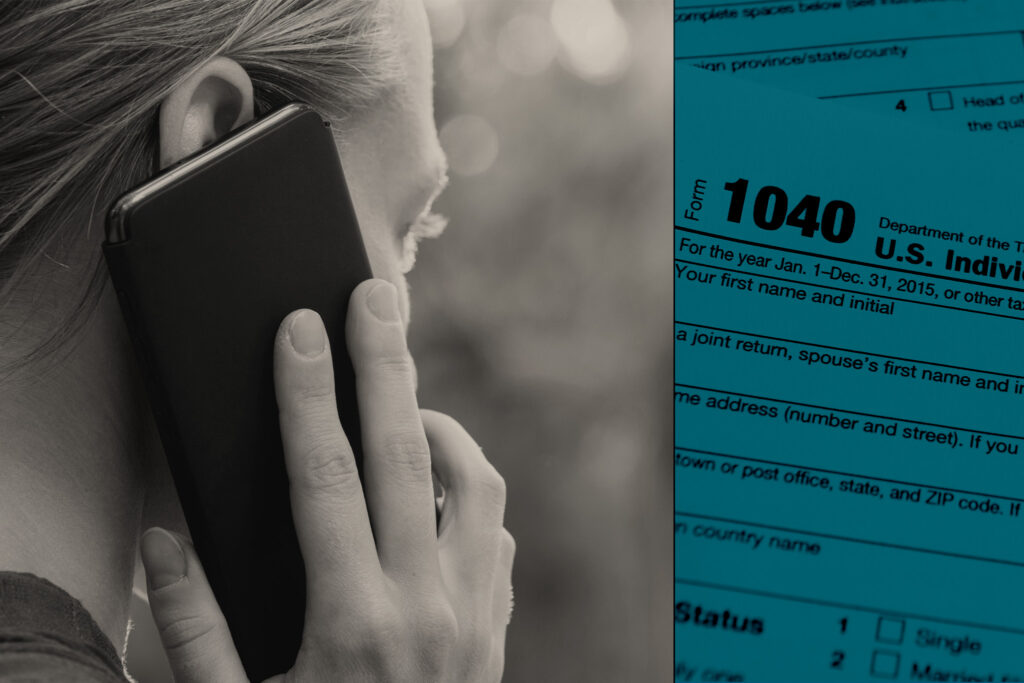
I owe the IRS absolutely nothing.
Yet in the last two weeks, I’ve been getting calls to my mobile number that make it seem as if the government has an issue with our tax situation. The implication is that we owe Uncle Sam, and there’s help available to sort it all out.
“Hello, this is Parker Ashland calling from the account review and compliance with the tax mediation and account support center,” a woman’s voice says.
My account is “listed for verification,” she says, and she’s making a “courtesy outreach” to assist me.
If I want, “this center can review IRS payment options, abatement programs, or resolution solutions,” the message says.
A few days earlier, a Martha Jennings called from the “verification services department with the tax help and mediation office.”
A review would help with “unresolved” tax items. “Many people find this step helpful just to better understand their current standing.”
I ignored the voicemails from vague-sounding companies about a tax problem I didn’t have.
You may have received similar calls recently that are probably using generative artificial intelligence to create more convincing scams, including deepfakes.
Last month, the Federal Trade Commission warned that the agency has seen a “big wave” of reports about phone scams in which fraudsters claim to be from the IRS or another official-sounding government agency, or use a company name like “Tax Resolution Oversight Department.”
You may be told that you haven’t paid your taxes or be offered an opportunity to connect with a “tax resolution officer,” who can help you apply for an “IRS liability reduction program.”
“Those aren’t real programs,” the FTC said.
It’s a scam intended to steal either your identity or your money.
The FTC reported that consumers lost more than $12.5 billion to fraud in 2024, a 25 percent increase from the prior year. The second-highest reported loss, after investment scams, was impostor fraud, with $2.95 billion reported stolen.
“Technology and digital tools enable scammers to more easily identify and manipulate victims,” National Taxpayer Advocate Erin M. Collins said in her annual report to Congress.
Here’s how fraudsters make those fake messages.
In many cases they are using a recording of a real person who sounds like an American professional. They grab these snippets from social media videos on Instagram or TikTok, or from spam calls, where people might repeatedly say “Hello?” after answering a robocall.
Older scams were easier to spot because of awkward phrasing or grammatical errors. But AI allows scammers to create messages that don’t sound robotic.
AI lets fraudsters craft flawless scripts that claim: “This is the IRS. You have unpaid taxes, and a warrant has been issued for your arrest,” or offer to find a way to settle your debt.
Scammers can glean enough information from people’s social media accounts or the vast amount of records stolen in data breaches to personalize the scheme, which makes targeted taxpayers panic and send the requested money.
If the message contains real information, such as the last four digits of your Social Security number, you might be inclined to believe that you are actually communicating with the IRS.
Here’s what’s really scary about the use of AI. Criminals can target more people even faster using “vishing” (voice phishing) techniques that involve making phone calls or leaving messages that pretend to be from a government agency or a reputable company.
AI bots can run thousands of concurrent vishing calls, adapting their scripts in real time based on how you answer the phone.
Even if you owe back taxes, the IRS will first contact you by mail, not by phone, the FTC warns.
I was tempted to call back the numbers left on my voicemail. But I didn’t.
If you get one of these calls, hang up immediately. Don’t call back, even out of courtesy, because then you let them know they’ve reached a real person, and you could end up on a list passed around to other scammers.
The IRS says it will never text or email you without your permission. If you get a suspicious text message or email, do not click on any links or open any attachments. Forward the email to [email protected] and then delete it. Report the text message to your carrier or forward it to 7726 to help block similar messages in the future.
The IRS will never ask you to pay your taxes using a gift card. The agency will not ask for debit or credit card numbers over the phone. If someone calls claiming to be from the IRS, hang up immediately unless you initiated the contact.
As these AI-driven tactics evolve, it’s increasingly hard to spot scams. So don’t believe anything without checking it out yourself. Don’t let a synthetic voice pressure you into anything. The safest response is not to engage.
The post How scammers are using AI deepfakes to steal money from taxpayers appeared first on Washington Post.