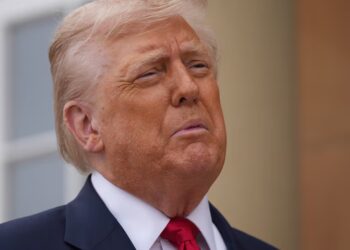
Iranians, from the government’s highest officials to the protesters calling for their ouster, are trying to game out President Donald Trump’s next move, under the looming threat of U.S. strikes. Trump has warned of “bad things” if Iranian negotiators don’t agree to a nuclear deal as he continues to expand a massive U.S. military buildup in the region. Iran “will never have a nuclear weapon,” he pledged in Tuesday night’s State of the Union address.
Trump already demonstrated once this year that he is willing to deploy U.S. military might. The raid to capture Venezuelan leader Nicolás Maduro offered encouragement to anti-government activists and protesters in Iran, some of them said. But it doesn’t appear to have sent a clear message to Iran’s leadership.
The targeted raid could well have reinforced the idea among some Iranian leaders that they can wait Trump out because they think he has the appetite only for short, surgical operations, according to an Iranian official and current and former Western officials with knowledge of the matter.
“What I hear from Iranians is: He’s going to do a TACO,” said a European diplomat in contact with Iran’s leaders, using an acronym, popularized by a Financial Times column, for “Trump Always Chickens Out,” used initially in reference to a pattern of imposing harsh tariffs before easing them. The diplomat, like other officials interviewed for this report, spoke on the condition of anonymity to discuss sensitive information that they were not authorized to share publicly.
After the U.S. strikes on Iran’s nuclear program last year and the Venezuela raid in January, he said many in Iran’s leadership believe further U.S. attacks are inevitable but will remain limited.
“They think he likes his diplomacy and his wars” like a fast-food “drive-through. Quick tasks,” he said. Trump has tasked envoy Steve Witkoff to meet with Iranian negotiators to work toward a nuclear deal, aiming for results within weeks. Under the Obama administration, negotiations that led to the 2015 nuclear deal lasted nearly two years.
U.S. and Iranian negotiators are set to continue talks Thursday.
Iran’s leaders believe that accepting an “unfair” deal would invite further aggression against the country from the United States and Israel, said Sina Azodi, a professor at George Washington University who studies nuclear nonproliferation, Iranian politics and U.S.-Iranian relations. He said Iran’s leaders are terrified of being trapped in a cycle in which outside powers feel comfortable launching attacks on the country, similar to the situation in parts of Syria and Lebanon.
“They think if they give up on this, there’s going to be a next demand and a next demand,” he said. “They believe they’ve reached the point where they think risking war is healthier than dying by a thousand cuts.”
Iranian officials declined to discuss their thinking on the record, but an Iranian diplomat who spoke on the condition of anonymity to discuss sensitive matters said leaders were unmoved after hearing news of Trump’s Venezuela operation, a view that persisted as the U.S. began to gather forces around Iran, echoing the run-up to the Maduro raid.
“You heard Witkoff saying that Trump is puzzled why Iran is not capitulating in the face of the U.S. military buildup. Trump expected Iran will be scared,” the diplomat said. Unlike Venezuela, he said, Iran is a significant regional military power and its capital city, Tehran, is heavily fortified and much further inland than Caracas is, qualities that could prohibit a raid like the one to capture Maduro.
Trump has said Iran can avoid war by agreeing to a nuclear deal, but it’s unclear what terms his administration is demanding. After Trump restarted talks with Iran last year, he demanded Tehran agree to zero nuclear enrichment, a position Iranian negotiators said they could not accept because they saw it as akin to total capitulation, according to the Iranian diplomat.
A former U.S. official familiar with Trump’s thinking said Iran’s capitulation is exactly what the president seeks.
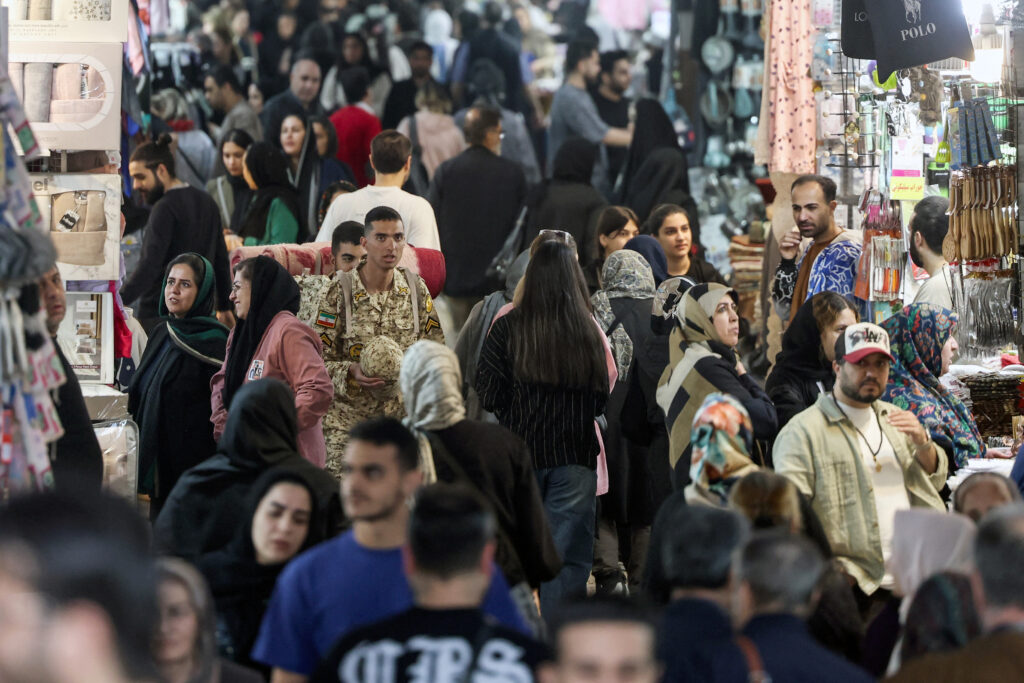
Inside Iran, people contacted by The Washington Post described a country preparing for war while mourning for people in the January crackdown.
The end of the traditional 40-day mourning period observed by Shiite Muslims coincided with the beginning of the university term in Iran. Starting Saturday, protests erupted in two of the country’s largest cities. Videos shared widely on social media showed crowds gathering at a half-dozen university campus across the country. The crowds continued to gather at schools on Monday and Tuesday, videos showed.
An architecture student from Tehran who participated in the demonstrations said that even as he continues to protest, he struggles to feel hopeful for the possibility of change in the aftermath of the violent government crackdown last month. Like other Iranians interviewed for this report, he spoke on the condition of anonymity for fear of reprisal.
“The Venezuela mission by the United States gave Iranians a lot of hope back then. But to be honest with you, we have been through so much that we all feel that was over a hundred years ago,” he said.
The attacks on protesters by Iranian security forces reached a level unprecedented for the Islamic Republic. Activists and human rights groups struggled to gather accurate tallies of those killed amid a partial communications blackout and severe government intimidation.
The U.S.-based Human Rights Activists News Agency says more than 7,000 people were killed, over 6,500 of them protesters, but that figure is considered a minimum, with thousands of cases still under investigation. Iranian officials have acknowledged some 3,000 protesters were killed, blaming the violence on “terrorist” groups.
The architecture student said the level of violence the Iranian security forces deployed against their own people has raised the stakes of any potential conflict with the United States.
“We know that the intervention has to be a full-on military intervention that can cripple them enough so that us, as unarmed people, can finish the job,” he said. He said he fears Iran’s military could once again turn against civilians if the conflict were to drag on.
After the crackdown, some Iranians could see a U.S. attack as a “humanitarian intervention,” said a veterinarian, 44, from Tehran. She said that she does not like how it feels to wish for a foreign country to attack her home, but that she believes war with the U.S. would give her hope again.
As people wait, she said, they are stocking up on canned goods, packing emergency “go bags” and taping the windows of their homes to protect them from blasts.
As Iranian civilians grow more desperate, the country’s leaders also grow increasingly primed for confrontation, increasing the risk of a wider, more violent confrontation, said Ali Vaez, the Iran Project director at the International Crisis Group.
“From Tehran’s vantage point, Trump’s swagger after Venezuela reinforces a dangerous assumption: that regime pressure campaigns can be replicated elsewhere,” he said. After Venezuela, Iranian hard-liners increasingly believe “that puncturing the aura of invincibility, at the price of American casualties, is what would force a recalibration in Washington.”
The post Iranians eye Venezuela for hints of Trump’s next move appeared first on Washington Post.