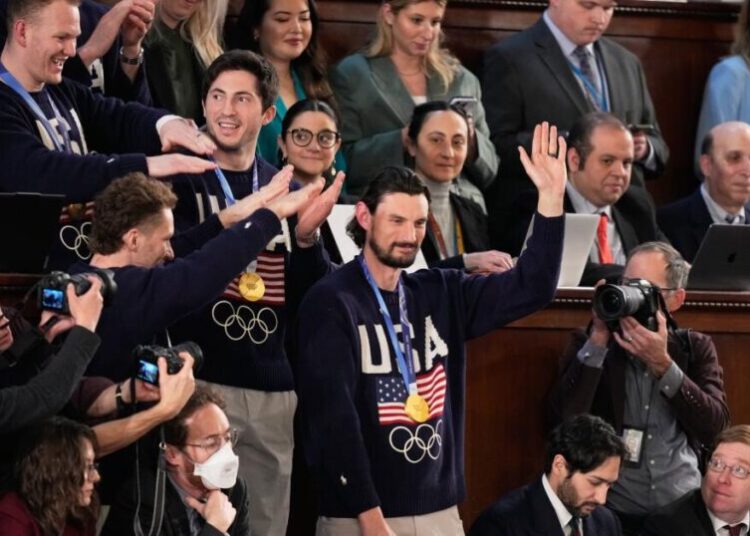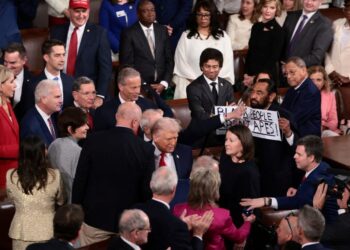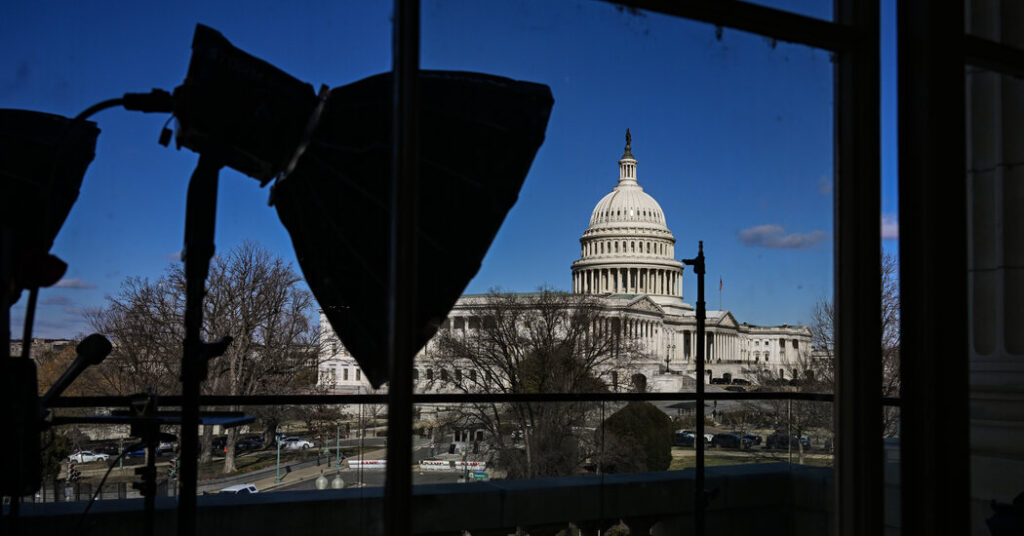
Tonight is somewhat of a political Super Bowl: President Trump will deliver his State of the Union address to the nation, a tradition that dates to 1790.
“It’s an important moment to see where the president is focused and how he is being received,” said Julie Hirschfeld Davis, The New York Times’s congressional editor, who is helping coordinate coverage of the speech.
A team of more than 50 Times journalists — more than three dozen reporters and editors, eight photographers and six photo editors — is covering the event. More than a dozen of them are on site at the Capitol in Washington, including two reporters and four photographers inside the House chamber, where the president will speak. Reporters from the International, Business, Politics, Climate and National desks will be among those watching and contributing.
Throughout the night, The Times will cover the proceedings in a live blog, which will include:
-
A livestream of the speech and a live chat among reporters
-
Insights from more than a dozen reporters and editors in The Times’s Washington newsroom, who will focus on providing context about topics like immigration, the economy and foreign policy
-
A dedicated fact-check reporter
“The goal is to offer readers as much explanation and context as we can, and also to try to place them in the room and in the political moment as much as possible,” Ms. Hirschfeld Davis said.
Kenny Holston, who has covered the address several times, will be the only news photographer on the House floor. The position rotates among news media outlets every seven years, and the photographer shares images with the entire press pool. Mr. Holston’s photographs will be filed to editors and published in nearly real time.
Anticipating where to position himself for the big moments, he said, is critical. That means studying the seating chart.
“Knowing exactly where the cabinet members, the justices and the first lady’s guests are sitting is the difference between getting the shot and missing the moment,” he said.
Reporters have been combing through President Trump’s recent appearances and remarks to get an idea of what topics might come up. For instance, how he might portray his priorities in nuclear talks with Iran.
“This speech must be read with a recognition that American naval forces are massing off Iran, for what may be a major attack,” said David Sanger, The Times’s chief White House correspondent. “We’ll be looking for how the president’s description of his goals for a negotiated settlement with Iran have evolved, or even whether they are serious negotiating offers.”
Even if it may not be the best experience if one wants to actually hear what’s being said — voices in the House chamber can echo, and the press seats are high above the floor — there’s something special about being in the room for such a momentous event, Mr. Holston said.
Especially from his front-row seat.
“While the gallery feels like watching a play,” he said, “the floor will feel like being in it.”
Sarah Bahr writes about culture and style for The Times.
The post How The Times Reports on the State of the Union appeared first on New York Times.