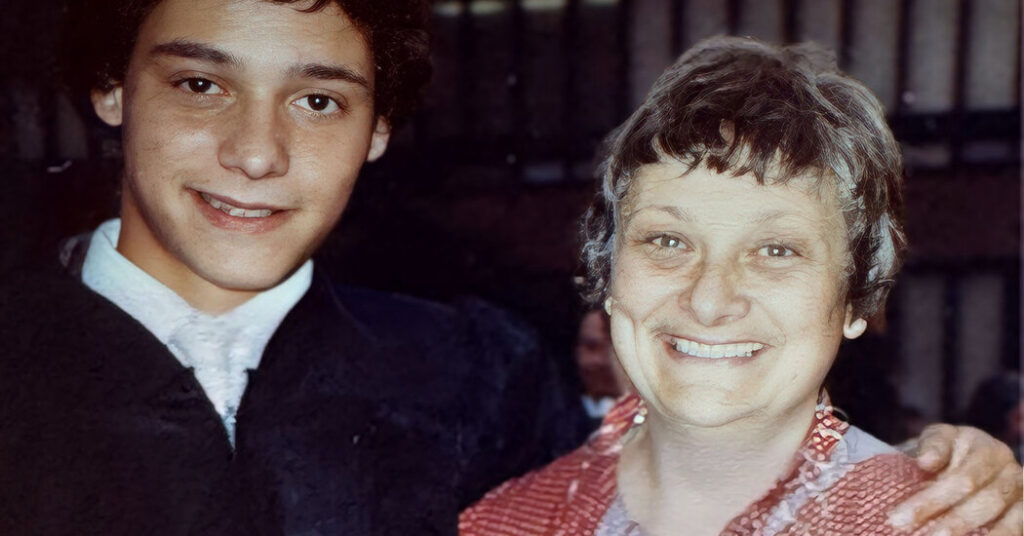
Susan E. Leeman, who helped reshape scientific understanding of how the brain sends chemical signals throughout the body, did not hesitate to leave the laboratory when her research demanded it — even if it meant visiting slaughterhouses.
In the late 1960s, while running a small lab at Brandeis University, she was trying to isolate a stress hormone and needed large quantities of the bovine hypothalamus, a cow’s version of the structure found deep in all mammalian brains. When supplies ran short at a local meatpacker in Boston, Dr. Leeman traveled to Chicago, home at the time to the sprawling Union Stock Yards, to secure fresh tissue.
What ultimately emerged was not the hormone that she sought but an elusive chemical called Substance P.
Discovered decades earlier but never fully understood, it was finally identified by Dr. Leeman in 1970 as a neuropeptide, released by cells in the brain or spinal cord in response to pain. Three years later, she identified another neuropeptide. The two discoveries established her as a leading figure in neuroendocrinology.
Dr. Leeman died on Jan. 20 in Manhattan, at the home of her daughter Eve Leeman, where she had been living. She was 95. Her death was confirmed by another daughter, Jennifer Leeman.
Although Substance P was identified in 1931 by Ulf von Euler and John Gaddum, researchers working in London, it was Dr. Leeman who discovered that it was a neuropeptide — a tiny, protein-like molecule released by neurons, or nerve cells in the brain and spinal cord, that transmits signals to target tissues.
It was the first neuropeptide discovered in what would become a large class known as tachykinins.
Dr. Leeman found that Substance P relays pain signals and amplifies the sensation of pain by triggering inflammation. It has since been linked to chronic pain syndromes, arthritis pain and migraines.
In 1973, she reported the discovery of another neuropeptide, known as neurotensin. It acts not only as a neurotransmitter in the brain but also as a hormone in the gastrointestinal tract, inhibiting stomach acid after meals while stimulating the flow of pancreatic secretions. Both of the neuropeptides that Dr. Leeman discovered have multiple complex functions.
Neuroendocrinology was a field that was just emerging in the mid-1950s when she began her doctoral studies at Harvard University, but it was her first choice as a field of concentration.
“I was particularly interested in questions of the mind-body bridge,” she wrote in 2008, in her entry in the sixth volume of “The History of Neuroscience in Autobiography,” a series focusing on pioneers in the field. “I was taken by the idea that some specialized nerve cells in select places in the brain not only function as nerve cells but also function as endocrine cells.”
The discipline of neuroendocrinology, she wrote, also offered insight into how “emotions, thoughts and feelings could travel through the central nervous system and connect to the anterior pituitary gland to regulate the release of many hormones.”
In 1952, Dr. Leeman was one of four women who began their graduate studies in the medical sciences program at Harvard. But she was the only one to earn both master’s and doctoral degrees and to pursue a scientific career. In her autobiography, she described how the others had succumbed to pressure, which they all felt, to leave the male-dominated graduate program. At the time, most female graduates of the university received their degrees from Harvard’s affiliated women’s division, Radcliffe College.
Securing a tenure-track academic position in an era of overt sexism proved even more arduous. It took 22 years for Dr. Leeman to obtain a tenured university appointment after completing her doctorate, despite two major discoveries in her field, she said in a 1993 interview with The Scientist.
“Women do have a more difficult time than men,” she told the magazine.
After she received her doctorate in 1958, she joined Harvard Medical School as an instructor, but left the following year for Brandeis, which offered slightly higher pay.
“I stayed there for the next 12 years,” Dr. Leeman told the magazine The Scientist. “They called me an adjunct professor and then assistant professor, but I was never given a full faculty position.”
When she returned to Harvard Medical School in 1972, it was “one of the worst chapters in her career,” her daughter Eve, a psychiatrist, said in an interview. “She was recruited with the promise of a tenure-track position, but when she got there she faced an enormous amount of discrimination.”
Male colleagues would ask her to run errands for the department, her daughter said, in an effort to demean her.
Finally, in 1980, the University of Massachusetts Medical School in Worcester offered her a full professorship. It was 50 miles from her home, but she accepted.
In 1992, Boston University appointed her professor of pharmacology and experimental therapeutics and named her director of the neuropeptide laboratory.
“She was a bit of an activist,” Dr. Eve Leeman said. “She cared about social justice and always took on the good fight.”
Susan Epstein was born on May 9, 1930, in Chicago, one of two children of Samuel and Dora (Gubernikoff) Epstein. Her father, a graduate of the City University of New York, worked as a metallurgist for U.S. Steel Corporation; her mother, who graduated from George Washington University, managed the home.
In 1936, the family moved to Bethlehem, Pa., where her father joined Bethlehem Steel. Susan grew up in that industrial town, anchored by the company’s 1,800-acre site.
After graduating from Liberty High School in Bethlehem in 1947, she attended Goucher College in Maryland and earned a bachelor’s degree in physiology there in 1951.
While completing her doctorate at Harvard, she met a medical student there, Cavin Leeman; they married in 1957.
In addition to her daughters, Dr. Leeman is survived by a son, Raphael, Jennifer’s twin; and five grandchildren. Her marriage ended in divorce in the 1980s.
Dr. Leeman received dozens of honors. In 1987, she was elected to the American Academy of Arts and Sciences, which recognizes exceptional achievement. In 1991, she was elected to the National Academy of Sciences, the first woman to receive that honor in the disciplines of physiology and pharmacology. Two years later, she received the Excellence in Science Award from the Federation of American Societies for Experimental Biology.
Dr. Leeman’s curiosity never waned, and “she retired incredibly late” — at nearly 90, her daughter Jennifer said. “She had a very long career and loved thinking about science and all the experiments she could be doing.”
The post Susan Leeman, 95, Dies; Explored How the Brain Influences the Body appeared first on New York Times.