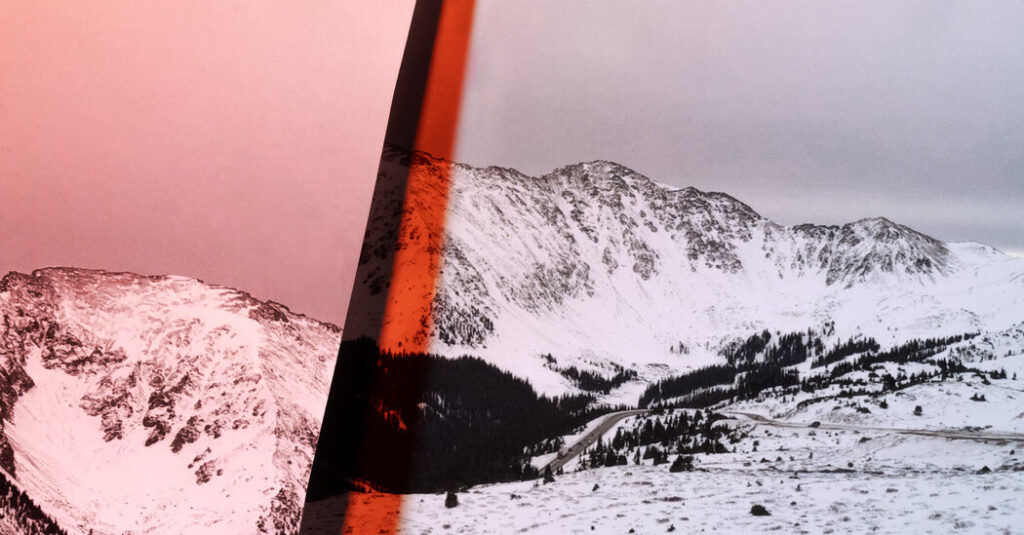
In the Northeast, snow lovers are celebrating benchmarks not seen since the 1980s. Vermont’s Jay Peak ski resort reported 349 inches of snow, more than Jackson Hole, Wyo. Lake Champlain froze for the first time since 2019. Back-to-back snowstorms in January dumped more than 30 inches of powder across the region in 10 days. This week, up to three feet of snow has fallen from Delaware to New Hampshire, in what meteorologists are calling a winter hurricane.
Not everyone relishes a snowstorm, but for those who do, this season has delivered schneelust, a German expression meaning “snow joy.” For the planet, it is something else entirely: a rare moment when one of its most vital climate systems functions as it should.
Snow and ice have cooled our planet and buffered it against natural and man-made climate change for billions of years. Their reflective surface helps control how much energy enters and exits the planet, sending as much as 80 percent of the sun’s heat back into space. Millions of square miles of Arctic sea ice play a particularly important role, cooling seawater and helping to maintain a temperature gradient that influences the jet stream, which in turn steers heat, weather and moisture across North America, Europe and Asia.
Now, as humans rapidly warm the atmosphere with greenhouse gases that melt ice and snow and disrupt the patterns of winter, we are leaving ourselves dangerously exposed to the sun’s heat. Winter is one of the last threads holding everything in place.
As the planet warms, the fallout of melting snow and ice will compound. A thawing of the wind-scoured tundra in Arctic Canada and the Siberian steppe — which contains nine million square miles of frozen methane-rich permafrost — will spike the amount of carbon in the atmosphere, radically increasing global temperatures. Rapid melting of ice at the poles could raise sea levels significantly, submerging many coastal and island communities. Meltwater will also interfere with crucial ocean currents, such as the Atlantic Meridional Overturning Circulation, by blocking the sinking power of cold salty water and the ocean’s ability to regulate heat and carbon. A slower Atlantic overturning current will not only reshape our climate; it will alter storm and precipitation patterns across North America and Europe.
For anyone who doubts these processes — or humanity’s power to alter our planet — consider this dispatch from the poles: Human-caused warming has already melted so much ice in Greenland and Antarctica that Earth’s rotation has slowed and its axis has shifted, slightly altering the length of the day and disrupting the precision of satellite tracking, global positioning systems and timekeeping.
The smaller-scale effects of warming can be consequential as well. As snowfall becomes more erratic and frozen areas melt across America’s northern states, exposed dark ground beneath them absorbs solar radiation, substantially increasing warming.
According to a 2020 study, North America lost 46 metric gigatons of snow per decade in the past 39 years. (One metric gigaton of ice would cover Central Park in New York City 1,100 feet deep.) The length of winter at U.S. ski resorts is projected to decline, in some locations by more than 50 percent by 2050 and by 80 percent by 2090, another study found. Spring snowpack in the American West declined by nearly 20 percent from 1955 to 2020. The great misfortune for snow in the world’s mountain ranges is threefold: The climate is warming faster at higher elevations, at higher latitudes and in the winter.
Americans lose far more than winter sports from this trend. The retreat of winter and the decline of mountain snowpacks across the United States contribute to dying forests, intensifying drought, increased wildfire risk and diminishing water supplies for farms and reservoirs. We are only at the beginning of climate destabilization, in which winter weather grows more erratic and extreme, leading to increased melting, which leads to more warming.
Watching the Winter Olympics in Cortina — set beneath the Marmolada Glacier, one of the fastest-melting glaciers in the Alps — I couldn’t help but think about another service the frozen world offers humanity. Mountain glaciers have served as the world’s water towers for millenniums, providing fresh water to farms, cities, forests, rivers and other habitats and to more than two billion people. Rapid melting in the Alps has diminished several of Europe’s major watersheds, with effects from growing crops to hydroelectric generation to cooling for nuclear power plants. A similar crisis is taking shape in Asia as glaciers on the Tibetan Plateau melt, depleting rivers that provide more than one billion people with water.
There are few meteorological events that alter a landscape as completely as a blizzard, like the one that just clobbered the Northeast. Muddy driveways and brown lawns become pristine, fluffy terrain. Gravity softens in deep snow, and sounds are muffled several decibels as billions of crystals thicken the air.
It is hard to imagine that in a few decades, these blizzards could become a distant memory. Without deeper reductions in greenhouse gas emissions in the United States and beyond, winter as we know it will be gone in a few decades. And the number of venues cold enough to host the Winter Olympics will be cut in half.
It takes only one degree Celsius (1.8 degrees Fahrenheit) of average global warming to melt the fragile crystals that blanket our mountains and backyards in the dark season. When we lose them, we will lose the shield that has helped humanity thrive for the past 10,000 years.
Porter Fox is the author, most recently, of “Category Five: Superstorms and the Warming Oceans That Feed Them.”
The Times is committed to publishing a diversity of letters to the editor. We’d like to hear what you think about this or any of our articles. Here are some tips. And here’s our email: [email protected].
Follow the New York Times Opinion section on Facebook, Instagram, TikTok, Bluesky, WhatsApp and Threads.
The post Without Snow and Ice, Humanity Would Be Cooked appeared first on New York Times.