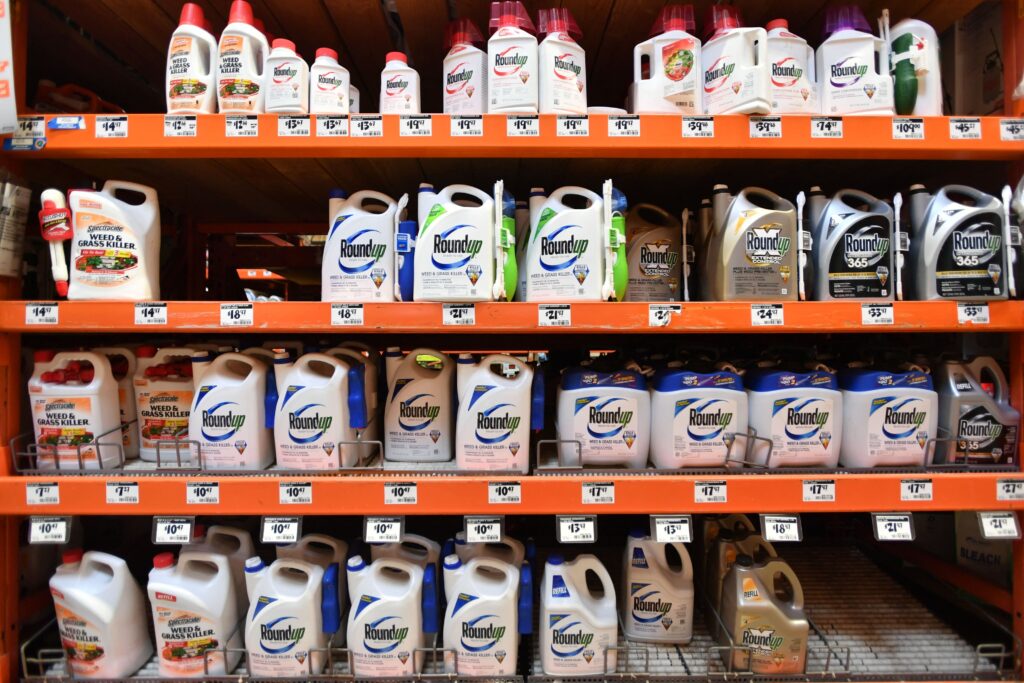
President Donald Trump recently invoked special wartime authorities to boost the production of glyphosate, a widely used weedkiller. No one wants America to become overly reliant on foreign pesticides, but this is the wrong way to go about ensuring stability for American agriculture.
The Defense Production Act, which allows the government to force private companies to manufacture essential goods, became law in the wake of World War II to ensure military readiness. But as is often the case with emergency government powers, that authority has crept far beyond its original intent. Presidents in recent years have deployed the law to direct the production of a wide range of “critical” goods, from baby formula to fire hoses to solar panels.
The administration says securing the supply chain of glyphosate — the active ingredient in the brand-name herbicide Roundup — is essential to national defense because much of the nation’s food production relies on it. If domestic production falters, the White House says, U.S. farmers would need to rely even more on China for production of the chemical than they already do, which could lead to shortages during a trade war.
Chinese control of critical industries is a legitimate national concern, but the problem is not easily solved by directives from the Oval Office. It’s also not the only reason Trump invoked the DPA. Bayer, the company behind Roundup, has been embroiled in tens of thousands of lawsuits over claims that its product causes cancer, and the administration is seeking to use DPA provisions to shield manufacturers from litigation.
Such relief is overdue. Trial lawyers, including Health and Human Services Secretary Robert F. Kennedy Jr., have gotten rich by demonizing supposedly “toxic” chemicals and extracting billions of dollars in settlements from manufacturers. That makes everyday products more expensive.
At the same time, glyphosate’s link to cancer has long been tenuous at best. In 2020, the Environmental Protection Agency found that the chemical posed no risk to human health when used as its label recommends. Regulators in Canada and the European Union came to similar conclusions.
Yet that doesn’t excuse the president’s misuse of an emergency power clearly meant for something else. The Supreme Court recently agreed to hear a case in which Bayer argues that the EPA’s nationwide labeling should protect it from litigation. The conglomerate has a strong legal case, and if the justices rule in Bayer’s favor, Trump’s invocation of the war powers law will be moot.
But there’s an option superior to relying on courts or executive orders: Congress. Tort reform is notoriously difficult to pass because of the pernicious influence of trial lawyers, and Bayer has had some success at the state level. Federal lawmaking is harder but ultimately worthwhile.
Lawmakers attempted to include provisions in last month’s spending bills to protect weedkiller manufacturers from being sued, though they were ultimately stripped from the final package. Legislators are fickle, but so are bureaucrats and judges. Finding a way to pass a law is a better bet in the long run.
The post Roundup needs legal protections. This is the wrong way to do it. appeared first on Washington Post.