There are now two competing visions for barring Wall Street investors from buying up single-family homes: President Trump’s and one announced Tuesday by a group of Senate Democrats.
The rival proposals reflect the urgency felt by both Mr. Trump and Democrats to jump on issue of affordable housing, and their willingness to join many Americans in blaming Wall Street investors for driving up home prices and rents in states across the country.
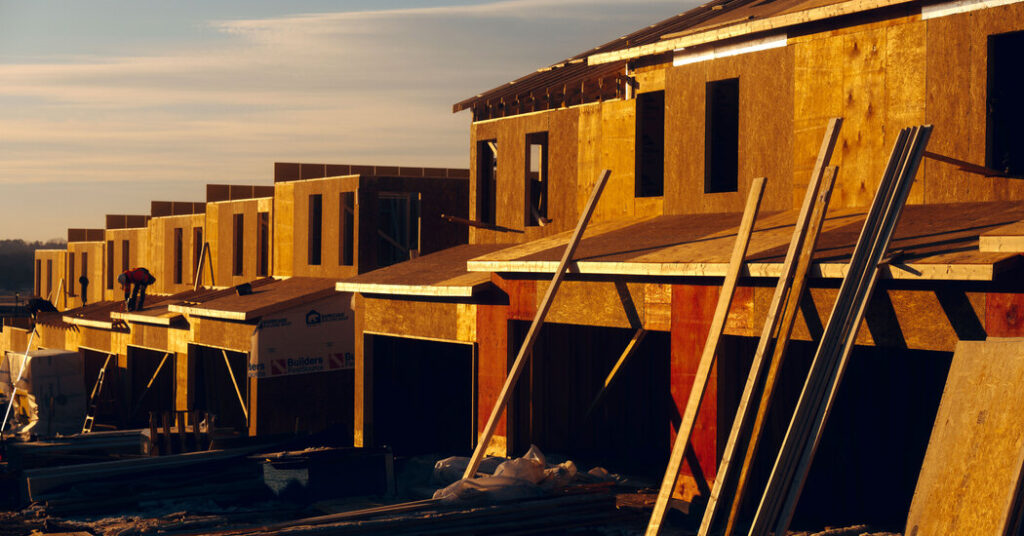
It is likely that Mr. Trump will discuss his plan during his State of the Union address on Tuesday night. That approach, announced last month, would bar most large investors from continuing to buy single-family homes to operate as rental properties. His proposal includes a major exemption for so-called build-to-rent communities — developments in which single-family homes are built to be operated solely as rentals. These projects involve some of the same Wall Street landlords that Mr. Trump has blamed for preventing average Americans from owning their own homes.
The plan unveiled by Senate Democrats would take a different approach: ending tax breaks that allow large investors in single-family rental homes to deduct depreciation and mortgage interest payments. The bill, which was introduced in the Senate on Tuesday, would also bar Wall Street investors from buying foreclosed homes sold by a federal housing agency.
The bill’s 17 Democratic sponsors released a fact sheet on the bill that said that savings from ending the tax breaks would be used to further policies to build more affordable housing and promote homeownership. They contend that ending tax breaks for large single-family landlords is a better solution than the ban proposed by the president and would encourage those investors to sell homes to ordinary buyers.
“Today, Democrats are introducing legislation to stop Wall Street from snapping up homes in bulk and jacking up rent for families,” said Sen. Elizabeth Warren of Massachusetts, the bill’s chief sponsor and the top Democrat on the Senate Banking Committee. “This bill will take on predatory landlords while making investments to increase housing supply and boost homeownership for Americans.”
Both plans would allow exemptions for mom-and-pop landlords. The Senate Democrats’ bill would also allow investors that buy dilapidated homes to take tax deductions for rehabbing those properties.
In the wake of the 2008 financial crisis, Wall Street-backed investors began buying hundreds of thousands of foreclosed homes to operate as rental properties. At that time, many politicians and economists supported the move because the acquisitions helped stabilize housing prices and provided a source of housing for Americans who had lost their homes in bank foreclosures.
But over time, the actions of the Wall Street landlords were seen as crowding out first-time buyers in some housing markets and leading to rent increases.
Housing experts have begun to debate the impact of a ban on Wall Street landlords buying homes, given that most big investors have slowed their purchases in recent years. And more firms have added to their stockpiles by investing in build-to-rent communities.
Housing advocates have said that build-to-rent communities are adding housing supply to the market at time when the nation is experiencing a shortage of affordable housing.
Matthew Goldstein is a Times reporter who covers Wall Street and white-collar crime and housing issues.
The post Democrats Counter Trump With Their Own Plan to Limit Wall Street Landlords appeared first on New York Times.