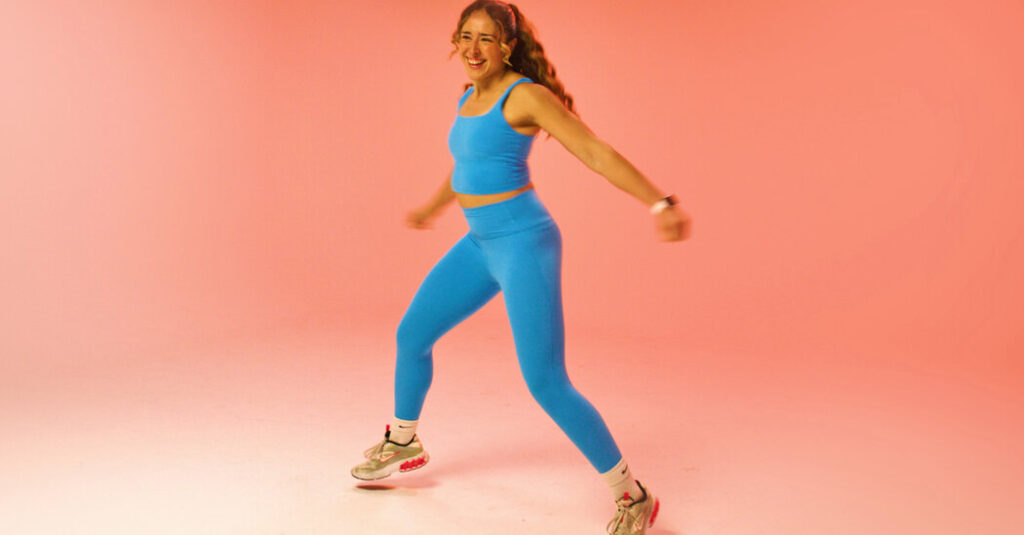
For many people, dance feels more like play than exercise, which helps to explain its enduring appeal as a workout.
What began as “aerobic dancing” in the 1970s has evolved with exercise science (and contemporary playlists) into today’s cardio dance classes, which are typically high-energy sessions that engage the whole body.
Dance is “exercise in disguise,” said Alycia Fong Yan, a senior lecturer in exercise and sports science at the University of Sydney, who has published several studies on the workout’s health benefits. And some research suggests people are more likely to stick with dance fitness programs compared with other forms of exercise: When a workout feels fun rather than like work, “you just keep going,” she said.
In recent decades, a growing body of research has found that dance may be just as beneficial for cardiovascular health as other common forms of aerobic exercise, when performed at a moderate to vigorous intensity.
Studies also suggest that dance can be an effective way to cultivate strength, balance and coordination, and can help to manage chronic pain.
“We underestimate exactly how much the body is doing” when we dance, Dr. Fong Yan said. This is especially true when doing repetitions of movements like squats, which some people find less tedious in a dance routine than a traditional gym setting, she said.
Dancing can have powerful psychological and cognitive benefits, helping to improve mood and memory. A 2024 review study found that, for some people, dancing was more effective for improving symptoms of depression than any other form of exercise.
When you dance with other people, you may also experience the many health benefits of being social, said Erica Hornthal, a dance therapist based in Chicago.
Create your own dance workout
Dancing for fitness doesn’t have to be complicated.
Start by turning on music that makes you want to move, Ms. Hornthal said. Music that is relatively fast-paced (120 beats per minute or more) can help you groove at a higher intensity than slow music.
Next, warm up by moving gently, in whatever way feels good. You can bob your head, march in place or hop from side to side. After a few minutes, start dancing at a moderate to vigorous level of intensity. “It needs to really get the heart rate up,” Dr. Fong Yan said. “You need to be sweaty. You need to be a little bit short of breath, you can only do short sentences when talking.” Strive to move your entire body, she added.
If you’re looking for structure, or simply inspiration, you can rotate between these popular cardio dance movements. If you want to give your brain a workout, too, try doing these moves on repeat, in a specific order:
Squats to the beat
Side steps with arm raises
One-arm jumping jacks
Box steps with arms
Or, you can just move to the music. Think about how you danced when you were a kid, Ms. Hornthal said, shaking off stress, letting loose and having fun.
“I really believe anyone can dance,” said Sadie Kurzban, founder of the cardio dance franchise 305 Fitness. “You can have no rhythm and still dance. You can be seated and still dance.”
Where to take a cardio dance class
If you want more guidance, many gyms and recreation centers offer dance fitness classes. Some host specific styles of dance, like hip-hop, or offer programs like Zumba or Jazzercise. You can also find dance workout classes on YouTube, and on platforms like Apple Fitness and Peloton.
If you’re new to keeping up with choreography, start by following the instructor’s leg movements, then add arms, Ms. Kurzban said. And if a class feels too challenging at first, don’t worry about matching the instructor’s skill or intensity. Just do your best to follow along, and move to the beat.
Workout credits: Demonstration and choreography, Bianca Camille; additional choreography, Devon Branch.
The post Yes, Even You Can Dance appeared first on New York Times.